NASA's Sonifications Unlock the Electromagnetic Music of the Moon's Dark Side
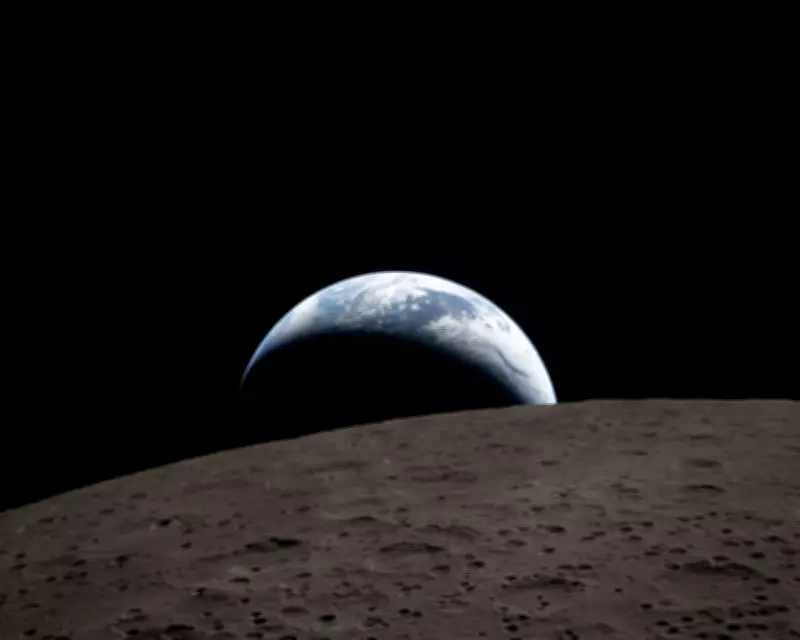
As the Artemis II mission returns from its journey around the moon, NASA's innovative sonification projects are transforming electromagnetic energy into audible sound, offering a unique glimpse into the cosmos. This process reminds us that everything in the universe vibrates, even as astronauts on board listen to pop hits from artists like Chappell Roan.
The Mundane and Mysterious Details of Artemis II
Beyond the jaw-dropping exploration of the moon's dark side, it's the everyday moments of the Artemis II mission that forge a connection with the four astronauts. From zero-gravity hair antics to playful microphone interactions during presidential calls, and the wake-up music curated by NASA—featuring tracks from Chappell Roan to CeeLo Green—these details humanize the cosmic voyage.
So far, there have been no reports of Artemis II astronauts hearing the eerie whistling and "outer-space type things" documented by the Apollo 10 crew in 1969. During that mission, astronauts experienced an hour of radio silence behind the moon, where they recorded unsettling sounds that sparked conspiracy theories until the transcript was released in 1973. Initially speculated as alien communications, these noises were later identified as interference between two VHF radio transmitters on the spacecraft.

The Science of Sonification and Space Sounds
In the vacuum of space, there are no humanly audible sounds due to the lack of an atmosphere to propagate sound waves. However, space is filled with electromagnetic energy, a radioactive maelstrom from which Artemis II astronauts are protected by thin layers of aluminium and glass. NASA's sonification process slows down these hyperactive electromagnetic frequencies to within the range of human hearing, creating sonic representations of celestial bodies.
These sonifications are profoundly moving, allowing us to experience physical connections with the orbits and energies of Jupiter, Saturn, and the Sun. For instance, the recording of the Huygens probe landing on Titan in 2005 captures actual sounds thanks to the moon's dense atmosphere, offering a stunning link between Earth and another world.
Artistic and Scientific Reflections on Cosmic Music
Samantha Harvey's Booker prize-winning novel Orbital eloquently captures the essence of space sonifications, describing Neptune's sound as "liquid and rushing" and Io's as a "metallic pulsing hum." Her metaphors align with ancient Greek concepts of the "music of the spheres," which envisioned cosmic ratios based on musical vibrations.
Today, theories like string theory, as explained by physicist Michio Kaku, suggest that the universe's fabric is composed of vibrating frequencies, akin to music. While no one can hear screams in space, as depicted in Alien, everything from dark matter to tectonic plates is formed by these energetic vibrations, creating harmonies and discords across the cosmos.
Music's Role in Healing and Remembrance
On Earth, music continues to play a vital role in addressing human conflicts. Sir Karl Jenkins' The Armed Man: A Mass for Peace, dedicated to Kosovo war victims, recently topped Classic FM's Hall of Fame, marking the first time a living composer achieved this feat. Jenkins emphasized music's power to remember the fallen and foster healing.
However, some argue that Benjamin Britten's War Requiem, premiered in 1962 at Coventry Cathedral, stands as the most powerful anti-war choral work. Despite its absence from the Hall of Fame, it offers a transformative reflection on humanity's capacity for redemption.
This week, Tom Service has been listening to Olga Pashchenko's recordings of Mozart's piano concertos, praised for their improvisational freedom on the fortepiano, showcasing the enduring vibrancy of musical exploration.