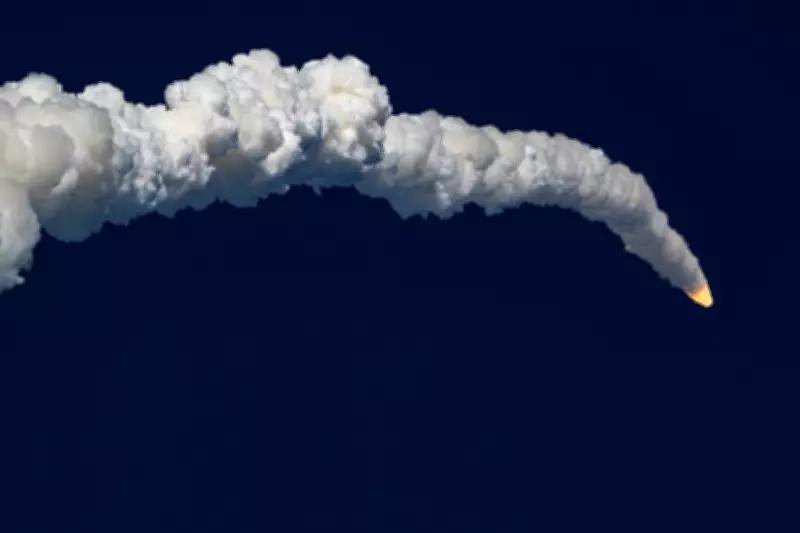
NASA's Artemis II Mission Launches First Crewed Moon Flight in Over 50 Years
NASA has achieved a monumental milestone by sending humans to the Moon for the first time in more than half a century. The Artemis II mission blasted off from Florida on Wednesday, carrying four astronauts on a 10-day, 252,000-mile journey that will see them fly around the Moon without landing or orbiting, before returning to Earth for a splashdown in the Pacific Ocean.
Historic Launch and Mission Details
The launch took place at 6:36 PM local time, with the 322-foot rocket becoming the most powerful spacecraft ever launched by NASA. Prior to boarding, over 2.6 million litres of fuel was loaded into the spacecraft. The mission will set a new distance record as the astronauts travel approximately 4,000 miles beyond the Moon before making a U-turn back to Earth. Initially, they will spend around 25 hours in a closer orbit to Earth to conduct spacecraft checks and early tasks.
This journey has faced repeated delays due to technical issues, including a previous launch attempt that was cancelled, forcing a two-month postponement. During Wednesday's launch, engineers overcame concerns such as problems with the rocket's safety systems. NASA and the astronauts have emphasized that Artemis II is a test mission, with the possibility of an early return if issues arise.

Crew and International Significance
The crew includes mission commander Reid Wiseman, Christina Koch (the first woman destined for the Moon), Victor Glover (the first Black astronaut on a lunar mission), and Jeremy Hansen from the Canadian Space Agency, who will become the first non-U.S. citizen to launch to the Moon. Best wishes have poured in from around the world, including a letter from England's King Charles III to Hansen, praising his courage and vision.
U.S. President Donald Trump hailed the mission on social media, stating, "We are WINNING, in Space, on Earth, and everywhere in between... God bless our incredible Astronauts, God bless NASA, and God bless the United States of America!" NASA Administrator Jared Isaacman declared, "The next era of exploration begins," highlighting the mission's role in NASA's grand plans for a sustainable moon base.
Future Goals and Challenges
Artemis II serves as the opening shot for NASA's ambitions to establish a permanent moon base, with a targeted landing near the lunar south pole by 2028. Originally, Artemis III was planned for no sooner than 2029, but under Isaacman's leadership, it has been accelerated to 2027 for practice docking maneuvers, shifting the actual landing to Artemis IV in 2028. This timeline aims to precede an anticipated Chinese crewed mission by 2030.
Unlike the Apollo missions, which focused on quick achievements during the Cold War, Artemis is designed for long-term sustainability. NASA's science mission chief Nicky Fox noted that for many generations who don't remember Apollo, this mission represents their own Apollo moment. The mission uses a free-return trajectory similar to Apollo 13, relying on gravity for efficiency, but risks remain high, with NASA keeping its risk assessment confidential, though managers claim odds are better than 50-50.
With half the world's population not yet born during the Apollo era, Artemis offers a fresh beginning in space exploration, aiming to inspire and advance human presence beyond Earth.