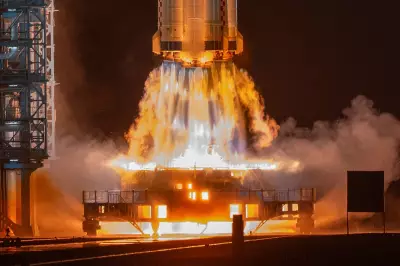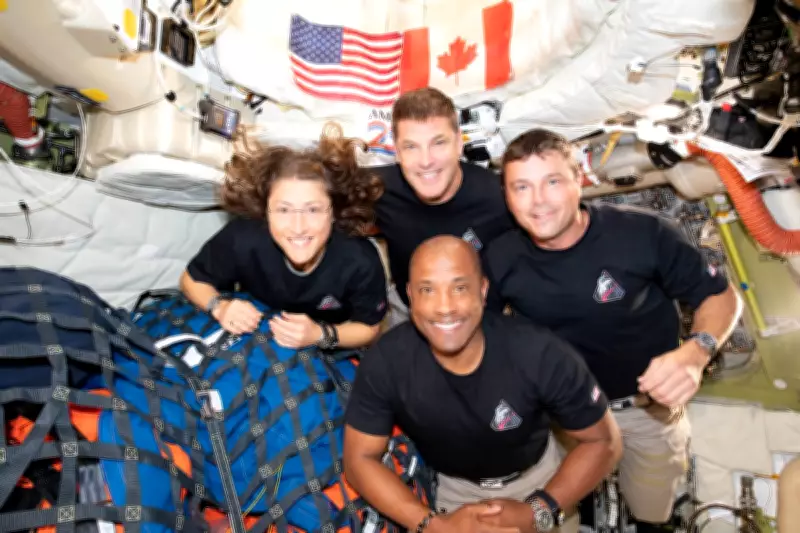
NASA officials are maintaining intense focus as the Artemis II crew prepares for their return to Earth following a groundbreaking test flight around the Moon. The astronauts, who have travelled deeper into space than any humans before, are scheduled to splash down in the Pacific Ocean off the coast of San Diego, California, this Friday.
Mission Success and Ongoing Learning
During a recent news conference, NASA scientists emphasised that the mission continues to proceed well, with the team now shifting attention to the critical return phase. Lakiesha Hawkins, NASA's acting deputy associate administrator for exploration systems development, stated that the crew is preparing to transition back to Earth, with entry day preparations underway.
"The team is turning our attention to the return and getting the crew safely home," Ms Hawkins explained. "Now, because this is a development flight, we are thinking about what we can still learn in the remaining days to better understand the systems and to inform future missions."

Vital Human Health Data Collection
A key aspect of the mission involves monitoring the impact of the deep space environment on the three American and one Canadian astronaut aboard the Orion module. This data is considered invaluable for future long-duration missions.
"The experiments about human health are going to give us data that we need to be able to live on the moon longer, as we develop the moon base, and be able to prepare for farther trips, like going on to Mars," Ms Hawkins elaborated. "During Apollo, they didn't gather this kind of human health data and we can't get this information during low Earth orbit missions."
Maintaining Focus Until the End
Despite the mission's success so far, NASA officials stress that complacency is not an option. Ms Hawkins cautioned that while a smooth mission might make lunar travel appear easy, the reality is quite different.
"We can't forget that this is a test flight, and are taking everything that we're learning forward to support the next mission," she emphasised. "This has been a good mission so far, and we're nearing the end, having retired a significant number of risks over recent days, but the team remains focused, and we're making sure that we don't take our eye off the ball."
Critical Final Moments
The re-entry and landing phase will be particularly intense, with the time between entering Earth's atmosphere and splashing down in the Pacific Ocean estimated at just thirteen minutes. Mission flight director Rick Henfling described the process as "very dynamic" and noted that "similarly to the launch environment, there's not a lot of time to react."
Recovery operations are already in motion, with the USS John P Murtha currently en route to meet the capsule upon landing. This marks the first time in over fifty years that NASA has sent astronauts on a Moon mission, with the last being Apollo 17 in 1972.
International Support and Future Goals
The mission has received global support, including tracking assistance from the Goonhilly Earth Station near Helston in Cornwall. NASA's ultimate objectives extend far beyond this mission, with plans to return a crew to the lunar surface by 2028, ahead of China's anticipated lunar landing around 2030.
Ms Hawkins concluded by highlighting the collective effort behind the mission: "Countless hours of people working together behind the scenes have been preparing for these moments, and people are still giving their all to ensure mission success. We continue to improve, to make our ultimate goals of going to the lunar surface, building the moon base and eventually sending the first humans to Mars, a reality."