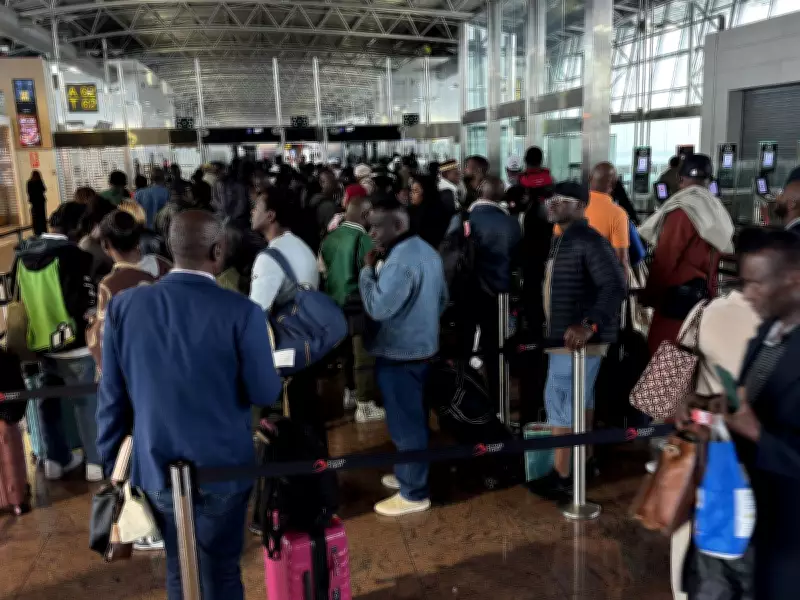
The head of Wizz Air has issued a cautiously optimistic message to British holidaymakers, advising them to prepare for lengthy queues at European airports due to new border checks, while encouraging them to continue booking trips with confidence.
Three-Hour Advice for Return Flights
Yvonne Moynihan, the UK boss of the budget airline, warned that passengers should arrive at the airport three hours before their flight home departs, as the new Entry Exit System (EES) has caused significant delays at passport control in some European destinations. She noted that long waits have already caused some travellers to miss return or connecting flights.
The EES, which requires travellers from outside the EU to register biometric information such as fingerprints when entering and leaving many European countries, has been in operation since October. Since then, nearly 80 million entries and exits have been recorded, with 35,000 refusals of entry. From April 10, the system is meant to be fully operational at all borders of the Schengen free movement zone, including airports.

Mixed Impact Across Europe
Moynihan described the impact of the new checks as “fragmented across Europe.” While some airports have experienced seamless travel, she highlighted long queues at “usual hotspots such as Spain, Portugal, France.” She advised passengers to bring portable chargers and water to cope with potential delays upon arrival.
Because EES information must also be verified when leaving, queues before flights back to the UK have become a particular concern. “Because there is another passport check… that’s where we see that people have, again, experienced longer waiting times than anticipated,” she said. While the usual advice is to arrive two hours before a flight, she recommended three hours under current circumstances, and suggested allowing several hours between connecting flights.
Airport and Commission Responses
ACI Europe, a trade body representing airports, reported that a survey of 45 airports in 20 EU states found queues of up to three and a half hours due to EES. The group warned that the situation is expected to “deteriorate further” and become “unmanageable” as passenger numbers rise towards the summer peak, despite the extensive use of partial suspensions of the system.
However, a European Commission spokesperson stated that EES is working well at “almost all border crossing points” and that registering information typically takes only about a minute. The Commission noted that it is up to member states to ensure proper implementation and to provide sufficient border guards. Portugal, where long waits have been reported, has announced the deployment of 360 additional border officers for airports in July.
Calls for Suspensions and Cost Concerns
Moynihan acknowledged that improvements have been made since initial teething issues, but she believes the summer travel surge will test the system. She called for more countries to suspend the checks during the peak period. The European Commission has allowed biometric registration to be suspended until September “at specific border crossing points and for a limited amount of time in cases of exceptional circumstances that lead to excessive waiting times.”
On the topic of costs, Moynihan insisted that passengers “should feel confident booking,” echoing similar sentiments from other short-haul airline bosses like EasyJet and Jet2. She confirmed that Wizz Air’s suppliers have adapted, no shortages are anticipated, and no cuts to the schedule are expected. However, she noted that fares are likely to rise if oil prices remain high, though in the short term, the airline can save costs in other areas.
Elsewhere, a burst water main at Heathrow Airport has caused flooding at a train station, leading to no trains running in or out of the airport. Passengers are advised to allow extra time and arrange alternative travel.