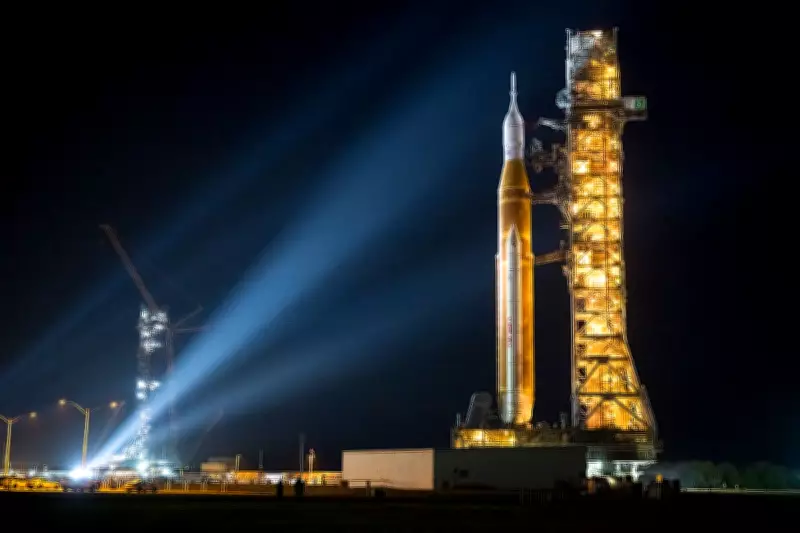
NASA has officially given the green light for the launch of its Artemis II mission, marking a pivotal moment in human space exploration. The historic flight, scheduled for Wednesday evening, will see a four-person crew embark on a 10-day journey around the Moon, traveling further from Earth than any humans have ever ventured before.
Final Preparations Underway at Kennedy Space Center
The US space agency has initiated the ultimate phase of preparations at the Kennedy Space Center in Florida, where the Space Launch System (SLS) rocket and Orion spacecraft are poised for liftoff. Mission commander Reid Wiseman expressed the significance of this endeavor, stating, "The nation and the world has been waiting a long time to do this again," highlighting the anticipation surrounding this first crewed mission to the Moon since the Apollo era over five decades ago.
Crew Composition and Quarantine Protocols
The Artemis II crew comprises NASA astronauts Reid Wiseman, Victor Glover, and Christina Koch, alongside Canadian Space Agency astronaut Jeremy Hansen. They arrived in Florida last Friday after beginning a quarantine period in Texas on March 18 to minimize the risk of viral infections, ensuring their health for the demanding mission ahead.

Record-Breaking Trajectory and Milestones
During the mission, the Orion spacecraft will execute a high-altitude flyby of the Moon, reaching an approximate distance of 400,000 kilometres (250,000 miles) from Earth. This trajectory will surpass the previous record set by Apollo 13 in 1970, when that mission's lunar landing was aborted due to technical issues, forcing a similar path around the Moon. The Moon's orbital position in early April necessitates that the Artemis II crew travel even further than their Apollo 13 predecessors.
Artemis II will also achieve several historic firsts, including sending the first woman, the first non-white person, and the first non-American to the Moon. Upon reentry, Orion is expected to reach velocities around 40,000 kph (25,000 mph), potentially setting a new speed record for crewed spacecraft returning to Earth.
Weather Conditions and Mission Objectives
NASA reports an 80% chance of favourable weather conditions for Wednesday's launch, though potential cloud cover and high winds in the area are being monitored. This test mission is designed to lay the groundwork for future lunar landings, with Artemis IV currently slated for 2028 as part of NASA's broader Artemis program aimed at establishing a sustainable human presence on the Moon.
Live Coverage Details
Live coverage of the launch will be broadcast on NASA's official website and YouTube channel, commencing at 7:45 AM local time (12:45 PM BST) on April 1. The launch is scheduled for 6:24 PM EDT (11:24 PM BST), allowing global audiences to witness this monumental event in real-time.