NASA Issues Update on Artemis 2 Mission as Launch Window Approaches
Just hours before the scheduled lift-off, NASA has provided a crucial update regarding the Artemis 2 mission, which aims to launch four astronauts on humanity's first crewed lunar journey in more than five decades. The space agency clarified that there is no significant issue with the rocket, despite earlier mentions of a minor concern.
Launch Commentator Corrects Earlier Statement
NASA launch commentator Derrol Nail initially indicated that engineers were monitoring a small problem, but he later retracted this statement. "I mentioned that there was a small issue. That actually was incorrect," Nail explained. "There was no issue, I've gotten the good data now that I'm on the headset and listening into the loops." He added that engineers are simply keeping an eye on a display unit inside the Orion spacecraft that is running slightly cooler than normal, but it remains within acceptable limits and poses no threat to the mission.
Mission Details and Crew Preparation
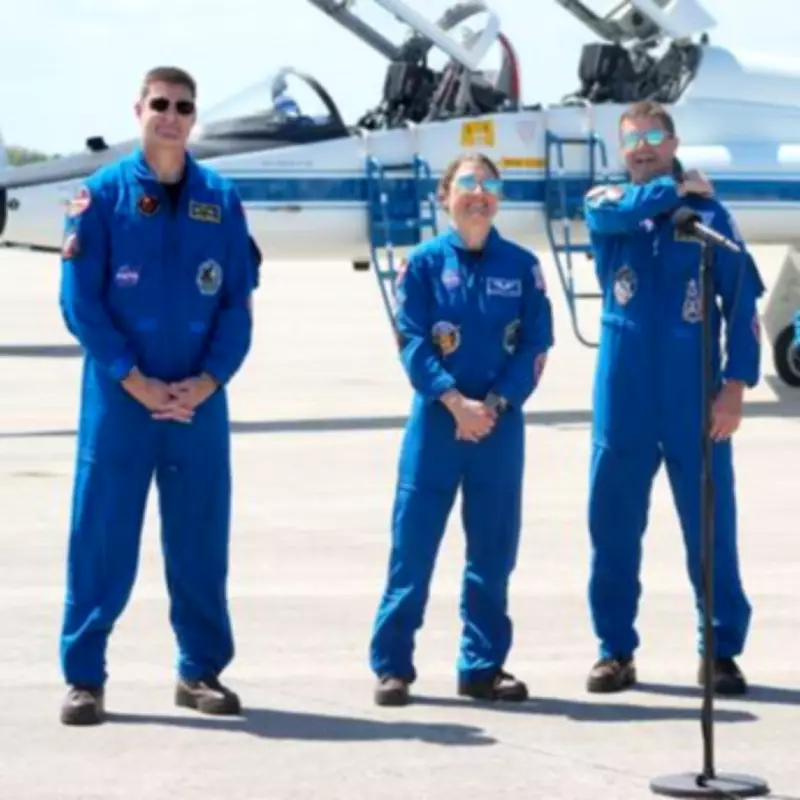
The Space Launch System rocket and Orion spacecraft are set to lift off from NASA's Kennedy Space Center in Cape Canaveral, Florida, at approximately 6:24 PM EDT (11:24 PM BST) tonight. The crew includes NASA astronauts Reid Wiseman, Victor Glover, and Christina Koch, along with Canadian Space Agency astronaut Jeremy Hansen. They are currently undergoing final preparations, including suiting up and receiving their wake-up calls, as excitement builds among space enthusiasts worldwide.

Weather Conditions and Launch Window
NASA weather experts have been closely monitoring forecasts, with an 80% chance of favorable conditions for launch. The main concerns are cloud coverage and high winds, but current assessments suggest low risks of rain or lightning during the launch window. If conditions fall outside acceptable limits, the mission could be scrubbed. The launch window opens at 6:24 PM EDT, and timing is critical for the trajectory to ensure optimal solar power and temperature control for the Orion spacecraft.
Historical Significance and Mission Objectives
Artemis 2 marks a significant milestone as the first crewed mission to the Moon since the Apollo 17 mission in 1972. The astronauts will embark on a 10-day journey, circling the Moon and traveling up to 250,000 miles from Earth, surpassing the distance record set by Apollo 13. This mission is part of NASA's broader Artemis program, aimed at returning humans to the lunar surface and paving the way for future missions to Mars. Key objectives include testing the Orion spacecraft's life support systems and re-establishing human capability for deep space exploration.
Crew Diversity and Personal Stories
The Artemis 2 crew represents a diverse group, with Christina Koch set to become the first woman to fly to the Moon, Victor Glover the first Black astronaut on a lunar mission, and Jeremy Hansen the first Canadian to travel beyond Earth's orbit. Commander Reid Wiseman, a former Navy captain, shared that he could not refuse this historic opportunity, emphasizing the mission's importance for future generations. Each astronaut has selected favorite foods for the trip, including a variety of hot sauces and beverages, to make the journey more comfortable.
Public Engagement and Live Coverage
Thousands of spectators are gathering in Florida to witness the launch, with over 35,000 people already watching NASA's live stream on YouTube. NASA has also created a "Moon Tunes" playlist on Spotify, featuring nearly 200 songs to celebrate the mission. The agency encourages global audiences to tune in for live coverage as the astronauts prepare for this groundbreaking journey.
As the countdown continues, all eyes are on NASA for what promises to be a historic moment in space exploration, rekindling humanity's lunar ambitions after decades of absence.