Meteor Fireball Illuminates UK Skies Before Disintegrating Over North Sea
Meteor Fireball Lights Up UK Skies, Burns Over North Sea

Meteor Fireball Illuminates UK Skies Before Disintegrating Over North Sea

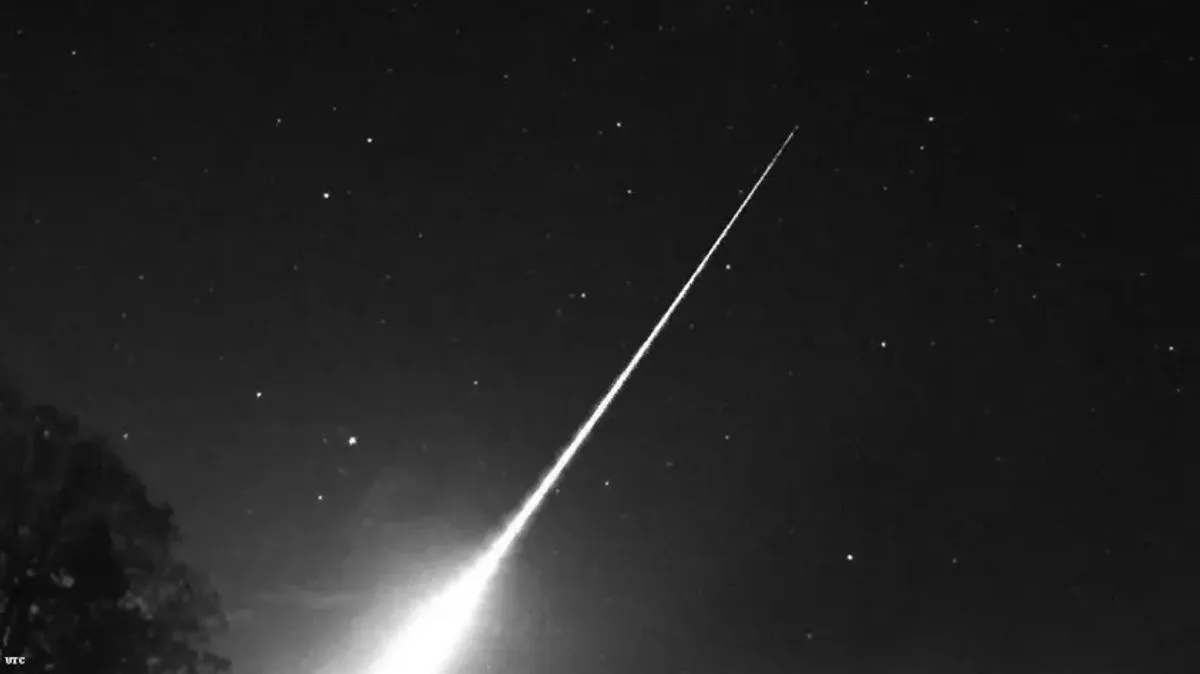
A spectacular bright meteor has been officially confirmed by experts after it lit up night skies across parts of the United Kingdom, with the celestial object likely burning up completely over the North Sea. The dramatic fireball was captured by observers in multiple locations, creating a vivid display that drew widespread attention.

Widespread Sightings Across Northern Europe

The meteor became visible at approximately 00:24 BST on Monday morning, with sightings reported from Hornsea, Billingborough, and Moulton Seas End in East Yorkshire and Lincolnshire. The event was recorded more broadly across northern Europe, captivating skywatchers with its intense brightness as it hurtled through Earth's atmosphere.

Charlotte Bays of the UK Fireball Alliance explained that while the meteor created a memorable spectacle, any surviving fragments are unlikely to be recovered due to its trajectory. "From the trajectory we've analysed, the object travelled over the North Sea," she stated. "That means we don't expect any meteorite debris to be found."

Wide Pickt banner — collaborative shopping lists app for Telegram, phone mockup with grocery list

Scientific Analysis of the Celestial Visitor

Scientists attribute the meteor's exceptional visibility to its chemical composition, with elements like magnesium producing a particularly vivid glow as the object underwent atmospheric entry. The fireball's brightness allowed it to be seen across an unusually wide geographical area despite its modest size.

John Maclean of the UK Meteor Network confirmed that this meteor was not associated with any known meteor shower or scheduled astronomical event. Instead, researchers believe it originated from a fragment of a larger asteroid that broke away and entered Earth's atmosphere independently.

Modest Size Despite Dramatic Display

Despite creating an impressive visual display, the meteor itself was relatively small. Estimates suggest it weighed approximately 12 grams before entering Earth's atmosphere. Travelling at tremendous speeds of roughly 20,000 miles per hour (32,000 km/h), the object would have disintegrated completely due to the intense heat generated during its rapid descent through the atmosphere.

The meteor's complete disintegration means no meteorite fragments are expected to reach the Earth's surface, particularly given its trajectory over the North Sea waters where recovery would be exceptionally challenging even if fragments had survived.

Upcoming Lyrids Meteor Shower Opportunity

While this particular meteor sighting was an isolated incident, astronomy enthusiasts will have another opportunity to witness celestial phenomena soon. The annual Lyrids meteor shower is expected to begin in the coming days, with peak activity forecast for 22 April.

The Lyrids shower is considered medium-strength and is best observed in the Northern Hemisphere. According to NASA, the optimal viewing time occurs during the dark hours after the moon sets and before the sun rises, specifically after 10pm on April 21. Observers should look toward the eastern sky for the best chance of spotting meteors.

Optimal Viewing Conditions and Preparation

To maximize the Lyrids meteor shower viewing experience:

  1. Avoid light pollution by traveling away from urban areas to darker locations
  2. Check weather conditions beforehand as clouds or fog can significantly limit visibility
  3. Allow 20-30 minutes for your eyes to adapt to darkness for optimal meteor spotting
  4. No special equipment required - the shower can be viewed without telescopes or binoculars
  5. Find a location with clear sky views as multiple meteors can appear simultaneously

While Southern Hemisphere observers can technically view the Lyrids shower, it proves much more challenging as the meteors travel northward below the horizon, providing a smaller viewing window. Northern Hemisphere observers will have significantly better opportunities to witness this annual astronomical event.

Pickt after-article banner — collaborative shopping lists app with family illustration