The New Lunar Gold Rush: Mining Helium-3 from the Moon
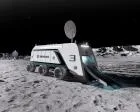
In the silent vacuum of space, a futuristic vision is taking shape: autonomous robots, each the size of a car, churn through the lunar surface, digging up rock and dust to extract a precious resource. These machines, stopping only to recharge at a central solar power station, process lunar dirt internally to harvest Helium-3, a gas so rare on Earth that a palm-sized container is estimated to be worth millions of dollars. Once processed, the resource is loaded into a launcher and ejected back to Earth, marking the dawn of a nascent lunar economy.
From Science Fiction to Reality
This scenario, once the stuff of science fiction, is now being pursued by several companies raising funds to mine Earth's celestial neighbor. Rob Meyerson, founder of the Seattle-based company Interlune, is at the forefront of this 21st-century lunar prospecting. Meyerson, who worked on the space shuttle program and helped Jeff Bezos grow Blue Origin, has raised $18 million from investors for his ambitious venture, which targets resources roughly 385,000 kilometers away.
"My view is that it's not a question of if, it's a matter of when," says Meyerson. The moon holds resources in extremely short supply on Earth, with Helium-3 being a primary focus. This gas, made in the sun and deposited on the moon's surface over billions of years by solar wind, is used in medical imaging and has potential applications in quantum computers and nuclear fusion. As demand grows, the limited supply makes it lucrative enough to justify space missions.
A Historical and Modern Context
The pursuit of lunar resources isn't entirely new. In 1969, Neil Armstrong collected lunar soil samples containing Helium-3 during the Apollo 11 mission, followed by geologist Harrison Schmitt in 1972 on Apollo 17. After a 50-year hiatus without human visitors, the moon is back in vogue. NASA's Artemis mission is leading an astronaut fly-by this week, aiming for a permanent human presence, including a lunar base. China is also on target for a crewed lunar landing this decade.
Private companies are driving a renaissance in deep space exploration, fueled by reduced access costs through firms like Blue Origin and SpaceX. Interlune plans to send a multispectral camera to the lunar south pole in 2025 to assess Helium-3 concentrations, with a follow-up mission, "Prospect Moon," slated for 2027. They're not alone; Japan's ispace has partnered with US start-up Magna Petra to develop AI-based, energy-efficient recovery methods for Helium-3.
Feasibility and Ethical Concerns
Key to the feasibility of Helium-3 mining is the concentration of the element in lunar regolith. Angel Abbud-Madrid, director of the Center for Space Resources at the Colorado School of Mines, uses the "gold in the ocean" metaphor: while the sea contains millions of tonnes of gold specks, extraction isn't viable due to low concentrations. Interlune's camera mission aims to address this by measuring concentrations, not just quantities.
However, this pioneering spirit raises ethical questions. Critics warn of irreparable environmental damage, drawing parallels to historical frontier exploitation. Abbud-Madrid notes that the moon, an object of adoration for millennia with philosophical and religious connotations, poses unique concerns. "Is it OK? That's a very valid question that has been asked lately, and one that has to be addressed at some point," he says.
Interlune avoids the term "mining," opting for "harvesting" to emphasize sustainability. Astronomers, like Martin Elvis of the Harvard and Smithsonian Center for Astrophysics, advocate for protecting sites of extraordinary scientific importance, such as the radio-quiet farside, which is ideal for deep space observation. "We're just asking for a few small spots on the moon," he says, highlighting potential conflicts over rare lunar real estate.
Legal and Global Implications
The legal framework for moon mining remains opaque. The 1967 Outer Space Treaty prohibits national ownership of celestial bodies but doesn't address commercial activities. Meanwhile, global powers are racing to establish a presence. China's Chang'e-6 mission in 2024 brought back Helium-3 samples from the moon's far side, with state media highlighting its potential as a future energy source.
Meyerson emphasizes the need for thoughtful operation, stating, "The moon is big," and there's space for both businesses and scientists. However, he warns of competition from countries like China, urging Western presence to balance power dynamics. Over the coming decades, the moon is expected to become a microcosm of Earth's power struggles, with Russia, the US, and China all planning ambitious returns.
As this lunar gold rush accelerates, it blends innovation with ethical dilemmas, setting the stage for a new era in space exploration and resource utilization.