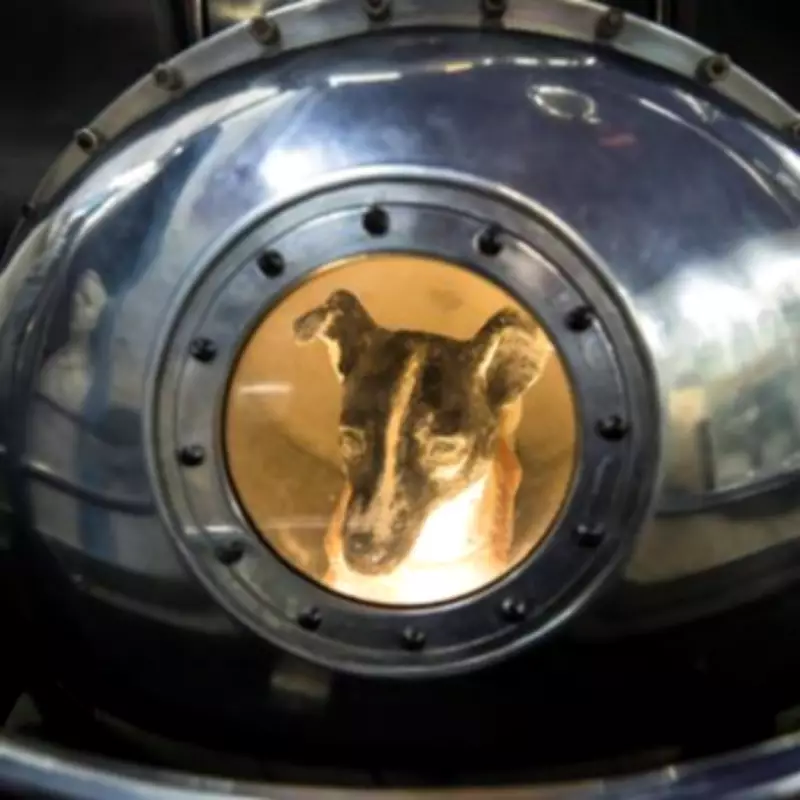
The Heartbreaking Tale of Laika: The Soviet Stray Dog Sent to Space
The poignant story of Laika, the stray dog launched into space aboard Sputnik 2 in 1957, continues to evoke profound grief and ethical reflection decades later. This mixed-breed canine, found roaming the streets of Moscow at just three years old, became one of the first animals in space, yet her mission was tragically designed as a one-way journey with no possibility of return.
From Moscow Streets to Space Orbit
Laika, whose gentle and affable nature made scientists consider her a perfect candidate, was subjected to weeks of rigorous preparation. This included adaptation to progressively smaller crates and cages before her historic launch on November 3, 1957. At that time, understanding of space travel's effects on living creatures was severely limited, and animal flights were viewed by engineers as an essential stepping stone toward eventual human missions.
The Soviet stray was given multiple names by staff, including Kudryavka (meaning 'Little Curly'), Limonchik ('Little Lemon'), and Zhuchka ('Little Bug'). However, it was Laika—a Russian word for certain husky-like breeds—that gained worldwide recognition. Her mission aimed to demonstrate whether a living creature could withstand the traumatic forces of launching into orbit, with her vital signs meticulously monitored to confirm theories about life functioning in reduced gravity and elevated radiation levels.

A Mission of Sacrifice and Discovery
Data from Laika's voyage revealed clear indicators of distress and increased agitation throughout her time in space. Over five months after launch, Sputnik 2—along with Laika's remains—descended back through Earth's atmosphere on April 14, 1958, incinerating upon re-entry. Despite the tragic outcome, researchers obtained groundbreaking information about the physiological effects of space travel from this mission.
Initial Soviet accounts provided contradictory information about her death, including claims she died merely seven hours into the mission due to the central R-7 sustainer's failure to separate from the spacecraft. However, in 2002, the actual circumstances were ultimately disclosed, revealing she died after exhausting her oxygen supply on her sixth isolated day aboard the cramped spacecraft.
Enduring Legacy and Ethical Reflection
Laika's story has recently re-emerged across social media, spotlighted by the popular page Fantastic Things in the World. Alongside an image of a statue resembling Laika looking out from the spacecraft, the account wrote: "Every year... I feel compelled to tell this story. There's a deep guilt that all of us should feel reading what we did to Laika. Human progress has often been achieved at the expense of animals that had nothing to do with our desire for supremacy."
The tribute continued: "Many believe this was an acceptable price for our conquests, but it seems obvious that it was really just a trivial form of prevarication. We had a duty to choose another path. We still have that duty today. Sorry humanity has failed you, Laika."
This reflection comes as modern space exploration continues to advance, with recent missions like Artemis II breaking radio silence with historic words as it emerged from the Moon. While today's astronauts set new records for human spaceflight, Laika's sacrifice remains a sobering reminder of the ethical complexities and costs associated with humanity's relentless pursuit of knowledge and exploration beyond Earth.