Cornwall's Historic Role in NASA's Return to the Moon
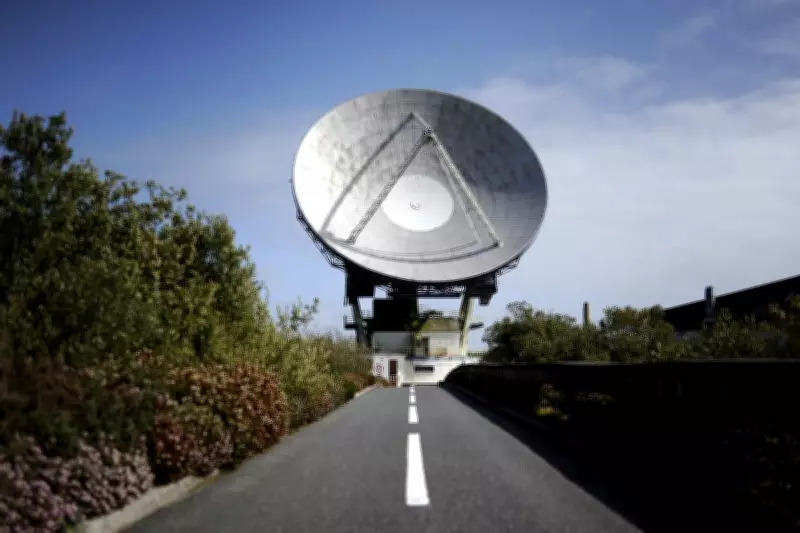
In a significant moment for international space exploration, a British satellite earth station is playing a pivotal role in NASA's ambitious Artemis II mission to the Moon. The Goonhilly Earth Station, situated near Helston in Cornwall, has been tasked with tracking the Orion spacecraft throughout its journey around the lunar surface and its subsequent return to Earth.
A Milestone in Human Spaceflight
This mission represents NASA's first crewed lunar expedition in more than five decades, aiming to send astronauts deeper into space than any human has previously ventured. The 322-foot rocket, carrying four crew members, successfully launched from Cape Canaveral in Florida at 6.36pm local time on April 1. The elite team, comprising three Americans and one Canadian, entered the capsule several hours prior to launch, where they will remain for approximately ten days within a space comparable to a small camper van.
Prior to boarding, more than 700,000 gallons of fuel, equivalent to 2.6 million litres, was loaded into the spacecraft. As they proceeded to the launch pad, the astronauts waved and shaped their hands into hearts for well-wishers, symbolising the unity and excitement surrounding this historic endeavour.

Goonhilly's Legacy and Future Contributions
Goonhilly Earth Station boasts a rich heritage in space communication, having been involved in landmark events such as broadcasting the Apollo 11 Moon landing globally in 1969 and facilitating the first commercial spacecraft landing on the Moon. In 2022, the site provided critical communication and tracking support for NASA's Artemis I mission, laying the groundwork for its current involvement.
Matthew Cosby, Chief Technology Officer of Goonhilly Earth Station, emphasised the station's readiness and strategic importance. "Artemis II marks a significant milestone in humanity's return to the Moon, and we're proud that the capabilities developed here in Cornwall are contributing to that mission," he stated. "From our site, we will support tracking of the Orion spacecraft, showcasing our readiness for future crewed Artemis missions. At the same time, we are positioning the UK to play a key role in NASA's longer-term Moon to Mars exploration strategy."
Additionally, Goonhilly is collaborating with the UK Space Agency and NASA to explore solutions for near-real-time space weather measurements, further enhancing its role in advancing space technology.
Government and NASA Perspectives
Baroness Lloyd, the UK government minister responsible for space, highlighted the station's enduring impact. "From broadcasting the Apollo 11 Moon landing to the world in 1969, to now supporting NASA's return to the Moon with Artemis II, Goonhilly's rich heritage in space communication continues to inspire," she remarked. "It's fantastic to see Cornwall once again at the heart of a truly historic moment in human spaceflight. This partnership with NASA shows what British expertise and innovation can achieve on the world stage, while creating opportunities for skilled jobs and growth right here in the UK."
At a press conference held on Monday night UK time, NASA leaders underscored the importance of international collaboration. Amit Kshatriya, Associate Administrator of NASA, told reporters, "This crew is an international crew for a reason. One of the most amazing things about the space station, I think the most amazing thing, was the partnership that was developed to operate that machine. As I said in my opening, we're going to need the free nations of the world to collaborate to build even more ambitious architectures as we expand our range of action throughout the solar system. There's no question in my mind partnership is fundamental to that."
Charlie Blackwell-Thompson, Launch Director, described it as "an exciting time for this team and our crew and really our nation and the world." Chief Flight Director Emily Nelson added, "The opportunity is immense for us to finally get the opportunity to send our crew farther than anyone's gone before, and it's an incredible moment for the Artemis generation and we're excited and we are ready to press."

This collaboration not only marks a historic step in space exploration but also reinforces the UK's position as a key player in global scientific and technological advancements, with Goonhilly Earth Station at the forefront of this exciting new chapter.