The Expanding 'Bermuda Triangle of the Sky' Threatens Space Technology
While the infamous Bermuda Triangle has long captured public imagination with tales of mysterious disappearances at sea, scientists have identified an equally concerning phenomenon high above our planet—a growing weak spot in Earth's magnetic field that's being called the 'Bermuda Triangle of the sky.' This atmospheric anomaly is actively damaging satellites and expanding at an alarming rate, posing significant challenges to space exploration and technology.
A Costly Space Mystery Unfolding
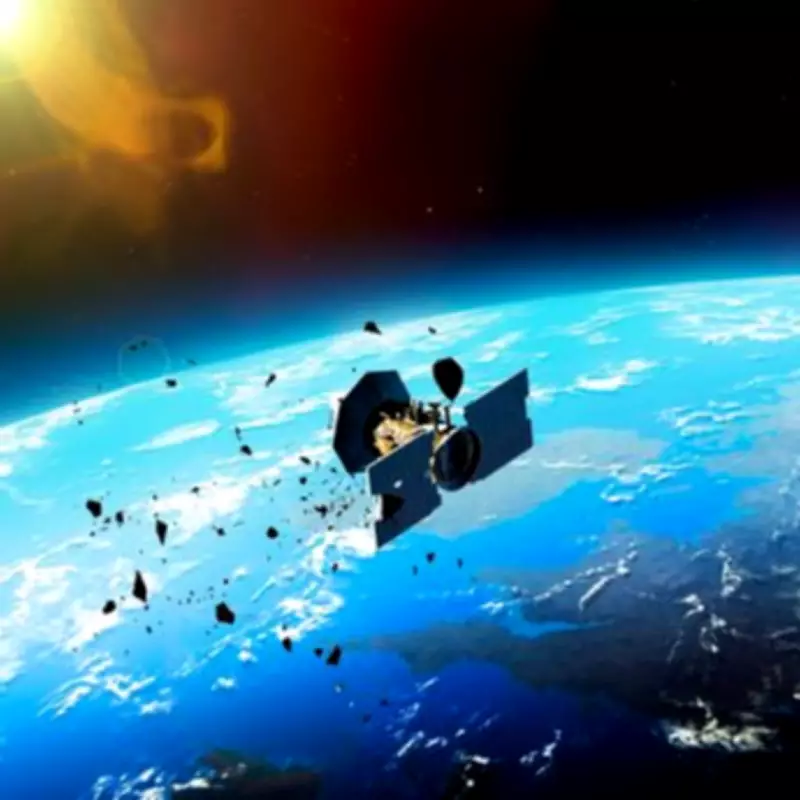
The South Atlantic Anomaly (SAA), first identified in the late 19th century, represents a significant weak spot in Earth's protective magnetic shield. This region interferes with satellite technology, causing potentially catastrophic malfunctions. The most dramatic demonstration of its destructive power occurred in March 2016 when Japan's Hitomi (ASTRO-H) X-ray observatory was torn apart after being propelled into an irreversible spin—a failure that cost approximately $273 million according to The Scientific American.
Now, a decade after that incident, the SAA continues to foil space exploration efforts and threatens our growing dependence on satellite technology. Earth's magnetic field serves as our planet's primary defense against cosmic radiation and charged particles from the Sun, making this weakening area particularly concerning for both technology and biological life.

Scientific Research Reveals Accelerating Expansion
Using over a decade of magnetic field measurements from the European Space Agency's Swarm satellite constellation, scientists have made a startling discovery: the South Atlantic Anomaly is not only persisting but expanding significantly. Since 2014, the affected area has grown by nearly half the size of continental Europe, creating an ever-larger zone where satellites face increased risk of malfunction.
Lead researcher Chris Finlay explained the complexity of the phenomenon: "The South Atlantic Anomaly is not just a single block. It's changing differently towards Africa than it is near South America. There's something special happening in this region that is causing the field to weaken in a more intense way."
Unusual Magnetic Behavior Beneath the Surface
Earth's magnetic field originates from liquid iron in the planet's outer core approximately 3,000 kilometers beneath the surface. This molten iron generates electrical currents that create our protective electromagnetic shield. The Swarm mission's identical satellites measure magnetic signals from Earth's core, revealing unexpected patterns beneath the South Atlantic Anomaly.
"Normally we'd expect to see magnetic field lines coming out of the core in the southern hemisphere," Finlay continued. "But beneath the South Atlantic Anomaly we see unexpected areas where the magnetic field, instead of coming out of the core, goes back into the core. Thanks to the Swarm data we can see one of these areas moving westward over Africa, which contributes to the weakening of the South Atlantic Anomaly in this region."
Regional Variations in Magnetic Weakening
Recent findings from the Swarm mission reveal additional complexity in this atmospheric phenomenon. Beyond the general expansion of the SAA, a specific region of the Atlantic Ocean southwest of Africa has experienced an even more rapid weakening of Earth's magnetic field since 2020. This localized acceleration suggests the anomaly may be developing in distinct patterns rather than as a uniform expansion.
The implications of this expanding weak spot extend far beyond satellite technology. As humanity increases its presence in space through satellite networks, space stations, and planned missions to colonize other celestial bodies, understanding and mitigating the effects of the South Atlantic Anomaly becomes increasingly critical. The phenomenon serves as a reminder that Earth's protective systems are dynamic and sometimes vulnerable, even as we push further into the final frontier.