The final words of Space Shuttle Challenger pilot Michael J Smith were a chilling "Uh-oh," uttered just before the shuttle disintegrated 73 seconds into its flight on January 28, 1986, killing all seven crew members.
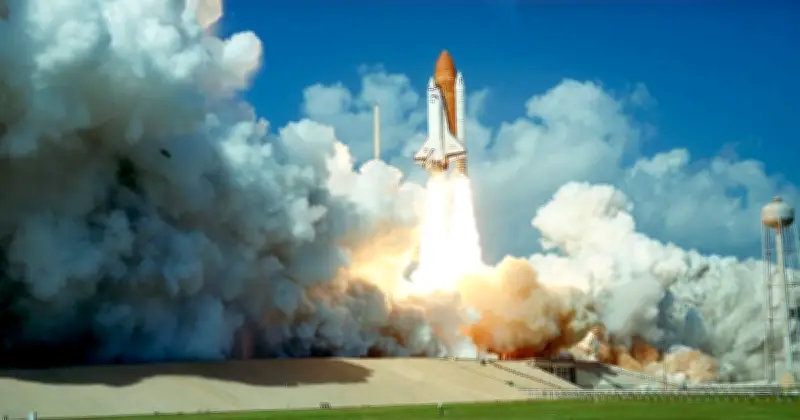
On that exceptionally cold morning, millions worldwide watched on television as Challenger lifted off from Kennedy Space Centre at Cape Canaveral, Florida. The seven-member crew included Commander Francis R Scobee, Pilot Michael J Smith, Mission Specialists Dr RE McNair, Lieutenant Colonel Ellison S Onizuka and Dr Judith A Resnik, Civilian Payload Specialist and Aircraft Engineer Gregory B Jarvis, and fellow Civilian Payload Specialist and teacher Sharon Christa McAuliffe.
McAuliffe, a social studies teacher at Concord High School in New Hampshire, was part of NASA's 'Teachers in Space' programme, which aimed to have an educator deliver live lessons from space for the first time.
Transcript reveals crew's final moments
The mission transcript captured the crew's initial good spirits, with jokes and banter. One minute four seconds before liftoff, Mission Specialist Onizuka observed, "Dick's thinking of somebody there," to which Commander Scobee responded, "Unhuh." At liftoff, the crew was heard saying, "Aaall riiight" and "here we go." Six seconds after liftoff, Scobee said, "There they go, guys," met with an "all right" from Resnik.
Eleven seconds into the voyage, Smith said, "Go you mother!" and four seconds later Resnik exclaimed, "sh-t hot." Moments later, Smith added, "Looks like we've got a lotta wind here today." A minute into the flight, Smith announced, "Feel that mother go," followed by an exuberant, "Woooohoooo." At 70 seconds, Scobee confirmed, "Roger, go at throttle up."
The disaster and its cause
At precisely 73 seconds, Smith uttered "Uh-oh." Radio silence followed as the shuttle experienced a complete loss of all data, culminating in an explosion. The Challenger broke apart approximately 46,000 feet (14 km) above the Atlantic Ocean, off the coast of Cape Canaveral.
According to reports, the disaster was caused by a single faulty component. The BBC explains: "The Challenger was lost because one small part - an O-ring seal - failed during a launch in cold weather. The possibility of this part failing had been predicted long before, but Nasa managers chose to ignore the concerns."
NASA's official accident report states: "The consensus of the Commission and participating investigative agencies is that the loss of the Space Shuttle Challenger was caused by a failure in the joint between the two lower segments of the right Solid Rocket Motor. The specific failure was the destruction of the seals that are intended to prevent hot gases from leaking through the joint during the propellant burn of the rocket motor."
Crew may have survived the breakup
Evidence suggests the crew compartment did not break apart immediately but continued ascending for approximately 25 seconds before descending into the Atlantic. NASA's assessment notes: "Forces to which the crew were exposed during Orbiter breakup were probably not sufficient to cause death or serious injury." Investigators later revealed that several of the crew's personal air packs had been activated, suggesting some may have remained alive and conscious after the breakup.
The crew compartment struck the ocean at approximately 333 km/hr (207mph). The remains of the crew were retrieved from the ocean floor weeks later, and on May 20, 1986, the commingled, unidentified remains were laid to rest at Arlington National Cemetery.