California Boy's Plush Toy Soars to Moon on NASA's Artemis II Mission
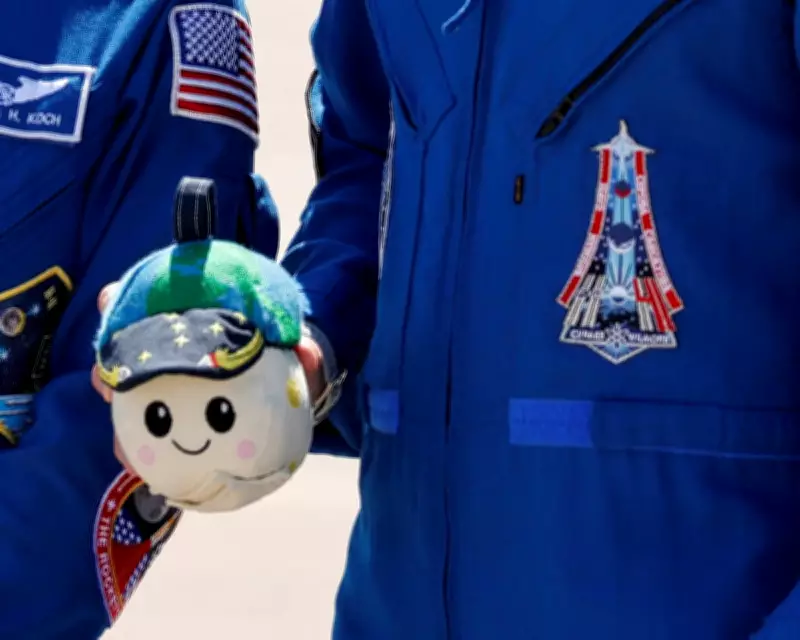
An eight-year-old space lover from California has achieved an out-of-this-world dream as his designed mascot embarked on NASA's Artemis II mission, the first crewed lunar expedition in over five decades. Lucas Ye, a second-grader from Mountain View in the San Francisco Bay Area, created a smiley-faced plush toy that serves as a zero-gravity indicator aboard the rocket, floating to signal weightlessness as it entered space following Wednesday's launch.
Young Designer's Cosmic Inspiration
Lucas, an avid enthusiast who declared, "I like rockets, I like NASA, I like the solar system, I like studying about space," triumphed in a global "moon mascot" competition overseen by NASA and the crowdsourcing company Freelancer. He bested over 2,600 other entrants with his creative design. Trisha Epp, Freelancer's director of innovation, celebrated his win in a recent news release, stating, "Your design is literally going to space, which is not a sentence most people get to say."
The plush toy, named Rise in homage to the iconic Earthrise photograph from Apollo 8 in 1968, features a baseball cap with a star-spangled visor and a crown resembling Earth's green and blue surface. Lucas noted that parts of his design pay tribute to the historic Apollo 11 moon landing in 1969, showcasing his deep knowledge and passion for space exploration.

Historic Mission and Future Aspirations
Artemis II represents a monumental step for NASA, sending humans to the moon for the first time in nearly 54 years, though they will not land on the lunar surface. The crew, including commander Reid Wiseman, is set to travel farther from Earth than any humans in history, with the mission also marking the first time a woman, Christina Koch, and a person of color, Victor Glover, have flown between Earth's orbit and the moon. If successful, Rise will journey over 250,000 miles into space and back over a 10-day period, with the crew preparing to leave Earth's orbit as of Thursday.
Lucas, who aspires to work at NASA or become an astrophysicist, expressed overwhelming joy before the launch. When asked about his design being on the rocket, he stretched out his words to convey his excitement: "Really, really, really, really, really, really, really surprised and very happy." His toy joins a rich tradition of zero-gravity indicators in space missions, such as the doll carried by Soviet cosmonaut Yuri Gagarin in 1961 and a toy giraffe taken by Wiseman on a 2014 expedition.
Broader Implications and Future Missions
The outcome of Artemis II, during which astronauts' health will be closely monitored, will inform Artemis IV, a scheduled 2028 mission aimed at placing humans back on the moon. This aligns with broader political priorities, as former President Donald Trump has emphasized achieving a lunar landing by the end of a potential second term. The mission underscores ongoing advancements in space exploration and the inspiring role of young innovators like Lucas in shaping future endeavors.