NASA astronauts Sunita Williams and Barry 'Butch' Wilmore, along with American Nicholas Hague and Russian Aleksandr Gorbunov, splashed down in the Gulf of Mexico off Tallahassee, Florida, on Tuesday evening, ending a mission that lasted more than nine months due to technical failures with Boeing's Starliner capsule.
The SpaceX Dragon capsule, named Freedom, landed at 5:57pm ET (9:57pm GMT) after a 17-hour descent from the International Space Station. The spacecraft slowed from 17,000mph (27,359 km/h) as it re-entered Earth's atmosphere, parachuting onto a calm sea. A pod of dolphins swam near the capsule as it bobbed in the water.
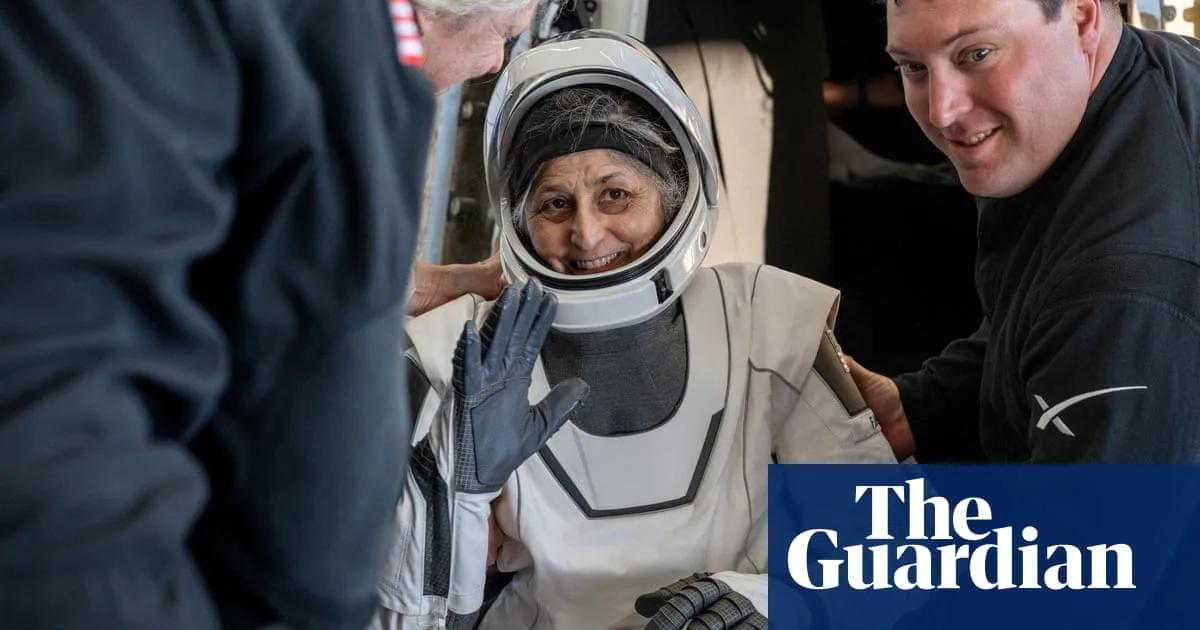
Hague, the third American onboard, remarked: 'What a ride. I see a capsule full of grins, ear to ear.' The astronauts were lifted onto a recovery vessel for medical evaluation. Hague emerged first, followed by Gorbunov, Williams, and Wilmore, who waved and smiled.

Williams and Wilmore arrived at the ISS on 6 June 2024 for a week-long test flight of Boeing's Starliner, but propulsion issues led NASA to return the capsule empty in September. The pair were reassigned as crew members, extending their stay. Williams now holds the second-longest cumulative time in space for a US astronaut: 608 days.
The mission became embroiled in political controversy, with SpaceX founder Elon Musk claiming – without evidence – that the astronauts had been 'abandoned' by the Biden administration. Former President Donald Trump also attempted to portray the routine crew rotation as a rescue mission. Wilmore, however, told reporters: 'We don't feel abandoned, we don't feel stuck, we don't feel stranded.'