Artemis Mission Aims to Rekindle Earthrise Unity Amid Global Division
For the first time in more than five decades, astronauts are poised to witness Earth from the distant vantage point of deep space. The upcoming Artemis II mission, scheduled to orbit the moon, represents a truly unifying international endeavour, one of the few remaining projects that transcends national borders. The images these astronauts capture of our fragile home planet could potentially deliver a much-needed dose of global unity.
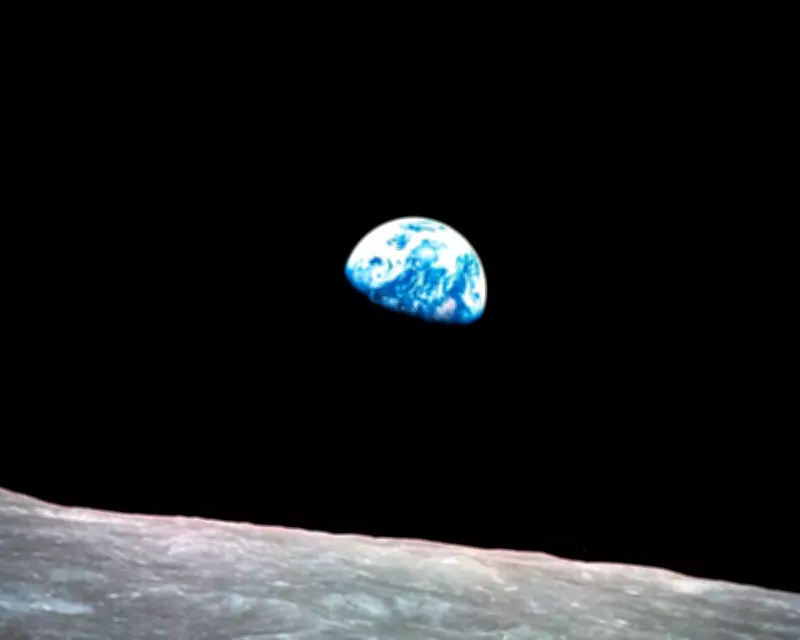
The Legacy of Apollo's Earthrise Photograph
The iconic 'Earthrise' photograph, taken by Apollo 8 astronaut William Anders on Christmas Eve 1968, had a profound and jolting effect on a society then grappling with division and conflict. President John F. Kennedy had spoken of "an hour of change and challenge, in a decade of hope and fear, in an age of both knowledge and ignorance." What he could not have foreseen was that humanity's journey to the moon would lead to the profound discovery of Earth itself.
Our home planet was suddenly revealed as a finite sphere of rock, enveloped in a perilously thin layer of life-sustaining atmosphere. This perspective starkly contrasted with the everyday human experience of living on what seemed an infinite world with boundless resources. The aftermath of this revelation was significant:

- The establishment of Earth Day
- The founding of the environmental charity Friends of the Earth
- The passage of numerous environmental protection laws
For a brief, shining moment, the accomplishments of the first moonwalkers were celebrated worldwide as an achievement of "we the human race," rather than merely an American triumph.
Decades of Diminished Perspective
In the intervening years, no human has travelled sufficiently far to behold Earth from that same humbling perspective. Human spaceflight has largely been confined to observations from space stations orbiting approximately 250 miles above Earth—a mere thousandth of the distance from which Apollo astronauts viewed our planet. This proximity is insufficient to perceive the entire Earth or to fully grasp the finite and precarious nature of our planet's habitability.
The images that once united and inspired a generation in the 1960s and 1970s now evoke little emotion. Instead of marvelling at technological wonders like Google Earth, with its exquisitely indexed global data and up-to-date imagery, society has grown complacent. At a recent sold-out exhibition at the British Library, a projected globe near the exit went largely unnoticed. "Oh, that's just Google Earth," one visitor remarked dismissively to a friend.
The Divisive Modern Landscape
The borderless, unifying sense of our world as a single global community that captivated the public after Apollo might have been amplified by modern social media. Instead, these platforms' profit-driven, algorithmically tuned echo chambers have driven many in the opposite direction. Rather than uniting to fight for the habitability of our home, humanity is increasingly fighting amongst itself, preoccupied by divisive politics and fractured international relations.
Artemis: A New Hope for Unity
Now, four individuals are venturing far from our divided planet once more. This international crew—composed of calm, curious, kind, and thoughtful people—represents the best of humanity. They will travel aboard a spacecraft built by communities from eleven nations, harnessing diverse thought and broad problem-solving abilities to accomplish a new moonshot. Unlike the individual national races of the past, the Artemis missions symbolise a coalition of united nations journeying to the moon together.
Artemis II will first orbit the moon this week, with a lunar landing planned for 2028. Sixty-one countries have signed the Artemis Accords, a set of global agreements committing to peaceful cooperation in space and on the lunar surface.

"I think it's wonderful," said Artemis II astronaut Christina Koch, who is set to become the first woman to fly around the moon. "Any country that's interested in exploring, come, come along, be a part of this." Mission commander Reid Wiseman echoed this sentiment, stating, "We are going as humanity." Fellow astronaut Victor Glover, poised to be the first African American to fly to the moon, added, "One of the things going to space teaches you is that we're all brothers and sisters, and when we work together to do really hard things, it just brings you together in a way nothing else will."
A Sacred View and a Hopeful Legacy
The first Artemis astronauts will travel more than 4,000 miles beyond the moon before its gravity pulls them back. As they pass the moon again, Earth will emerge from behind it. Unlike the Apollo astronauts, who were taken by surprise by this view, the Artemis II crew plans to photograph it deliberately and may even attempt to stream the sight live to Earth.
As the first humans in over half a century prepare to gaze upon the whole Earth from such a distance, they are about to experience something almost sacred. Sharing this experience will undoubtedly change them profoundly. Perhaps the knowledge that people are once again looking back from so far away will also change us, serving as a reminder to see ourselves, in the words of poet Archibald MacLeish, "as riders on the Earth together, on that bright loveliness in the eternal cold."
Lying on the lunar surface, a few thousand miles below the Artemis astronauts as they pass over the moon, will be a tiny silicon disc containing goodwill messages from world leaders, placed there by the Apollo 11 crew in July 1969. One message, from Eric Williams, then prime minister of Trinidad and Tobago, reads: "It is our earnest hope of mankind that while we gain the moon, we shall not lose the world." This sentiment resonates powerfully as a new generation of explorers prepares to look back at our shared home.