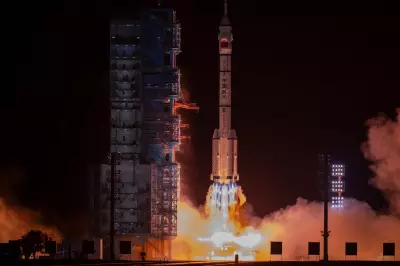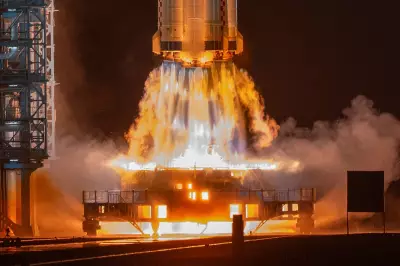
NASA's historic Artemis II mission is set to conclude dramatically today, Friday, as the Orion capsule carrying four astronauts makes a high-speed return to Earth after venturing further into space than any human mission before. The crew, comprising three Americans and one Canadian, will splash down in the Pacific Ocean off the coast of San Diego, California, marking the end of a groundbreaking journey that pushes the boundaries of space exploration.
Incredible Re-Entry Speeds and Temperatures
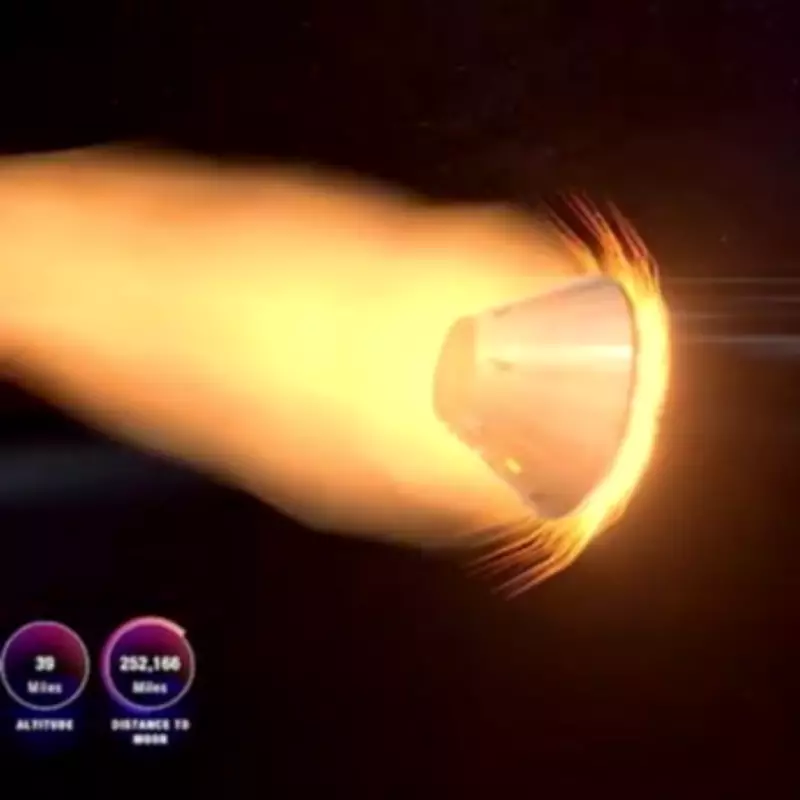
During a press conference held yesterday, Thursday, NASA associate administrator Amit Kshatriya revealed the astonishing details of the capsule's re-entry. The Orion spacecraft is expected to enter Earth's atmosphere at approximately 25,000 miles per hour, a velocity that underscores the immense engineering challenges involved. Kshatriya emphasized the critical role of the heat shield, stating, "That heat shield, the thermal protection system, built by American hands and factories from materials designed to withstand temperatures approaching the surface of the Sun, will bear the full force of that re-entry."
He further explained that every system demonstrated over the past nine days—including life support, navigation, propulsion, and communications—depends on the final minutes of flight. "We have high confidence in the system, in the heat shield, in the parachutes, and in the recovery systems we've assembled," Kshatriya added, noting that engineering data, Artemis I flight results, ground tests, and thorough analysis all support this confidence. The crew, he said, is placing their lives behind that assurance.

Mission Team's Confidence and Preparations
Despite the high stakes, Kshatriya acknowledged the natural anxieties of the ground team, saying, "It's impossible to say you don't have irrational fears left, right? But I would tell you I don't have any rational fears about what's going to happen." Lakiesha Hawkins, NASA's acting deputy associate administrator for exploration systems development, highlighted the mission's significance as a test flight. "When a mission goes well, it can look like flying to the Moon is easy. It certainly is not," she remarked.
Hawkins stressed that the team remains focused on learning from this mission to support future endeavors, including lunar surface missions, moon base construction, and eventual human missions to Mars. "Countless hours of people working together behind the scenes have been preparing for these moments, and people are still giving their all to ensure mission success," she added. This mission follows NASA's last astronaut trip to the Moon with Apollo 17 in 1972, with the agency aiming to return a crew by 2028, ahead of China's planned lunar mission around 2030.
Detailed Re-Entry and Splashdown Sequence
The re-entry process will be a rapid and intense event. As the capsule plunges back into Earth's atmosphere, the shockwave generated will cause the surrounding air to reach temperatures of 10,000 degrees Fahrenheit or higher. The heat shield, only a few inches thick, is designed to burn away strategically, transferring heat away from the capsule to protect the astronauts inside.
Communications with mission control will be disrupted during the descent as the capsule falls 400,000 feet, with the crew experiencing forces of 3.9 Gs—nearly four times normal gravity. The entire sequence from atmospheric re-entry to splashdown in the Pacific Ocean will last about 13 minutes, a brief but critical window. Mission flight director Rick Henfling described it as "very dynamic," noting, "Similarly to the launch environment, there's not a lot of time to react."
Two sets of parachutes will deploy as the capsule nears landing, slowing its descent for a controlled splashdown scheduled for 5:07 PM local time in San Diego, which corresponds to 1:07 AM on Saturday morning in the UK. The U.S. Navy's USS John P Murtha is currently en route to meet the capsule upon landing, ensuring a swift recovery operation. This momentous event caps off a mission that has retired significant risks and advanced NASA's lunar and Martian exploration goals.