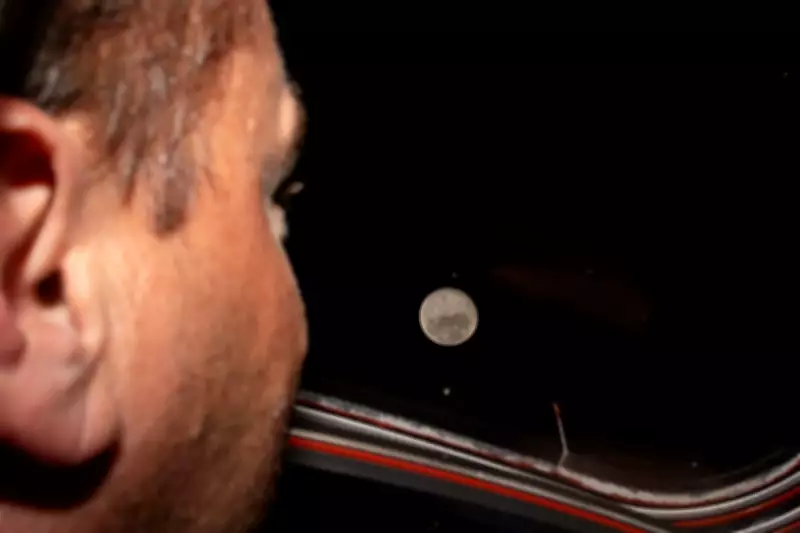
Artemis II Astronauts Commence Return Voyage Following Unprecedented Lunar Milestone
The crew of NASA's groundbreaking Artemis II mission have initiated their journey back to Earth after achieving a monumental record during their lunar flyby. This marks the first manned mission to the Moon in over five decades, with the four astronauts reaching an astonishing 252,756 miles (406,771 kilometres) from our home planet.
Historic Distance and Communication Blackout
This remarkable distance was accomplished during a meticulously planned seven-hour lunar flyby, which included a tense 40-minute communication blackout as the spacecraft traversed the far side of the Moon. The previous record, held by Apollo 13 since April 1970, stood at 248,655 miles (400,171 kilometres). During the blackout period, the Artemis II crew achieved their closest approach to the lunar surface, coming within 4,067 miles (6,545 kilometres).
Crew Experiences and Emotional Moments
Canadian astronaut Jeremy Hansen expressed awe prior to the flyby, stating, "It is blowing my mind what you can see with the naked eye from the Moon right now. It is just unbelievable." The crew, comprising Commander Reid Wiseman, Pilot Victor Glover, Mission Specialist Christina Koch, and Hansen, witnessed a total solar eclipse from their unique vantage point behind the Moon early on Tuesday.

In a poignant tribute, the astronauts requested NASA to name two newly observed lunar craters Integrity, after their Orion spacecraft's capsule, and Carroll, in honour of Commander Wiseman's late wife who passed away from cancer in 2020.
Messages from Leadership and Legacy
NASA Administrator Jared Isaacman remarked on social media platform X, "Before they left, they said they hoped this mission would be forgotten, but it will be remembered as the moment people started to believe that America can once again do the near-impossible and change the world." He emphasised that the mission remains ongoing until the crew safely splashes down in the Pacific Ocean under parachutes.
US President Donald Trump communicated with the astronauts post-flyby, lauding them as "modern-day pioneers" and suggesting that continued lunar exploration would pave the way for "the whole big trip to Mars."
Technical Manoeuvres and Historical Echoes
Artemis II is utilising the same gravitational slingshot technique employed by Apollo 13 following its infamous "Houston, we've had a problem" incident, which transformed a moon landing attempt into a survival ordeal. Leveraging the Moon's gravity for a "free" return trajectory, the crew anticipates a four-day journey back, culminating in a Pacific splashdown on Friday.
The mission has been supported by tracking from the Goonhilly Earth Station in Cornwall, UK, highlighting international collaboration. Although the astronauts will not land on the lunar surface, Artemis II is a critical precursor for future Moon landings and establishes foundational protocols for eventual crewed missions to Mars.
Overcoming Delays and Future Ambitions
The launch faced a two-month postponement due to technical issues, including hydrogen fuel leaks and obstructed helium lines. NASA's last crewed lunar mission was Apollo 17 in 1972. The agency aims to return astronauts to the Moon's surface by 2028, ahead of China's projected timeline around 2030.
During the flyby, the crew captured detailed photographs of the Moon's typically hidden far side using professional cameras, while also marvelling at the rare sight of Earth from such a vast distance. The astronauts were awakened on the mission's sixth day with a recorded message from the late Apollo veteran Jim Lovell, who passed away last year at 97, offering words of encouragement and reminding them to "enjoy the view."