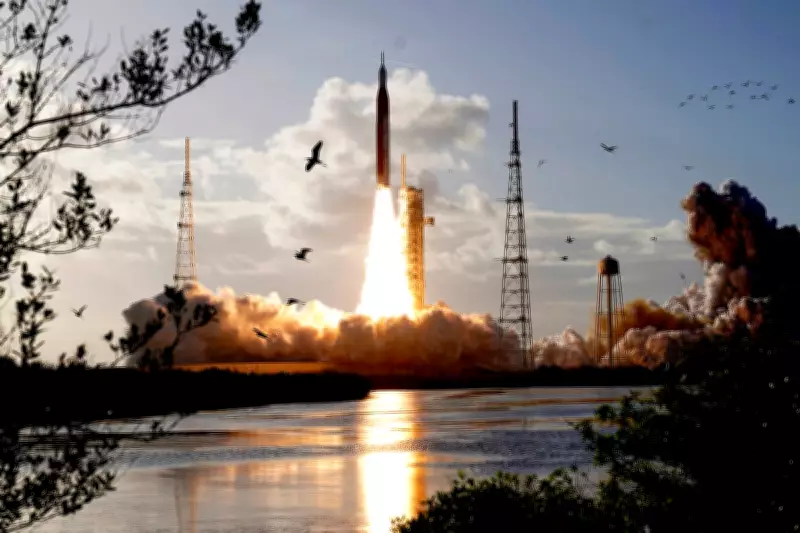
Artemis II Astronauts Marvel at Earth Views as Mission Heads to Moon
The four crew members of NASA's Artemis II mission have shared a "spectacular moment" as their spacecraft departed Earth's orbit, embarking on its final trajectory toward the far side of the Moon. During the mission's first public video conference, Commander Reid Wiseman vividly described the awe-inspiring sight as Orion moved away from our planet.
'Most Spectacular Moment' Pauses Crew in Their Tracks
"You can see the entire globe from pole to pole... It was the most spectacular moment and it paused all four of us in our tracks," Wiseman revealed. This marks the first crewed mission to lunar vicinity since Apollo 17 in 1972, representing a monumental step in human space exploration.
Following Wednesday evening's successful launch from Cape Canaveral in Florida, the astronauts spent approximately 25 hours circling Earth before Orion's systems received final approval. A flawless engine burn lasting five minutes and 55 seconds then propelled the spacecraft at thousands of kilometres per hour toward its lunar destination.

Historic Distance Record Within Reach
The Artemis II mission is poised to break the longstanding spaceflight distance record of approximately 248,000 miles, set by Apollo 13 astronauts in 1970. Orion will travel about 4,000 miles beyond the Moon during Monday's planned lunar flyby, sending the crew some 252,000 miles (406,000 kilometres) into space before returning to Earth.
Canadian astronaut Jeremy Hansen expressed how the crew felt "the power" of everyone who contributed to the mission, stating: "Humanity has once again shown what we are capable of, and it's your hopes for the future that carry us now on this journey around the Moon."
Mission Milestones and Future Implications
Key aspects of the ongoing mission include:
- The crew will witness a total solar eclipse on the mission's sixth day as Orion cruises beyond the Moon
- Although no lunar landing is planned for Artemis II, the mission paves the way for future surface missions
- The technology and experience gained directly support NASA's ambitions for crewed Mars exploration
- Safety protocols remain in place, including a potential 36-hour return trajectory if serious issues arise
This mission follows a two-month delay caused by technical challenges including hydrogen fuel leaks and clogged helium lines. NASA aims to return astronauts to the lunar surface by 2028, ahead of China's planned 2030 lunar landing.
The Artemis program represents a new chapter in space exploration, combining international cooperation with cutting-edge technology to expand humanity's presence beyond Earth orbit.