In a landmark achievement for space exploration, NASA's Artemis II mission reached its triumphant conclusion on Friday, 10 April 2026, as the Orion spacecraft safely splashed down in the Pacific Ocean off the coast of California. This event marked the end of a historic 10-day journey around the moon, showcasing significant advancements in human spaceflight capabilities.
A Successful Return to Earth
The Artemis II crew, comprising commander Reid Wiseman, pilot Victor Glover, and mission specialist Christina Koch from NASA, along with Jeremy Hansen from the Canadian Space Agency, landed without incident. Their return was monitored by teams on the ground and celebrated by spectators worldwide, highlighting the mission's global impact and the collaborative efforts between international space agencies.
Celebrations Across the Globe
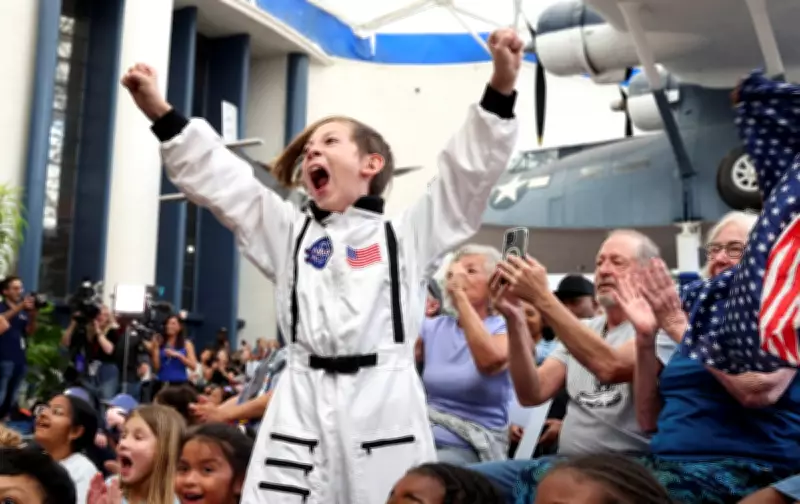
Excitement and emotion filled various locations as crowds gathered to witness the splashdown. At the Air and Space Museum in San Diego, California, onlookers cheered as the Orion capsule descended, with similar scenes unfolding at watch parties in Downey, California, and the Johnson Space Center in Houston, Texas. In Houston, one man was captured reacting emotionally, underscoring the profound significance of this moment for space enthusiasts and the general public alike.

Further afield, the event drew attention from the International Space Station (ISS), where crew members Chris Williams, Jack Hathaway, Jessica Meir, and European Space Agency astronaut Sophie Adenot attempted to view the re-entry from the ISS cupola. This cross-space observation emphasised the interconnected nature of modern space missions and the shared enthusiasm among astronauts.
Public Engagement and Media Coverage
The splashdown was not only a scientific milestone but also a cultural event, with live broadcasts captivating audiences in diverse settings. For instance, at Great American Ball Park in Cincinnati, Ohio, the outfield video board displayed the splashdown during a baseball game between the Los Angeles Angels and the Cincinnati Reds, blending sports and science in a unique public display.
In Canada, space enthusiasts at the University of Toronto hosted a watch party, reacting joyfully to the successful return. Meanwhile, along the beaches of Coronado, California, people waited eagerly for a glimpse of the spacecraft, demonstrating widespread public interest in space exploration. Children at the Air and Space Museum in San Diego watched with awe, inspiring the next generation of scientists and explorers.
Mission Highlights and Future Implications
The Artemis II mission, part of NASA's broader Artemis program aimed at returning humans to the moon, set a record for the longest crewed lunar flyby to date. The successful splashdown validates key technologies and procedures for future missions, including planned lunar landings. Photographs provided by NASA and agencies like Reuters and Getty Images documented every step, from the Orion's approach to the ocean surface to the celebratory crowds, ensuring this historic event is preserved for posterity.
As the crew recovers and data is analysed, this mission paves the way for further exploration, reinforcing international partnerships and advancing our understanding of space. The emotional and public responses captured across the globe underscore the enduring fascination with space travel and its potential to unite people in pursuit of scientific discovery.