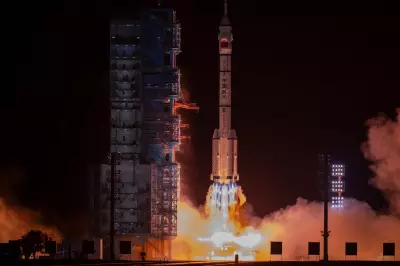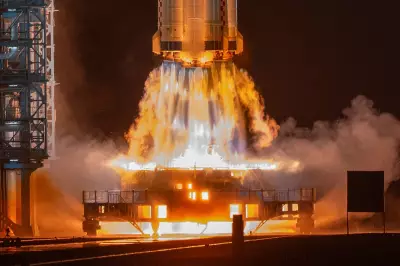
The Artemis II crew, comprising NASA astronauts Reid Wiseman, Victor Glover, Christina Koch, and Canadian astronaut Jeremy Hansen, is on the brink of the most hazardous phase of their historic lunar mission. The Orion spacecraft is set to plunge back to Earth, marking the culmination of a ten-day voyage that has taken humanity farther into space than ever before.
Historic Journey and Record-Breaking Distance
This mission represents the first instance in over five decades that humans have traveled such a vast distance into space and observed the lunar surface with the naked eye since the Apollo era. During their expedition, the astronauts ventured behind the Moon, soaring over its enigmatic far side, often termed the dark side due to its perpetual orientation away from Earth.
Notably, Artemis II has shattered a long-standing distance record established during Apollo 13 in 1970, when astronauts reached 248,655 miles from Earth. The current mission has surpassed this milestone by thousands of miles, setting a new benchmark for human spaceflight achievements.

Critical Re-Entry Timeline and Procedures
The Orion spacecraft is scheduled to streak through Earth's atmosphere at approximately 7.53pm ET on Friday, achieving blistering speeds of up to 25,000 miles per hour. It will then splash down roughly 13 minutes later in the Pacific Ocean off the coast of San Diego, California.
NASA has released an official timeline detailing the key events during this historic return:
- 7.33pm ET: Orion's crew module will separate from the service module, exposing its heat shield for atmospheric re-entry, where temperatures are expected to soar up to 3,000 degrees Fahrenheit.
- 7.37pm ET: The spacecraft will execute an 18-second crew module raise burn to establish the correct entry angle and align the heat shield for atmospheric collision.
- 7.53pm ET: Upon reaching 400,000 feet above Earth's surface, the crew may experience up to 3.9 Gs, marking first contact with the upper atmosphere and initiating a six-minute communications blackout.
- 8.03pm ET: At around 22,000 feet, parachutes will deploy to slow and stabilize the capsule as it approaches splashdown.
- 8.04pm ET: Initial parachutes will release at approximately 6,000 feet, with three main parachutes deploying to reduce Orion's speed to less than 136 mph.
- 8.07pm ET: Slowing to 20 mph, Orion will complete its splashdown in the Pacific, concluding a monumental 694,481-mile journey.
Final Preparations and Course Adjustment
In preparation for re-entry, the Orion spacecraft successfully completed its final burn on Friday afternoon at 2.53pm ET. The capsule ignited its thrusters for eight seconds, altering velocity by 4.2 feet-per-second and ensuring a safe trajectory into the Pacific Ocean at the designated time.
This mission not only advances human exploration but also sets the stage for future lunar endeavors, demonstrating NASA's capabilities in deep space travel and re-entry technologies.