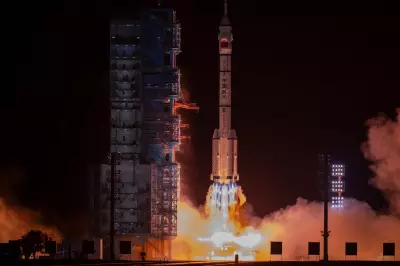
Artemis II Astronauts Make History by Breaking Apollo 13's Distance Record
In a monumental achievement for human space exploration, NASA's Artemis II astronauts have officially traveled further from Earth than any humans in history. The four-person crew aboard the Orion spacecraft has shattered the long-standing distance record previously held by the Apollo 13 mission.
Surpassing a Legendary Milestone
The Artemis II crew surpassed Apollo 13's record distance of 248,655 miles (400,171 kilometers) at approximately 2 p.m. EST/7 p.m. BST on Monday. This historic moment occurred as the astronauts prepared for the highlight of their mission: a critical flyby of the moon. The record-breaking achievement marks a significant milestone in NASA's ongoing efforts to return humans to lunar exploration.
Maximum Distance and Mission Details
The spacecraft is expected to reach its maximum distance from Earth at 252,760 miles, scheduled for 7:07 p.m. EST/1:07 a.m. BST. This represents an increase of more than 4,100 miles (6,600 kilometers) beyond Apollo 13's previous record. The Artemis II mission is utilizing the same "free-turn trajectory" maneuver that Apollo 13 employed after its famous oxygen tank explosion, which famously forced the crew to abandon their moon landing plans with the iconic transmission, "Houston, we've had a problem."

Historical Context and Significance
The breaking of this record comes more than five decades after Apollo 13 set the original benchmark in April 1970. While Apollo 13's mission became a dramatic survival story following technical failures, Artemis II represents a planned, successful advancement in space travel technology and human endurance. This achievement demonstrates NASA's continued capability to push the boundaries of human space exploration beyond previous limits.
The Artemis program aims to establish sustainable lunar exploration as a stepping stone for future missions to Mars. The successful distance record-breaking during Artemis II provides crucial data and experience for these ambitious long-duration spaceflight objectives. As the mission continues, NASA engineers and scientists will be monitoring the crew's health and spacecraft performance at these unprecedented distances from Earth.