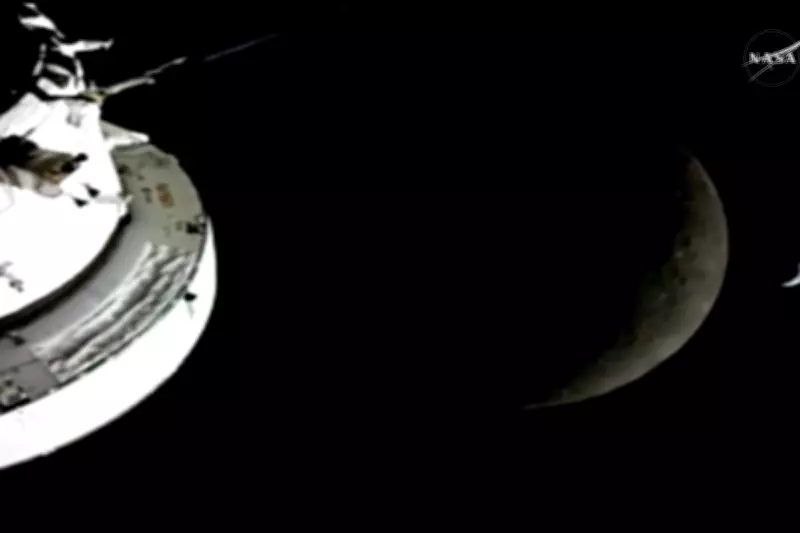
NASA's Artemis II moon mission has successfully completed a lunar flyby, propelling its crew to the farthest distance from Earth ever achieved by human beings. Astronauts Christina Koch, Victor Glover, and Jeremy Hansen reestablished vital communication with Mission Control after enduring a 41-minute communications blackout, during which they expressed profound awe at the celestial sights unfolding before them.
Unprecedented Views from Deep Space
The spacecraft, named Integrity, has now moved away from the moon, but not before the crew was treated to a breathtaking solar eclipse from their unique vantage point in deep space. This rare event provided the astronauts with an "unreal" perspective, as described by the team, highlighting the extraordinary nature of their journey.
Stellar Observations and Lunar Phenomena
During the flyby, the astronauts observed a stunning eclipse, the sun's radiant corona, and the moon illuminated by the soft glow of "Earthshine." Additionally, they reported vivid views of stars and planets, enhancing their cosmic experience. In a remarkable discovery, the crew witnessed at least five meteor impacts on the lunar surface, which sparked significant excitement among the science team at Mission Control, offering valuable insights into lunar geology.

The Artemis II mission continues to push the boundaries of human space exploration, with this latest achievement marking a historic milestone in NASA's efforts to return humans to the moon and beyond. The astronauts' observations and data collected during this phase are expected to contribute to future missions and deepen our understanding of space phenomena.