Artemis II Astronauts Break Distance Record While Enjoying Gourmet Space Meals
NASA's Artemis II moon mission has successfully achieved a monumental milestone, circling the moon and setting a new record for the farthest distance any human has ever traveled from Earth. This historic journey marks a significant leap in space exploration, with the crew navigating the vast expanse beyond our planet's immediate vicinity.
Communication Restored After Tense Blackout Period
During the mission, a critical moment occurred when communications with Mission Control were lost for approximately 41 minutes as the spacecraft passed behind the moon. Mission specialist Christina Koch played a pivotal role in re-establishing contact, expressing profound relief upon reconnecting with Earth. This blackout period is a standard but nerve-wracking phase of lunar missions, highlighting the challenges of deep-space communication.
Diverse Midday Menu Fuels Astronauts During Support Roles
As the mission progressed, the crew's midday meal was revealed to be a surprisingly diverse and nutritious spread. The menu included:

- Beef ravioli, providing a hearty and protein-rich option
- Salmon, offering essential omega-3 fatty acids
- Butternut squash, a source of vitamins and fiber
- Desserts such as cherry blueberry cobbler for a sweet treat
Pilot Victor Glover and Christina Koch were specifically encouraged to eat during this period, as they were in "support roles" with available downtime. This strategic meal timing ensures astronauts maintain energy levels and mental sharpness during less intensive phases of the mission.
Technical Adjustments and Crew Collaboration
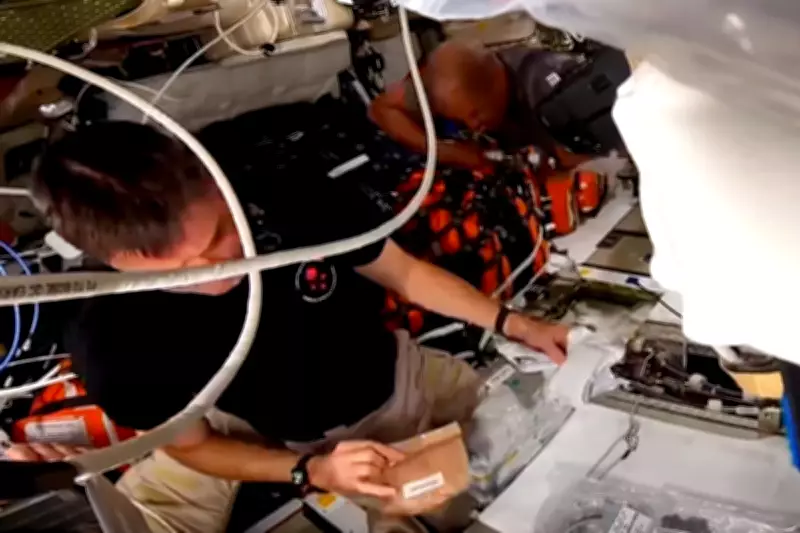
Earlier in the mission, the crew engaged in detailed discussions with Mission Control to address technical issues. They explored methods to reduce bright light entering through a spacecraft window and tackle condensation on the glass. These adjustments are crucial for maintaining optimal visibility and comfort during the long-duration flight, demonstrating the continuous problem-solving required in space missions.
The Artemis II mission continues to provide valuable insights into human endurance and operational logistics in deep space. As astronauts like Koch and Glover push the boundaries of exploration, their experiences—from managing communications to enjoying carefully planned meals—contribute to the growing body of knowledge for future lunar and Martian missions.