Artemis II Astronauts Adapt Beauty and Hygiene Routines for Lunar Mission
As NASA's Artemis II spacecraft blasts off towards the moon with astronauts Reid Wiseman, Victor Glover, Christina Koch, and Jeremy Hansen onboard, the crew faces the monumental task of settling into their new lives in space. While their primary mission involves gathering crucial information about the moon, the four astronauts must also navigate the intricate details of daily life while traveling up to 270,000 miles from Earth inside the Orion capsule. For female astronauts in particular, this journey presents unique challenges and additional needs that require careful adaptation to the microgravity environment.
The Microgravity Effect on Personal Care
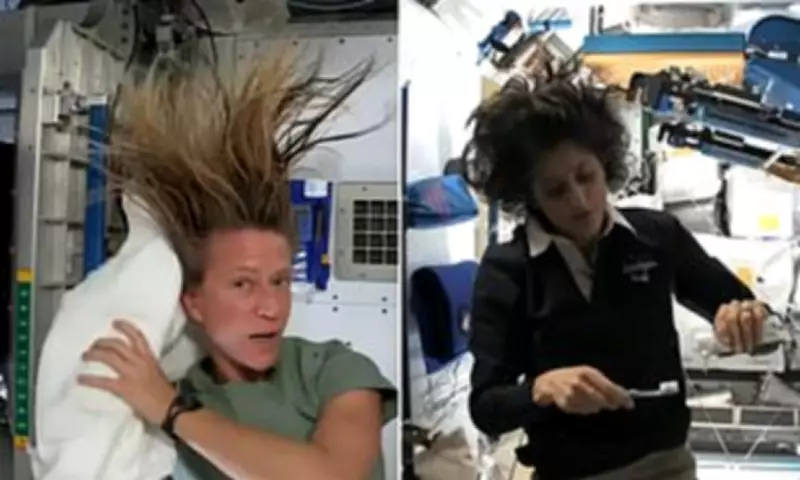
In the absence of gravity, water behaves unpredictably, forming floating, sticky blobs instead of flowing downward. This phenomenon complicates even the most basic hygiene tasks. Microgravity also causes long hair to float freely in all directions, defying traditional styling methods. To mitigate health and safety risks, astronauts must swap powders and perfumes for creamy alternatives, as airborne particles could damage sensitive lungs or critical machinery. A minimalist cleansing routine becomes essential due to the precious and limited water supply available on board.
Commercial astronaut Kellie Gerardi previously explained to Glamour magazine that NASA provides each astronaut with a personalised hygiene kit. "NASA will provide a personal hygiene kit for every astronaut, and each astronaut is allowed to personalise this based on their preferences - for example, like a certain brand of toothpaste," she said. Gerardi added, "So whilst you rarely see an astronaut applying a full face in space as you would here on earth, certainly astronauts take things up that make them feel less washed out."

Innovative Solutions for Hair and Skincare
Luxurious showers are a distant memory in space, replaced by humble wash rags for quick cleanses. Hair washing involves a meticulous process using foil-and-plastic water bags with rinseless shampoos, a task that can consume 20 to 25 minutes. For shaving, NASA astronaut Serena Auñón-Chancellor notes that only a generic razor and unscented shaving cream are viable options, with a "conservative" amount required for lengthy missions.
Auñón-Chancellor shared her beauty routine with Marie Claire, stating, "I usually bring eyeliner, eyeshadow and maybe an eyebrow pencil, but I found that it's almost more trouble than it's worth to put it on in space. Other female astronauts wear makeup daily though." She also observed a surprising benefit of space travel, remarking, "I swear my skin looks younger in space because there's a massive fluid shift that occurs in orbit. When I do video conferences with people on Earth, they even comment on my skin looking younger."
Historical Evolution of Women's Needs in Space
Our understanding of female astronauts' requirements has evolved significantly since Valentina Tereshkova became the first woman in space in 1963. When NASA welcomed its first female astronauts in 1978, the agency had to adapt equipment, including Maximum Absorbency Garments (MAGs), clothing, parachutes, and helmets. Remarkably, NASA even designed a makeup kit for female astronauts that year, containing mascara, lip gloss, and blusher. The agency later reflected on this, writing in 2018, "The engineers at NASA, in their infinite wisdom, decided that women astronauts would want makeup - so they designed a makeup kit. You can just imagine the discussions amongst the predominantly male engineers about what should go in a makeup kit."
Retired NASA astronaut Rhea Sheddon, part of the 1978 cohort, explained on her website, "If there would be pictures taken of me from space, I didn't want to fade into the background so I requested some basic items. All agreed that a small kit with items of our choosing would be a 'preference item,' that is, stowed only if requested. It was interesting to me that I wasn’t the sole space traveler whose in-flight pictures showed a bit of lipstick and blush."

Additional Challenges and Adaptations
Female astronauts often opt for loose hairstyles to promote better aeration and reduce risks of clogged follicles, dandruff, or bacterial growth. A notable example is NASA astronaut Sunita "Suni" Williams, who spent 288 days in space and returned with her chestnut hair turned white, likely due to adrenaline and cortisol affecting melanin production.
European Space Agency astronaut Samantha Cristoforetti demonstrated a daily skincare routine during her 2015 Mission Futura, using a special soap pouch where solution floats on the skin due to surface tension. Nail care requires astronauts to cut their own nails and vacuum the debris to prevent it from floating around the station. Even brushing teeth becomes complex, as astronauts must either swallow toothpaste or spit it into a towel due to the lack of gravity.
Sally Ride, the first American woman in space, highlighted other beauty-related issues, including tampon supplies and the need for "more female-friendly lotions and potions" to replace items like British Sterling deodorant and men's hair tonic. Kathryn Sullivan, the first American woman to perform a spacewalk, recalled a humorous incident where engineers provided an excessive supply of tampons, prompting Ride to laugh and clarify that it was "really too much."
As Artemis II continues its journey, astronauts like Christina Koch and her colleagues exemplify how innovation and personal adaptation are crucial for thriving in the extreme environment of space, blending scientific mission with the human need for comfort and routine.