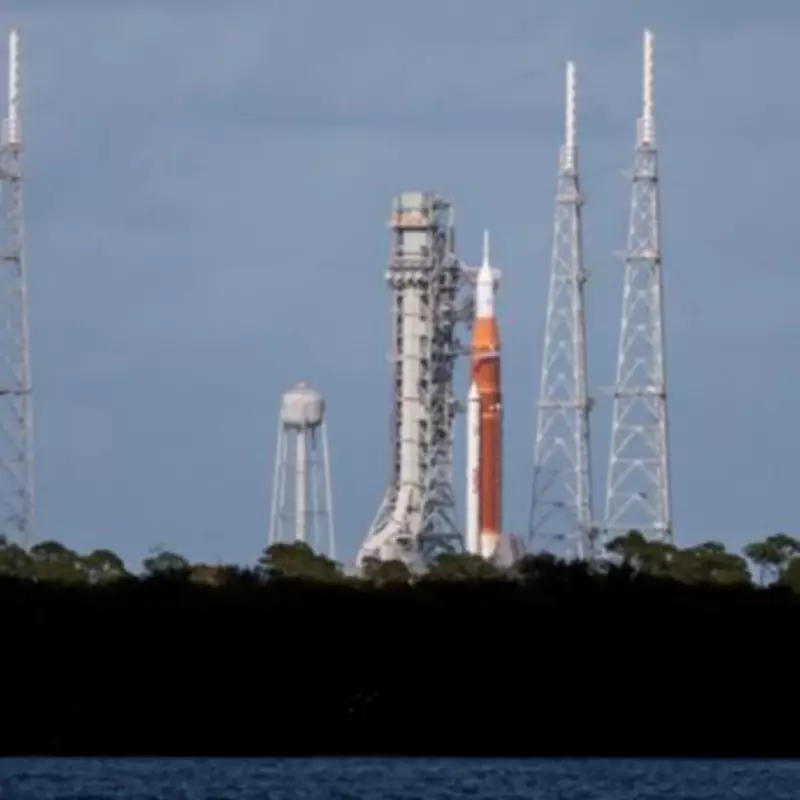
NASA's Artemis 2 Launch: Moon Mission Ready for Liftoff in Minutes
The countdown to NASA's Artemis 2 launch is intensifying, with the space agency confirming readiness for a historic return to the Moon. Liftoff is scheduled for approximately 6:24 PM EDT (11:24 PM BST) from Kennedy Space Center in Cape Canaveral, Florida. The mission marks humanity's first crewed lunar journey in over five decades, carrying four astronauts into deep space aboard the Space Launch System rocket and Orion spacecraft.
Technical Issues Resolved and Weather Conditions Favorable
NASA has addressed a minor battery concern related to the Launch Abort System, confirming it will not impact the launch. Engineers identified a higher-than-expected temperature on a battery, but attributed it to an instrumentation glitch. Additionally, an earlier issue with the flight termination system range has been fully resolved, with all systems now operational. Meteorologists have upgraded weather conditions to a "90 per cent go" rating, up from 80 per cent, indicating minimal environmental constraints for the launch window.
Astronauts Prepared and Final Checks Underway
The crew, consisting of NASA astronauts Reid Wiseman, Victor Glover, Christina Koch, and Canadian Space Agency astronaut Jeremy Hansen, is securely strapped inside the Orion capsule. Final communications checks with Mission Control have been completed, with all systems reporting normal. The astronauts underwent a traditional farewell with family members before boarding the capsule, following quarantine protocols to ensure health and safety. They are equipped with custom orange spacesuits designed for launch, reentry, and emergency scenarios, capable of sustaining life for up to six days if needed.

Mission Trajectory and Historical Significance
Artemis 2 will follow a free-return trajectory around the Moon, leveraging gravitational forces to minimize fuel usage. The astronauts will spend initial hours in Earth orbit practicing docking maneuvers before embarking on a journey that will take them 5,000 miles beyond the lunar surface, surpassing the distance record set by Apollo 13. The mission is set to conclude with a splashdown after approximately nine days, symbolizing a new era in space exploration. Launch Complex 39B, steeped in history from the Apollo era, serves as the departure point, underscoring the continuity of human spaceflight ambitions.
Global Attention and Support
The launch has garnered international interest, with messages of support from figures such as King Charles III, who emphasized environmental stewardship in space exploration. In the United States, political leaders have hailed the mission as a testament to national pioneering spirit. Skywatchers in Florida and southern Georgia may witness the launch visibly, adding to the public engagement surrounding this monumental event. As the final minutes tick down, NASA teams remain vigilant, ensuring all parameters align for a successful and safe departure into the cosmos.