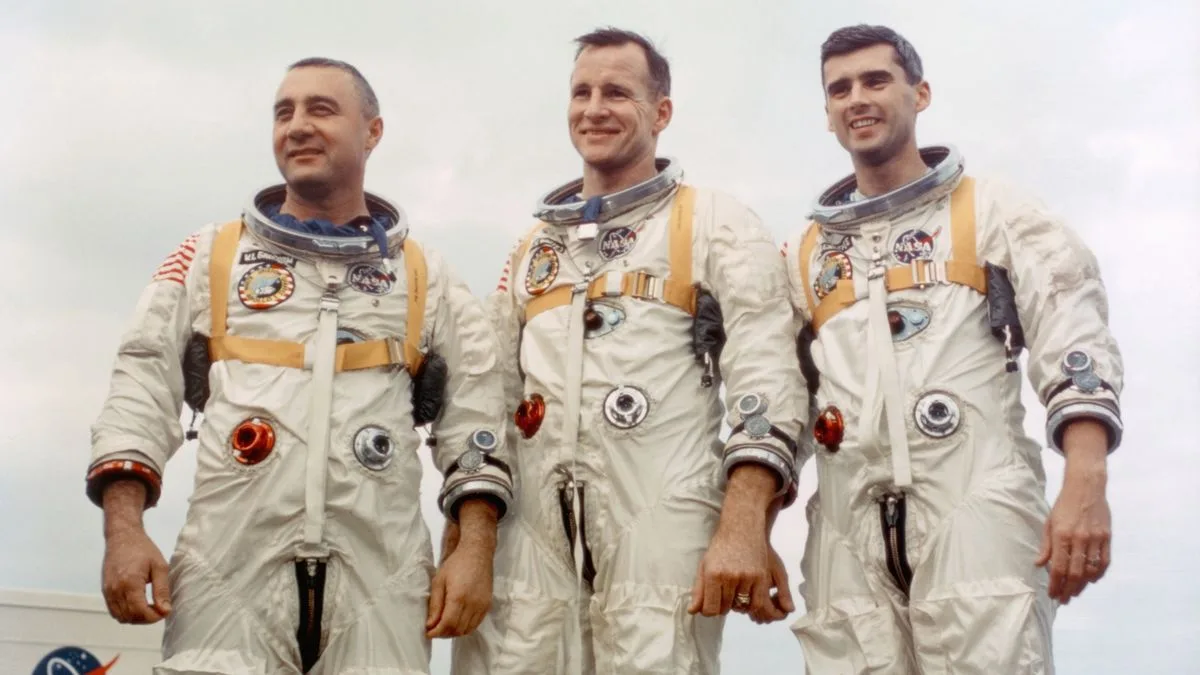
On 27 January 1967, the three astronauts of the Apollo 1 mission—Command Pilot Virgil 'Gus' Grissom, Senior Pilot Edward White and Pilot Roger B. Chaffee—entered the command module at Cape Kennedy Air Force Station Launch Complex 34 for a 'plugs out test', a rehearsal for the planned 21 February launch. Within minutes, a fire broke out, killing all three men. Their final words, heard over the radio, were: 'We've got a fire in the crew deck.'
The Apollo 1 mission was intended to be a low Earth orbit test of the command and service module, part of the US effort to land a man on the moon by the end of the 1960s. However, concerns had been raised during training about the spacecraft's safety, particularly the presence of flammable nylon materials and the decision to use a 100 percent oxygen atmosphere, which made the environment highly combustible. The inwardly opening hatch without explosive bolts further hindered escape.
From the moment the crew entered the module, problems arose. A foul odour from the oxygen tank was noted, followed by an alarm indicating high oxygen flow. Communication difficulties due to static led one astronaut to remark: 'How are we going to get to the moon if we can’t talk between two or three buildings?' Despite these issues, the test proceeded until the fire was reported.

The emergency escape procedure required a minimum of 90 seconds to open the hatch, but the fire spread so rapidly that the crew had no chance. The tragedy highlighted the pressure of President John F. Kennedy's deadline for a moon landing, which some experts believe led NASA and contractor North American Aviation to cut corners on safety. The Apollo 1 fire remains one of the darkest moments in space exploration history.