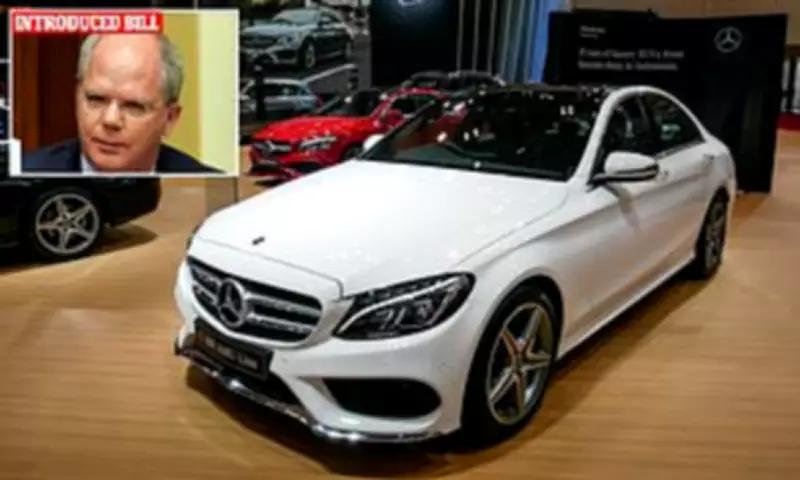
Mercedes-Benz is at risk of being banned from the United States market, potentially costing tens of thousands of jobs, as American lawmakers move to restrict foreign influence in the automotive sector. The proposed legislation, HR 7389, known as the Motor Vehicle Modernization Act of 2026, targets companies with significant ownership by foreign-adversary governments.
Proposed Legislation Targets Chinese Stake
Introduced by Representative Brett Guthrie in February, the bill would prohibit the sale or production of vehicles by any auto group where a foreign-adversary government entity holds more than a 15 percent stake. This includes entities from China, Russia, and North Korea. Approximately 20 percent of Mercedes-Benz is tied to Chinese interests, making it a primary target.
Key Shareholders
The German luxury carmaker's largest investor is BAIC, a state-owned Chinese automaker, which owns a 9.98 percent share. The second largest shareholder is Chinese billionaire Li Shufu, who holds a 9.69 percent stake, according to CNBC. Combined, these stakes exceed the 15 percent threshold proposed in the bill.

Impact on American Jobs and Operations
If the legislation passes without exemptions for Mercedes-Benz, the company could lose its ability to operate in the US, jeopardizing more than 10,000 jobs. Mercedes-Benz currently operates two assembly plants in the US: one in Tuscaloosa, Alabama, and another in Charleston, South Carolina. Since opening in 1997, the Alabama facility has produced over five million vehicles, while the South Carolina plant has manufactured more than 450,000 vans since 2006.
Company Response
A Mercedes-Benz spokesperson told Bloomberg that the company will continue to work with lawmakers to ensure any new legislation allows them to continue serving their US customer base. The Daily Mail has reached out to Mercedes-Benz and the Energy and Commerce Committee for comment.
Potential Exceptions and Retroactive Application
The bill does allow exceptions for Chinese companies that are not state-backed. However, two sources familiar with the legislation told CNBC that, as currently written, the bill would effectively ban Mercedes-Benz. A former automotive policy advisor stated, 'The language is unambiguous.' If approved, the bill would be retroactive to January 1, 2026, and impose a five-year ban.
Broader Context
The move is part of a wider effort by the US to control the influence of Chinese automakers in the American market. Mercedes-Benz is one of the best-selling car brands in the US, and its potential ban could significantly impact the automotive industry.