Starmer Pledges Government Will 'Go Further' Following Landmark US Social Media Addiction Ruling
Prime Minister Sir Keir Starmer has declared that the UK Government must "go further" in regulating social media platforms, following a potentially precedent-setting US court ruling. The Prime Minister emphasised that more needs to be done to protect children from harmful online features.
Landmark US Trial Sets Precedent
In a significant legal development on Wednesday in Los Angeles, a jury found that Google, the owner of YouTube, and Meta, which operates Facebook, Instagram, and WhatsApp, had deliberately designed their platforms to hook young users without adequate regard for their wellbeing. The lawsuit was initiated by a 20-year-old woman who argued that a childhood addiction to social media had severely exacerbated her mental health issues. This verdict could influence thousands of similar cases accusing social media firms of causing harm to young people.
The LA jury recommended that the plaintiff be awarded $6 million, approximately £4.4 million, in damages. Both Meta and Google have expressed disagreement with the verdict and announced plans to appeal. Notably, Snapchat and TikTok were also named as defendants in the lawsuit but settled before the trial commenced.

Starmer's Firm Stance on Regulation
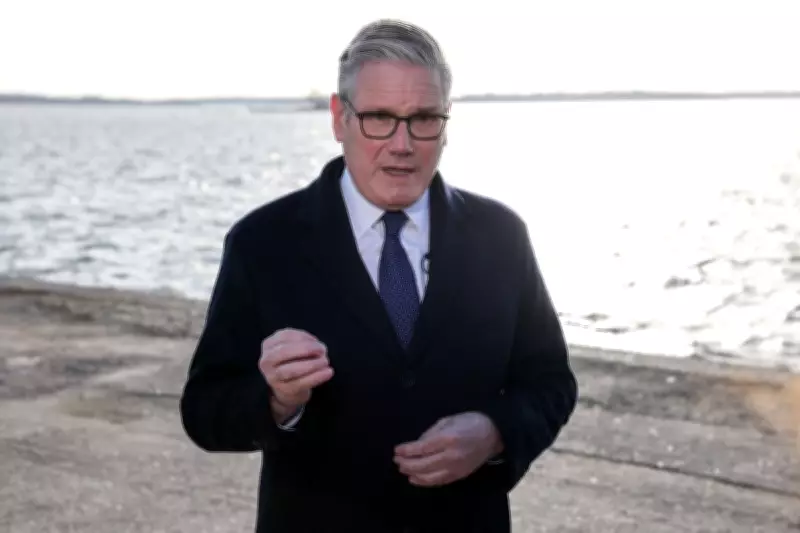
Speaking to the media in Helsinki, Finland, on Thursday, Sir Keir Starmer was asked if the trial indicated a shift in public mood, with growing expectations for more aggressive regulation of social media platforms. He responded unequivocally, stating, "I think it does, and obviously we’ll study that ruling very carefully, but I’m absolutely clear that we need to go further."
The Prime Minister underscored the urgency of the situation, adding, "The status quo isn’t good enough. We need to do more to protect children. That’s why we’re consulting about issues such as banning social media for under-16s. I’m very keen that we do more on addictive features within social media."
UK Government Considers Under-16 Social Media Ban
The UK Government is currently weighing the implementation of a blanket ban on social media for individuals under the age of 16, following a similar prohibition enacted in Australia. Ministers are actively consulting on this plan, while hundreds of teenagers are participating in a trial involving social media bans, time limits, and curfews to assess the impact on wellbeing.
In a parallel development, peers in the House of Lords supported a social media ban for under-16s for the second time on Wednesday. Lord Nash, who proposed the age limit as part of the Children’s Wellbeing and Schools Bill, criticised "techies" for taking a "cavalier approach" to content that is damaging to children.
Sir Keir highlighted the Government's preparedness, stating, "We’ve already taken the powers so that when we get to the end of the consultation, we don’t have to wait years to implement this. But I want to be really clear, it’s not if things are going to change, things are going to change. The question is, how much and what are we going to do?"
Parliamentary Context and Industry Response
Earlier in March, MPs voted against an amendment to the Children’s Wellbeing and Schools Bill that had been backed by peers, which would have introduced a social media ban for under-16s. This highlights the ongoing legislative debate surrounding child protection online.
The California decision came just one day after a New Mexico jury found Meta liable under state consumer protection law for misleading the public about the safety of its platforms and failing to protect children. In response to the rulings, a Meta spokesperson argued that "teen mental health is profoundly complex and cannot be linked to a single app," while Google contended that the verdict misunderstood YouTube, describing it as "a responsibly built streaming platform, not a social media site."
As the UK Government moves forward with its consultations and potential regulatory actions, the global spotlight on social media addiction and its impact on youth mental health continues to intensify, prompting calls for robust and immediate intervention.