FCC Chair Calls for Patriotic Programming Ahead of America's 250th Birthday
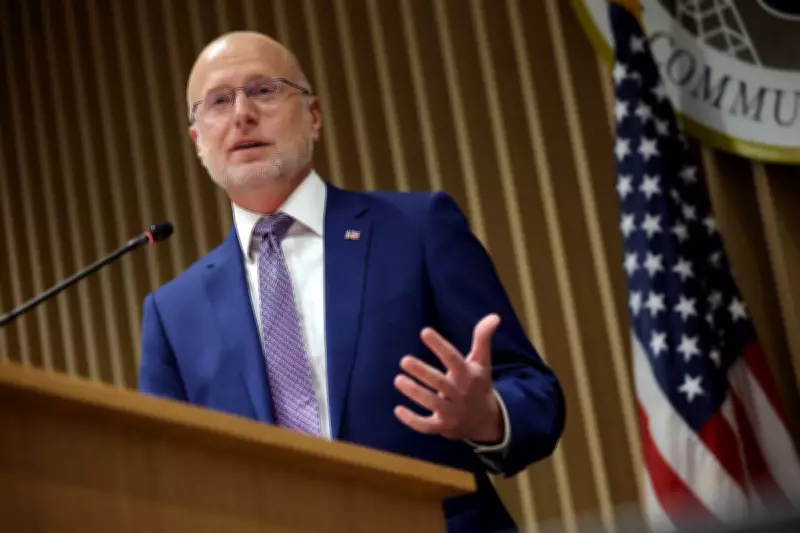
Brendan Carr, the chairman of the Federal Communications Commission, has issued a direct appeal to broadcast networks, urging them to air "patriotic, pro-America" content in the lead-up to the nation's 250th birthday celebration this July. This call comes amidst heightened tensions between the Trump administration and prominent late-night television hosts, including Stephen Colbert and Jimmy Kimmel, who have publicly clashed with the FCC official.
The Pledge America Campaign Proposal
In a formal statement released on Friday, Carr introduced the Pledge America Campaign. He requested that broadcasters voluntarily commit to programming that "celebrates the American journey and inspires its citizens by highlighting the historic accomplishments of this great nation from our founding through the Trump Administration today." The White House has established a dedicated task force to coordinate festivities for the upcoming 250th anniversary of American independence on July 4th.
Carr provided specific examples of the type of content he envisions, describing it as a "non-partisan celebration." His suggestions include airing special documentaries focused on American history, commencing each broadcast day with the recitation of the Pledge of Allegiance, and featuring music from iconic American composers. The statement explicitly named John Philip Sousa, Aaron Copland, Duke Ellington, and George Gershwin as exemplary artists for such programming.

Rationale and Immediate Pushback
"I am calling on broadcasters to pledge to provide programming that promotes civic education, national pride, and our shared history," Carr declared. He argued that this initiative is critically needed, citing surveys that indicate a rapid decline in civics education across the country. He noted that educational classics like Schoolhouse Rock! are now largely confined to online archives.
"Broadcasters are uniquely positioned to help address these concerning developments by providing programming that celebrates the remarkable story of American Independence while also tailoring it to the specific needs of their local communities, in furtherance of their public interest obligations," Carr added.
However, the proposal was swiftly criticized by Anna Gomez, the sole Democratic commissioner on the FCC. In a post on social media platform X, Gomez rebuked the campaign, stating, "Nothing is more American than defending our constitutional rights against those who would erode our civil liberties. If broadcasters choose to participate in this FCC campaign, they can do so by defending their First Amendment rights and refusing government interference."
Context of Controversy with Late-Night Hosts
Carr's public profile has been elevated recently due to high-profile disputes with late-night television hosts. Many Americans may have been unfamiliar with the FCC chairman prior to these controversies. Critics, including the hosts, have accused Carr and the broader Trump administration of infringing upon First Amendment rights by attempting to influence broadcast content.
In September, ABC temporarily suspended Jimmy Kimmel's late-night program following comments the host made about the fatal shooting of conservative activist Charlie Kirk. This decision came after Carr publicly pressured the network to "take action" against Kimmel. Upon his return, Kimmel directly challenged Carr, referencing a 2022 social media post from the FCC official that praised political satire as "one of the oldest and most important forms of free speech."
More recently, Stephen Colbert targeted Carr on The Late Show. Colbert claimed that CBS lawyers prevented him from broadcasting an interview with James Talarico, a Democratic candidate for the U.S. Senate in Texas, due to concerns about the FCC's equal-time rule. This rule generally requires broadcasters to offer comparable airtime to opposing political candidates in a race.

Debate Over FCC Rules and Exemptions
While talk shows have traditionally been exempt from the equal-time rule, the FCC issued a warning in January clarifying that not all late-night and daytime programs automatically qualify for this exemption. "Carr said he was thinking about dropping the exception for talk shows because he said that some of them were motivated by partisan purposes," Colbert stated during his Monday broadcast. "Well, sir, you're chairman of the FCC. So FCC you. Because I think you are motivated by partisan purposes yourself."
CBS has denied blocking the Talarico interview, explaining, "The show was provided legal guidance that the broadcast could trigger the FCC equal-time rule for two other candidates." It is important to note that FCC regulations governing broadcast content do not apply to digital platforms. The video of the interview was subsequently uploaded to The Late Show's YouTube channel, where it has amassed over 8.3 million views.
Carr's Defense and Broader Narrative
In a recent interview on Fox News, Carr defended his agency's stance and broader philosophy. Speaking to host Laura Ingraham, he asserted, "The days that these legacy media broadcasters get to decide what we can say, what we can think, who we can vote for, are over. I think President Trump played a key role in just smashing the facade that they still get to decide the narrative."
This statement underscores the ideological battle at the heart of the controversy, framing the push for patriotic programming as part of a larger effort to challenge the perceived influence of traditional media outlets. The debate continues to hinge on the delicate balance between promoting national unity and upholding the constitutional protections for free speech and a free press.