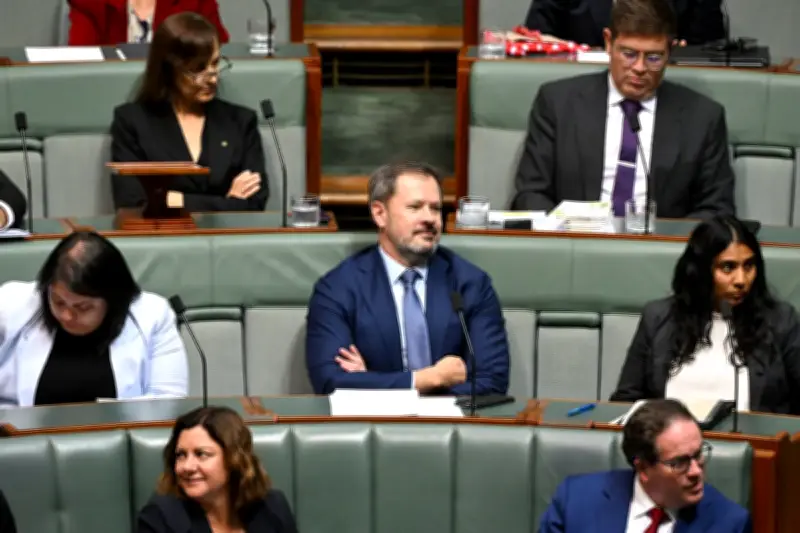
Labor MP Ed Husic has warned that any moves to weaken copyright law to benefit artificial intelligence companies would be “going against the ethos” of the Labor Party and undermine the principle of “a fair day’s pay for a fair day’s work”. Speaking ahead of Prime Minister Anthony Albanese’s major speech on AI, Husic urged colleagues to impose stricter rules on big tech firms or face failure.
Husic: Self-regulation with tech is 'doomed to failure'
Husic, a long-time advocate for stronger AI policy intervention, told Sky News on Tuesday that companies like OpenAI and Anthropic should not be left to self-regulate. “If we were to wait for social licence with industry, we wouldn’t get emissions reduction. Governments sometimes have to step in,” he said. “We’ve tried this. Going down the path of social licence with tech is a path that’s sadly doomed to failure, because we tried self-regulation for a couple of decades and found out that it didn’t work.”
The Media Entertainment & Arts Alliance (MEAA), the union for journalists, artists and creatives, has called on the government to enact tougher copyright rules to prevent creative works being used to train AI models without consent or compensation.
Prime Minister's speech on AI and copyright
Albanese is set to deliver a highly anticipated speech in Sydney on Wednesday addressing concerns around social licence, policy guardrails for AI, datacentres and Australian intellectual property. However, he is not expected to detail progress on long-awaited copyright reforms to protect creative industries, according to sources. Labor has ruled out giving a text and data mining exemption for AI firms to train their large language models on Australian content without compensation, but cabinet discussions continue. Guardian Australia understands there is a diversity of views among senior ministers following lobbying from big tech and an industry proposal for special copyright exemptions.
Documents released under freedom of information laws reveal Treasury officials warned Treasurer Jim Chalmers that Anthropic would complain copyright rules were “impeding the development of datacentres” in Australia, ahead of a meeting with CEO Dario Amodei.
Husic: 'A fair day's pay for a fair day's work'
Husic, the former minister for industry, strongly opposed any copyright changes. “I’m from the Labor side of politics. We’ve grown up with the notion of a fair day’s pay for a fair day’s work – that people should be remunerated fairly for the labour, the effort that they provide. If you’re a Labor person arguing to water down the Copyright Act, you’re actually going against the ethos of your own party,” he said.
When asked if he thought colleagues were doing that, Husic replied: “Obviously, there’s a debate that’s going on behind the scenes. Clearly, there’s elements of this being teased out. Otherwise we wouldn’t be getting this type of media speculation about what might happen.” He added: “These companies – Anthropic, OpenAI – these are going to be the biggest or are already the biggest firms on the planet. Their executives get paid for their work, and if they’re expecting others to hand over their work without being paid, that is just a no-go zone and should be resisted.”
Growing scrutiny on AI and datacentres
Albanese’s speech comes amid increasing scrutiny of AI and datacentres, particularly their energy-intensive nature and the land, capital and workforce requirements. Labor minister Sam Rae and backbencher Alice Jordan-Baird released a statement last week raising concerns about a massive new datacentre development at Plumpton in Melbourne’s outer west, backing community worries about impacts on local energy, water, traffic and noise. “Our community deserves clear answers, genuine consultation and transparent planning processes … The west cannot simply become the destination for infrastructure that places additional strain on resources while delivering little in return,” they said.
MEAA calls for long-term solutions
The MEAA urged the government to outline plans on copyright and announce “long-term solutions” to protect creative workers from exploitation by AI companies. “The benefits of AI cannot be captured by the same global entertainment and tech giants that already profit from our members’ work – it must be the workers who benefit,” a MEAA spokesperson said. The union called for rules ensuring equitable remuneration, guaranteeing workers like authors and musicians a “guaranteed, inalienable right to be paid” when their work is used or reproduced by AI systems, and explicitly barring AI firms from training models on creative works without consent and payment to the original creator.