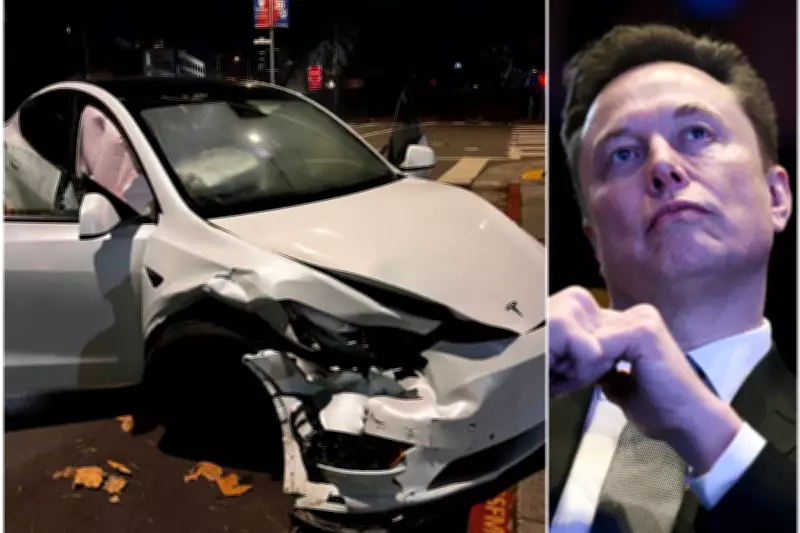
AI Scientist Blames 'Dangerously Defective' Tesla Model Y for Career-Derailing Brain Injury
An internationally recognized artificial intelligence scientist has filed a product liability lawsuit against Tesla, claiming that the "dangerously defective" safety systems in her Model Y caused a crash that left her with a traumatic brain injury and permanently derailed her career trajectory.
Elite Career Shattered by Cognitive Impairment
According to court documents reviewed by The Independent, Samaneh Movassaghi, a 39-year-old San Francisco resident specializing in machine learning and autonomous systems, was among a "small fraction of world-leading AI experts" with extraordinary lifetime earning potential and research impact before the December 2023 crash.
The 23-page complaint states that Movassaghi's work required "sustained high-precision executive functioning, rapid-cycle reasoning and uninterrupted cognitive stamina" – capabilities that have been severely compromised by her injuries. Even mild neurological impairment can cause "catastrophic, career-ending consequences" in advanced AI innovation, the lawsuit emphasizes.

"The injuries caused by Movassaghi's defective Model Y have severely disrupted her professional path, derailed significant ongoing research activities, and impaired her ability to function at the elite cognitive level required in her field," the complaint asserts.
Tesla's Controversial Sensor Decisions Under Scrutiny
The lawsuit places particular blame on Tesla's decision to eliminate radar sensors in 2021 and ultrasonic sensors in 2022, opting instead for a camera-only approach to advanced driver assistance systems. Despite Elon Musk and Tesla touting their vehicles' ability to "see" pedestrians, cyclists and other vehicles, the complaint alleges this was a "deliberate and reckless decision."
"Tesla's internal data showed the new setup was unreliable, unvalidated, and capable of catastrophic failure during a foreseeable crash event," the documents state. "Tesla chose speed over safety, public perception over truth, and profits over human lives."
Attorney Dominic Flamiano, representing Movassaghi, told The Independent that a "belt-and-suspenders" system with built-in redundancy is crucial for collision-avoidance. Had Tesla maintained multiple sensor types, the crash that injured his client "might never have happened," he argued.
The Night of the Crash: Camera-Only System Failed
On December 4, 2023, around 11:30 p.m., Movassaghi was driving her white Tesla Model Y through an intersection in San Francisco's SoMa neighborhood when a black Volkswagen Passat ran a red light and T-boned her vehicle. According to the complaint, the Tesla was traveling at approximately 40 mph when the collision occurred.
Flamiano described how a building on one corner of the intersection rendered the Tesla's cameras useless, while radar could have detected objects through walls and solid objects. Evidence suggests the camera-only collision avoidance systems were ineffective, with Automatic Emergency Braking not activating until after the Tesla had been broadsided.
Adding to the injuries, the complaint alleges the steering wheel airbag defectively deployed, "exploding in Movassaghi's face and covering her in microscopic toxic particles."
Lasting Effects and Growing Legal Challenges
More than two years after the crash, Movassaghi continues to experience neurological, physiological and psychological effects including impaired concentration, reduced cognitive stamina, emotional trauma, sleep disruption, anxiety, irritability, and difficulty performing complex reasoning tasks. Her earnings have taken a major hit and career opportunities have stalled, according to the lawsuit.
This case joins a growing list of legal actions against Tesla. In December, a Utah man sued after his family was killed when their Tesla Model X crossed a center line. Last June, a motorcyclist sued after being hit by a Tesla Model 3 in Autopilot mode, and relatives of a driver incinerated in a Cybertruck filed suit when electrically-operated doors wouldn't open after power loss.

The complaint notes that Tesla issued a recall for the 2022 Model Y following Movassaghi's wreck – evidence the company claims confirms "pre-sale knowledge of the precise safety defects" that caused her injuries. Feasible alternative designs were available and are used by Tesla's competitors, the lawsuit states.
Movassaghi is seeking general and special damages for medical expenses, rehabilitation costs, lost earnings, plus punitive damages to be determined by a jury. A Tesla spokesperson did not respond to requests for comment on Tuesday.