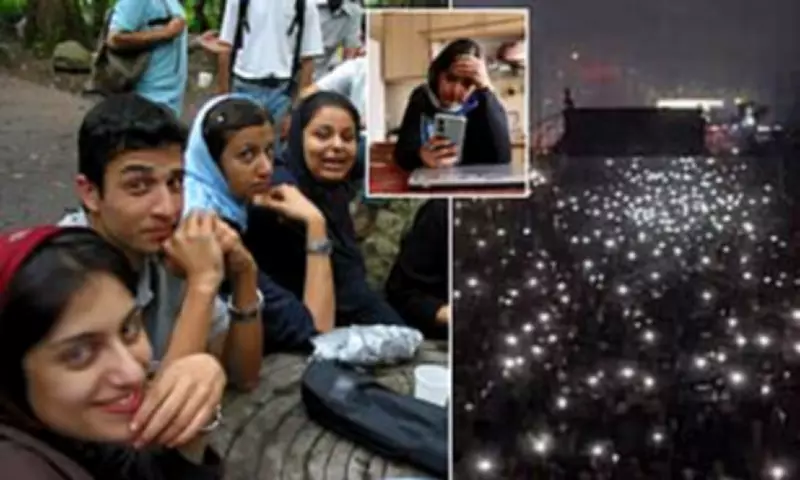
Iran's Digital Battlefield: Citizens Fight Internet Blackouts Amid Regime Crackdown
For citizens living under the Islamic Republic of Iran, the internet has transformed from a basic utility into a critical battleground. As the regime confronts mounting internal unrest and escalating regional tensions, it has once again plunged the entire nation into digital darkness. Behind this formidable firewall, however, a young and technologically adept generation of Iranians is fighting relentlessly to maintain connections, circumvent surveillance, and ensure their collective voice remains audible.
Economic and Psychological Toll of Connectivity Loss
Through compelling testimonies from three Iranians currently navigating this pervasive blackout, a chilling portrait emerges of a state systematically weaponizing connectivity against its own populace. Bahare, a fitness coach operating her own business in Tehran who conceals her surname for safety, speaks openly about the devastating consequences of these internet shutdowns.
'I'm in Tehran, and my immediate family is here too. Whenever I have internet access, I can stay connected to the outside world through different apps,' Bahare explains. 'That's absolutely vital for me because I'm a fitness coach working online with clients globally. They're all Iranian, and they've become like an extended family since the COVID period.'

When the regime abruptly severs connectivity, the resulting isolation proves both immediate and suffocating. 'When the internet gets cut off, I not only lose my income but also get disconnected from this wide, meaningful, and supportive network,' she reveals. 'That creates immense psychological pressure on me and countless others in similar situations.'
Desperate Measures to Bypass Digital Barriers
As citizens scramble to bypass the heavily restricted national intranet using virtual private networks, they discover their options rapidly diminishing. Bahare notes that while people explore 'strange workarounds,' access remains fiercely throttled. Some cafes and restaurants offer internet if customers purchase sufficient food, yet even then connection chances remain uncertain. Others resort to smuggled mobile hotspots.
The current blackout represents not an anomaly but the latest escalation in a decades-long campaign of digital suppression. Another Iranian insider outlines this dark history, emphasizing that censorship has steadily expanded under both hardline and reformist presidential administrations alike.
'The Islamic Republic's internet censorship didn't start recently,' another Iranian explains, referencing the total shutdowns during the 2022 Mahsa Amini protests that provided cover for mass killings. Mahsa Amini's death triggered the 'Women, Life, Freedom' movement after police killed her for improper headscarf wear.
State Surveillance and Controlled Alternatives
When international messaging applications fail, the regime offers its own alternatives—but at a steep privacy cost. One young Iranian described being compelled to download 'Bale,' a state-backed messaging application meaning 'yes' in Farsi. Some users even resort to speaking in coded language within these apps, fearing regime surveillance.
Innovative hiding methods include requesting friends and family to examine the second letter of each word to construct concealed sentences. 'Yes, this is considered the regime's surveillance method, which explains why these applications remain functional,' he discloses. 'I worry about using them but have no alternative. There's a reason this application continues operating.'
This systematic funneling of citizens into monitored digital spaces forms part of a broader strategic vision. Bahare observes that the regime is implementing a terrifying concept: 'I heard today that some major universities provide students with VPN access, yet still with restrictions... It genuinely feels like that frightening idea they previously discussed—they want a tiered internet with different access levels for various groups.'

Regime Hypocrisy and Smuggled Technology
Despite pervasive blackouts affecting ordinary citizens, the regime ensures its own agents maintain online access to control narratives. 'Under President Masoud Pezeshkian, also a reformist, the Islamic Republic's hypocrisy was again demonstrated,' an insider explains. 'They distributed 'white SIM cards' to regime insiders—ensuring Islamic Republic news agencies and officials maintain full access to platforms like Instagram and X. This isn't due to war or strikes. It's deliberate suppression while agents openly propagate narratives.'
To circumvent this comprehensive blackout, Iranians assume substantial risks. Traditional communication methods like SMS and phone calls face heavy monitoring and frequent restrictions, while international calls require expensive packages. In desperation, many turn to smuggled technology.
'Nearly all my friends cannot access the internet—effectively no connection exists,' shares one Iranian source. 'However, one friend obtains intermittent access via illegally acquired Starlink, which constitutes a crime in Iran. Even then, he connects roughly every other day with severe limitations, sending only brief safety confirmations.'
Since SpaceX's initial 2019 deployment of 60 operational satellites, Elon Musk's company has added over 9,300 units to the Starlink network, currently supporting more than 8 million subscribers across 150 nations.
Unified Pleas and Unbroken Resolve
Those managing mere minutes of connectivity use this precious time to send unified appeals to the international community. 'One primary request involves providing people inside Iran with internet access,' urged the third source within the country.
The regime's ultimate objective remains transparent. 'What the government consistently demonstrates is that it doesn't want truth heard,' Bahare states. Yet despite pervasive surveillance, economic devastation, and profound isolation, Iranian resolve remains unbroken. As Bahare ultimately declares: 'Many of us willingly pay any price to ensure this system doesn't remain in power even one minute longer.'