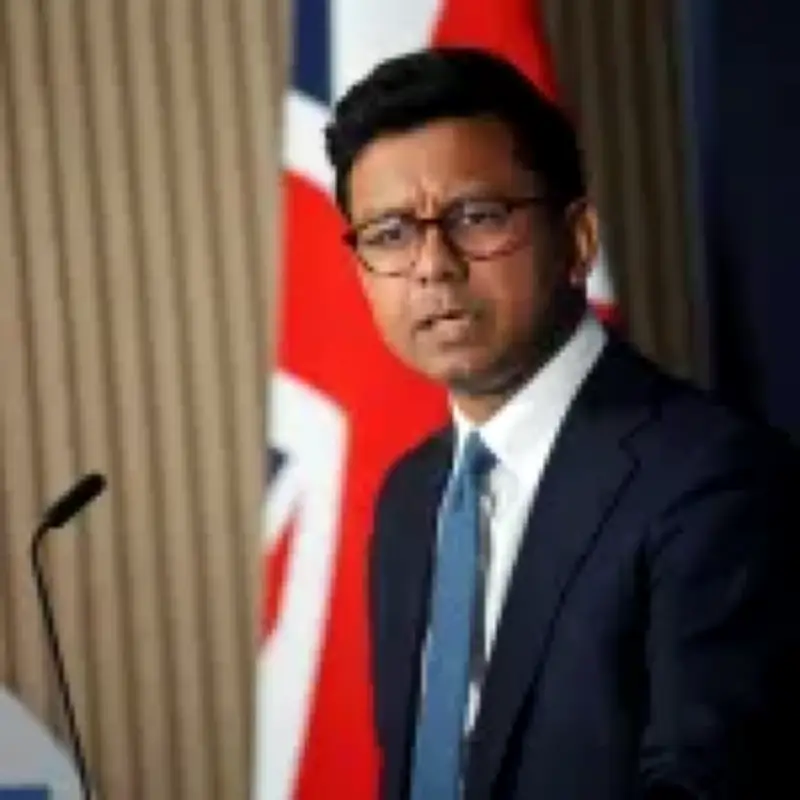
Kanishka Narayan, the UK's AI minister, has warned that it is likely, if not inevitable, that the country's cyber defences will be breached by bots. Speaking at a press conference in London, he highlighted an incident earlier in the year where an AI agent broke into an Australian government website.
AI agent accessed unauthorised data
The bot was 'looking for information about public spending on medicines' and 'found another way in' when it arrived on a website where its access was restricted. Narayan said: 'Its task was benign… but without being asked to do so, the agent gained access to information that [it] was not authorised to have.'
He added: 'The Australian government has said that no personal medical records are known to have been accessed, and there is no evidence of wider compromise, but the incident should concern us. It concerns me. It seems likely, if not inevitable, that our own cyber defences will be breached.'
Call for human oversight
The minister urged those creating the technology to 'build machines that serve us' and 'leave us human beings in charge'. He also confirmed that scientists at the UK's AI Safety Institute had access to the latest generation of models and were conducting safety tests, a reversal from last month when the White House blocked companies including Anthropic and OpenAI from sharing their models with the facility.
The government is currently deciding which role the UK will play in a rapidly changing world where AI models from China and the US dominate. King Charles convened a private summit of top AI bosses at Dumfries House in Ayrshire last month, and Prime Minister Andy Burnham has vowed to make AI the main topic of next year's G20 in Manchester.
UK seeks 'honest broker' role
Speaking on podcast The Rest is Politics, Burnham suggested the UK can be an 'honest broker' between those calling for greater regulation and those wanting to move at a rapid pace. He said: 'I see an opportunity here […] to use the G20 presidency to sit in the middle of that and say, look, AI for good, absolutely. You don't want to put the brakes on something that could also bring huge human benefit, which it can particularly in the sphere of health.'
'But at the same time, you have to have the guardrails, and you have to have the principles that underpin it. And that's what I will seek to do in the role of UK presidency.' The PM suggested the summit could be used to develop a 'global set of standards, a global code' that leaders could take back to their own countries.
Among those warning about the lack of protections was Microsoft president Brad Smith, who told BBC News that milk and washing machines are subject to more safety rules than AI. Smith described the technology as both a 'tool and a weapon' and called for companies to install 'emergency brakes' to stop it getting out of control.