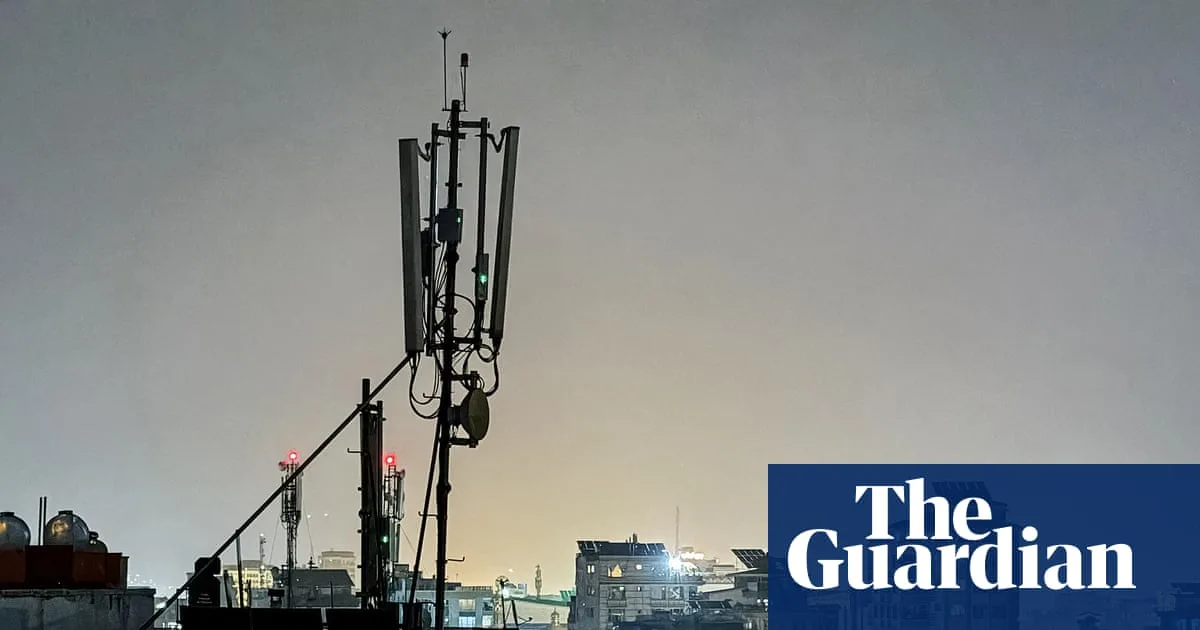
Afghans are living under a near-complete communications blackout after Taliban authorities cut internet and mobile phone services for a second day, in an unprecedented nationwide crackdown. The former insurgents, who retook control of Afghanistan in 2021, began gradual restrictions on internet access earlier this month, also affecting telephone lines routed over the internet.
High-speed connections to some provinces were cut in mid-September to “prevent immorality”, on the orders of the supreme leader, Hibatullah Akhundzada. On Monday night, mobile phone signal and internet service gradually weakened nationwide until connectivity was less than 1% of ordinary levels, according to the internet watchdog NetBlocks. On Tuesday, internet and telephone services continued to be down.
“We are blind without phones and internet,” said Najibullah, a 42-year-old shopkeeper in Kabul. “All our business relies on mobiles. The deliveries are with mobiles. It’s like a holiday; everyone is at home. The market is totally frozen.” While officials have previously blocked access to social media or restricted internet access, it was the first time the Taliban government had cut communications across the whole country.
The administration offered no immediate explanation for the blackout, although in recent weeks it has voiced concern about pornography online. Rights groups say the regime is instead trying to disconnect Afghans from the world to suppress the population. Fereshta Abbasi, a researcher at Human Rights Watch, said cutting off internet access deprived millions of Afghans of their livelihoods and fundamental rights. “The Taliban should drop its excuses about morality and instead focus on how these shutdowns are causing irreversible harm,” she said.
The UN mission to Afghanistan, Unama, warned the disconnection “risks inflicting significant harm on the Afghan people, including by threatening economic stability and exacerbating one of the world’s worst humanitarian crises”. In the minutes before Monday’s blackout, a government official warned the fibre-optic network would be cut, affecting mobile phone services, and that “eight to nine thousand telecommunications pillars” would be shut down until further notice. “The banking sector, customs, everything across the country will be affected,” the official said.
The Taliban leader reportedly ignored warnings from some officials about the economic fallout and ordered authorities to press ahead with a nationwide ban. A UN source said operations were severely impacted, falling back to radio communications and limited satellite links. NetBlocks said the blackout appeared “consistent with the intentional disconnection of service”.