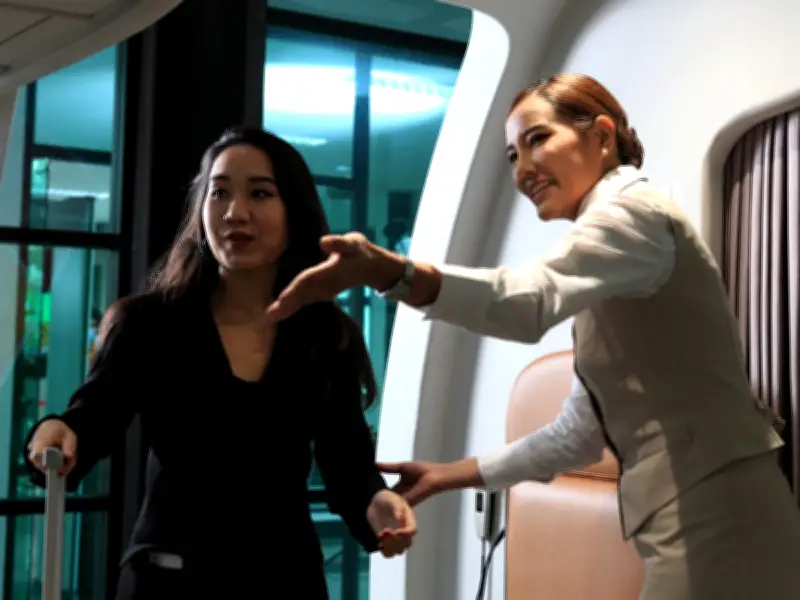
A Wizz Air cabin crew instructor has disclosed that flight attendants employ a 'secret code' when greeting passengers boarding a flight. Gabriel Randone, a Wizz Air Cabin Crew Instructor, explained to the Mirror that this practice is part of essential safety measures, not merely a courtesy.
Safety Through Observation
Randone stated that cabin crew are trained to perform a 'mental scan of passengers' to ensure everyone is fit to fly. They use a secret acronym—details of which are not shared with passengers—to guide their assessment. Crew members check for signs of aggression, intoxication, or medical conditions that could compromise safety. 'The goal is safety,' Randone emphasized.
Emergency Exit Row Protocols
Passengers seated near emergency exit rows also receive special attention. Randone noted that crew assess whether passengers in these seats meet requirements, as certain categories are prohibited from occupying them. Wizz Air's website specifies that passengers under 16, overweight individuals, those with special needs, expectant mothers, and travelers with infants under two cannot occupy Extra Legroom or Front Row seats. These passengers must be able to open exits in an emergency and receive a briefing.

If no one books an emergency exit seat, crew select an 'able-bodied person' (ABP) to move there. 'Sometimes, because flights might not be fully booked, there would be no one close to the emergency exits,' Randone explained. 'So what we need to do is to select someone who we call an ABP, an able-bodied person, and move them close to the emergency exits so that they can help out in case of an emergency.'
Critical 90-Second Evacuation Window
In an emergency, passengers in exit rows must detach the safety cover and pull a lever to open the door. Randone stressed the urgency: 'In an emergency, our priority is to get you out as quickly as possible. We only have 90 seconds to evacuate a full cabin with 239 passengers.' This protocol underscores the importance of the secret assessment code used during boarding.