Navigating the airport can be an exhausting ordeal. In an ideal world, we would sail through the security queue to give ourselves time to browse the perfumed duty-free outlets or enjoy a relaxed coffee, but there are many bottlenecks where you can find yourself delayed.
What Does SSSS Mean on a Boarding Pass?
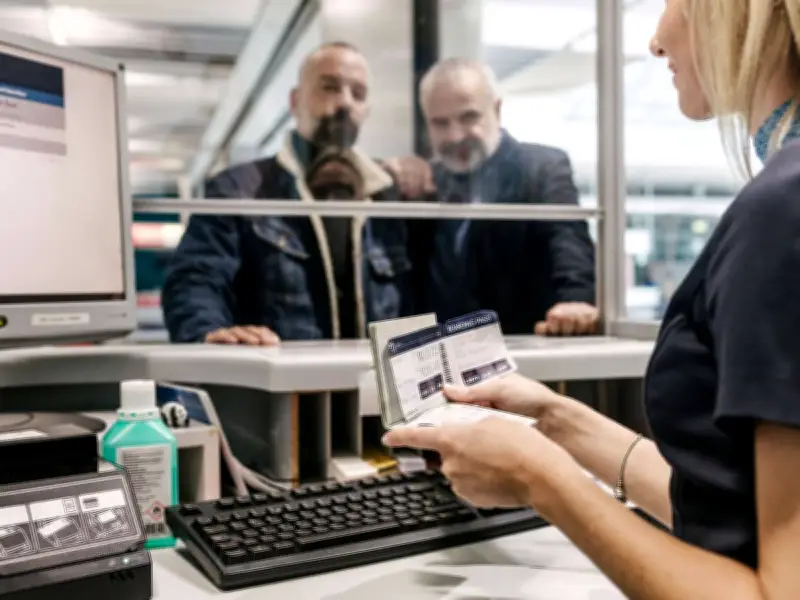
One indication that your journey through the airport might not run as smoothly as you hope can be identified once your boarding pass has been printed. Check-in personnel often add codes to your ticket alerting airport staff to watch for particular things, and there is one code travellers really do not want to encounter if they are jetting off to the World Cup.
Those flying to or from the United States may notice SSSS on their boarding pass, which stands for Secondary Security Screening Selection or Secondary Security Screening Selectee. Essentially, this code indicates you have been chosen for extra inspection, and this can be for a wide range of reasons.

How Airlines Flag Extra Screening
Certain airlines will not print SSSS but may have their own method of flagging that a passenger requires additional screening. For instance, Southwest Airlines reportedly uses a chequerboard pattern that appears on boarding passes.
Citizens of particular countries, such as those with sanctions or political tensions with the USA, may be more likely to encounter SSSS on their boarding pass. However, the Transportation Security Administration (TSA) remains tight-lipped about the precise criteria that could see your name flagged in this manner, reports the Express.
Factors That Trigger SSSS
The ACLU (American Civil Liberties Union) has previously claimed that "TSA maintains a 'Selectee List' (sometimes called the 'Automatic Selectee List') of people who are automatically and intentionally selected for enhanced screening every time they fly."
However, there are other factors that could see passengers flagged for additional screening, including making one-way bookings and purchasing tickets with cash. Travellers who have previously passed through high-risk countries, regularly visit 'unusual' destinations, or display other flight patterns deemed suspicious may also find themselves subjected to extra screening.
Having a name similar to someone on a Department of Homeland Security watch list could be yet another reason you end up with additional security checks, and could even result in you being denied boarding. Passengers who are repeatedly flagged for extra screening can apply for the DHS Traveler Redress Inquiry Program (DHS TRIP), and if approved they will receive a Redress Control Number to use when booking flights, which should make their travels considerably smoother.
What to Do If You Get SSSS
If you do spot SSSS or a similar code on your boarding pass, there is no need to panic. More often than not, it simply means you will require some additional time to clear security. Typically this involves an enhanced pat-down, a manual inspection of carry-on bags, and possibly the use of a handheld metal detector as you pass through the security lane. Travellers should make sure they adhere to their airline's advice on when to arrive at the airport, as this will guarantee they have sufficient time to clear any additional security checks.
In the USA, the TSA advises arriving a minimum of two hours before domestic flights and three hours ahead of international departures.