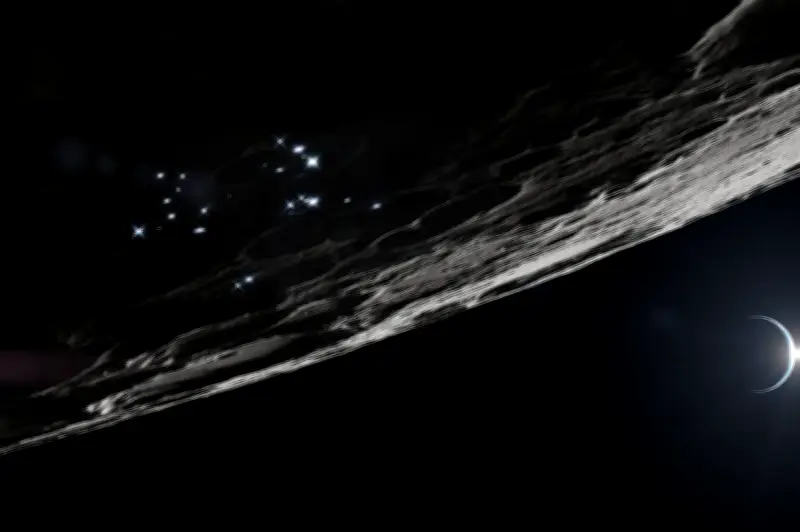
NASA has reaffirmed that Blue Origin, the rocket company founded by Amazon billionaire Jeff Bezos, remains its primary choice for returning humans to the Moon, despite a catastrophic explosion during an engine test in May. Space agency chief Jared Isaacman stated that Blue Origin has made "great progress" since the incident and that the New Glenn rocket is still "plan A" for the Artemis III mission and beyond.
Progress After the Setback
Speaking about the May explosion that destroyed a launchpad during a static fire test, Isaacman said: "Some time has gone by since the anomaly and Blue Origin’s response to the situation is almost beyond impressive." He added that the company is "very committed to getting back in the business of launching New Glenn before the end of the year." Isaacman indicated that NASA would not begin to worry until mid-2027, as alternatives are being explored in parallel.
Blue Origin's Role in Lunar Plans
Blue Origin has a critical role in NASA's Artemis program, which aims to establish a permanent base on the Moon. The Artemis III mission, scheduled for 2025, will test docking procedures between the Orion spacecraft and commercial lunar landers. Blue Origin and SpaceX are developing landers to carry astronauts to the lunar surface by 2028. However, these plans depend heavily on the heavy-lift New Glenn rocket, which suffered the May explosion.
Blue Origin CEO Dave Limp announced that the company will not rebuild the damaged pad but will adopt a different launch setup to resume flights this year.
NASA's Backup Plans
Isaacman emphasized that NASA is not waiting idly: "Nasa does not sit on our hands and wait for hardware to show up. It would be almost irresponsible with the importance of the moon base… not to have plan Bs." He added, "But plan A was always New Glenn, and plan A is looking a lot better today than it was weeks ago, just based on the progress that the Blue Origin team is making."
NASA's moon base program manager, Carlos Garcia-Galan, said: "We’re working with Blue Origin very closely to understand their timelines to recovery, and also looking at other options in case it doesn’t meet our timeline, so we’re paying a lot of attention again, putting the entire Nasa capability at the service of making this vendor successful."
Timeline for Lunar Living
The moon base mission could see humans living and working on the lunar surface within six years. The project aims to develop technologies for deep space voyages, including to Mars, and will be rolled out in three stages.
In a lighter moment, Isaacman joked about payload capacity: "Speaking of payload capacity, what do you think the chances are here if America wins at all, that we can find some volume here on one of these landers to put one of the soccer balls in?" Garcia-Galan replied: "If the United States wins the World Cup, we will absolutely find space."
This article includes reporting from PA Media.