UK's AI Ambitions Tempered by Caution
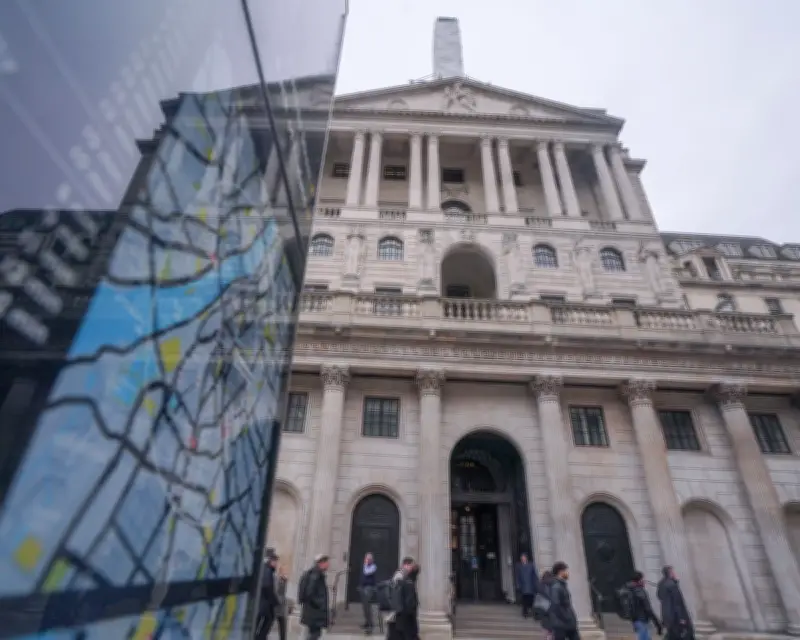
The United Kingdom finds itself in a bind over artificial intelligence: eager to secure a share of massive global AI investment but simultaneously wary of the risks. The Bank of England is planning to ease capital rules in the coming weeks to encourage more lending, yet the central bank has expressed concerns that too many loans are flowing to investors like hedge funds, who use the money to buy AI stocks. This dual approach reflects the country's global position—hoping to catch up to the US and China in the AI race, struggling to mobilize resources, and too cautious to go full throttle.
UK banking regulators have faced enormous pressure to stimulate growth, as reported by Kalyeena Makortoff. The relaxed requirements are likely to trigger a fresh wave of lending, as investors clamor for more funds to pour into AI-related stocks. The rules slated for loosening were implemented after the 2008 financial crisis, alarming critics who fear an AI bubble.
Bank of England Governor Warns of 'Triple Whammy'
The Bank of England itself has made its concerns public. Governor Andrew Bailey warned on Tuesday of a 'triple whammy' of AI risks: oversized investment in AI stocks, slower adoption of AI than tech companies predict, and the breakneck pace of AI development that could leave even large companies behind. 'The risk of a sharp correction in equity markets remains high,' Bailey said. Despite his warnings, he did not recommend new policies to guard against high valuations, according to Politico.

In contrast, the largest US companies and Donald Trump have bet heavily on the AI boom, leaving Americans feeling their economic fortunes are tied to a single industry.
OpenAI's Stock Market Debut Threatened by Legal and Leadership Challenges
OpenAI's path to a trillion-dollar IPO faces new obstacles. In May, Sam Altman's legal victory over Elon Musk seemed to clear the way, but two developments this week have raised doubts. On Friday, Apple sued OpenAI, alleging the AI firm stole trade secrets to create its own hardware device. The lawsuit marks a major reversal in what was once a close relationship. In 2024, Apple announced that its revamped Siri would rely on ChatGPT, but when the update launched last month, it used Google's Gemini instead, signaling trouble.
Meanwhile, OpenAI paid $6.4bn in equity to acquire the product-less startup of Sir Jony Ive, Apple's former chief design officer, in 2025. Apple's lawsuit names Ive's startup and Tang Yew Tan, a former Apple vice-president now heading hardware at OpenAI. The suit may aim to stop repeated trade secret theft or serve as a pre-emptive strike to protect the iPhone's dominance. OpenAI responded: 'We have no interest in other companies' trade secrets.'
Adding to OpenAI's woes, second-in-command Fidji Simo stepped down last week, creating a leadership vacuum at a critical time as the company prepares to go public. OpenAI needs to generate hype and optimism to attract investors, but current difficulties risk undermining confidence in its vision beyond ChatGPT.
Tech Journalism Shifts from Online to Offline
Tech reporting has evolved significantly over the past decade. Previously, the biggest stories happened online—Donald Trump's use of Twitter, Cambridge Analytica's Facebook data acquisition, and the rise of TikTok. Today, one of the biggest tech stories is developing offline: the AI boom. AI datacenters are among the most massive and complex structures ever built, prompting tech reporters to cover infrastructure, energy use, protests, and city council meetings.
The Guardian has sent reporters to datacenters in the dry US west, the ghostly plains of Scotland, and the most polluted neighborhood in Mumbai, revealing new facets of the rapid rollout of AI power structures. As one Guardian editor noted, 'These are some of the most complex structures ever created.' The shift reflects how tech reporting has moved into the physical world.