My patients use ChatGPT for therapy. Now I use it too. I can’t blame my patients for turning to its straightforward assessments. But it has real risks – and care may require human messiness.
“Chat told me I should break up with him.” I instructed my face to remain therapist-neutral, but I must have smirked. The truth is, I was annoyed. We had been discussing the viability of this relationship for weeks, and in an instant AI had brought the answer. “How do you feel about it?” She said this had been her gut feeling all along. The following session, her relationship was over.
AI is everywhere, therapy included, and yet somehow the first time it showed up in my work, I was surprised. A patient passed me his phone to show me how AI had helped him through a fight with his wife. After validating his pain, AI analyzed moments of relational breakdown and offered several ideas to initiate a repair. I read it and then had an unexpected thought: “WTF. This thing is actually good.” To top it off, it worked. My patient had used its suggestions and the conflict was repaired. I was impressed. Then, for a moment, I felt puny. I would probably have offered an unpolished version of one of these ideas over an entire session.

Whose Voice Is It?
As patients increasingly bring AI into sessions, I sometimes don’t know whose voice I am hearing, whose emotion, whose gut feeling. I deal with this, along with the creepy annoyance and competition it brings up in me, by moving us towards what feels like safer grounds, re-asserting the “IRL” world. As in: “How about instead of talking to Claude, you wrote in a diary and brought it to therapy next week?” I talk about the real mental health risks of using AI: how it can worsen anxiety, give false information, increase isolation, and sometimes lead to delusional beliefs or suicidal thinking.
Dazed by its boundless sycophantic embrace, some of my patients report not leaving their beds or couches on the weekend as they get sucked in, vulnerably uploading their private lives to big tech. AI can be dangerous, I warn my patients; I do not recommend you use it.
Even Therapists Turn to AI
Then I go home and I know that part of me is hiding: because when my nine-year-old had a tantrum at 7.20am on a Sunday morning, I did not write in a diary to bring to my therapist next week. What I actually did was, gulp, reach for Chat. Not that I needed parenting techniques (I teach them, for goodness sake). I am a single mom and wanted presence pronto. I didn’t care that it was phoney. And AI was there, calm and supportive, coaching me to breathe through the screams. Was the therapy help fake? Yes. But it worked. So does it matter?
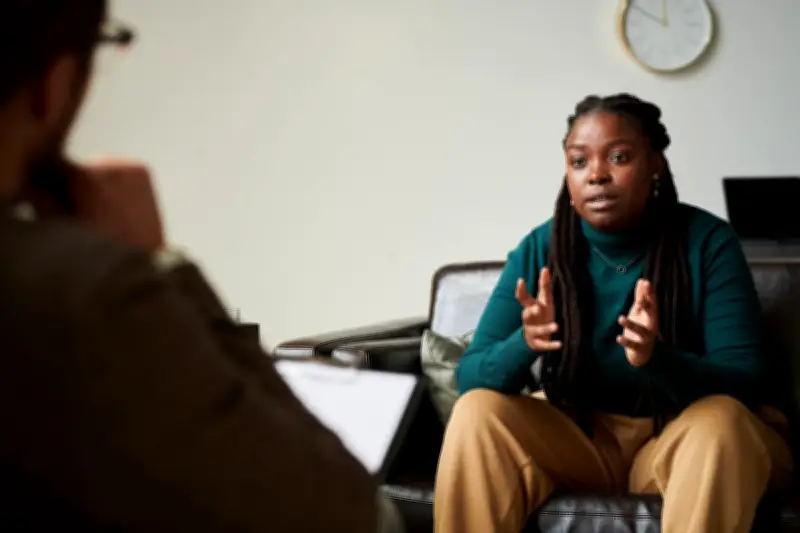
What is real therapy, anyway? There are tons of therapeutic approaches, and just as many therapist personalities. Near the end of a recent session, a patient is intensely angry at the world, and more so at herself. Her voice cracks. Her body is tense; she is ashamed. I am on edge. I say a few ineffective words which seem to land nowhere; there is an awkward silence, and she shakes her head. I imagine Chat showing up in that moment, keenly articulating its efficiently organized ideas. I am tongue-tied and helpless.
What Human Therapy Offers That AI Cannot
What, if anything, is worth salvaging about human therapy that AI will not replicate? I wonder whether human therapists will ultimately lose when it comes to technique or interpretation. AI may soon outshine seasoned therapists with regards to what it tells people.
Friends reassure me there is no way people will feel connected to AI in the same way. I don’t buy that. Therapy is a major reason people use AI, and as it gets better at recognizing facial expressions, its capacity for digitalized empathy will accelerate its relational potency.
As telehealth continues to expand, people may soon not know whether they are meeting with a human or an AI therapist. Does it matter in a world where less than 7% of people with mental health and substance use conditions are receiving effective treatment?

Integrating AI with Humility
Everyone now has access to a free, imperfect, risky, and at times fairly competent technology that could help address some of their issues, at least some of the time. We therapists have to adjust, with a dose of humility, to invitations to integrate AI judiciously in psychiatric practice. I’m not sure what judicious integration will look like, assuming it is actually possible.
My patient leaves, and I have no idea if she will come back next week. On my walk home, I ruminate. I remember a grad school professor saying that therapy is like sorting through a messy closet: everything has to be taken out, your room has to look like a tornado hit it, and only then can things be sorted through. My patient and I were in the chaos of the tornado.
And then I think: what if it’s the mess in therapy that is its most prized possession? This can look like many things: conflict. Hesitation. Stalling. Changing directions. Making the wrong decision. Strong emotion that explodes all words. Sometimes, we have to stay patient with the chaotic unknowns, the slow emergence of an idea, or a loss so deep it cannot be touched by therapy, week after week after week. We want to escape it at all costs, because who wants to sit in the middle of a tornado?
The Value of Mess
Yet mess is often a signal that we are getting at something important. What if AI’s clean, all-knowing stance is in fact a liability on the slow, unsteady path of human healing? I think of the many times in therapy where I do not really “know”, and how change often happens in circuitous and unpredictable ways.
Only because not knowing is anathema to everything AI stands for, the tech-pushed sense of desire for an immediate response may be hard for many to resist. I am guessing the future will see a sizeable number of people swept up by the powerful current of AI-like therapy.
I also wonder if a minority will remain seekers of human therapy: I imagine a small yet significant counter-movement of determined people who, either by conviction or trend – and likely with money – will resolve to stand up again and again in the moving sand, refusing the pull of the AI waves. They are those who will seek the flawed human therapist who will, I guarantee you, frustrate them and whom they may annoy too, but who will feel genuine happiness when a small good thing has happened in their life.
That same therapist will say the wrong thing at times, will forget parts of their past, and will also resolve to sit with them in emotional tornadoes of massive scale, and feel moved by those fragile absurd moments of beauty so overwhelming that there will be no words.
My patient comes back. We continue to work through jagged emotions and unfinished pain. One day, she comes in and says: “It was how you laughed at my joke as I was leaving the room last time that made me feel better.” What? So it had nothing to do with what I had seen as the rich therapeutic dialogue we had? I didn’t even remember the joke. But I went with it, not really understanding, humbled, and feeling pretty happy being a human.
In the US, you can call or text the 988 Suicide & Crisis Lifeline at 988 or chat at 988lifeline.org. In the UK and Ireland, Samaritans can be contacted on freephone 116 123. In Australia, the crisis support service Lifeline is 13 11 14. Other international helplines can be found at befrienders.org