Pentagon UFO Videos Spark Alien Chase: A Journey into American Ufology
The Pentagon's release of UFO videos has ignited a renewed fascination with extraterrestrial life, prompting a deep dive into the world of ufology. This investigation explores the surge in alien-related claims and the cultural forces driving this phenomenon.
The Government's Role in Ufology
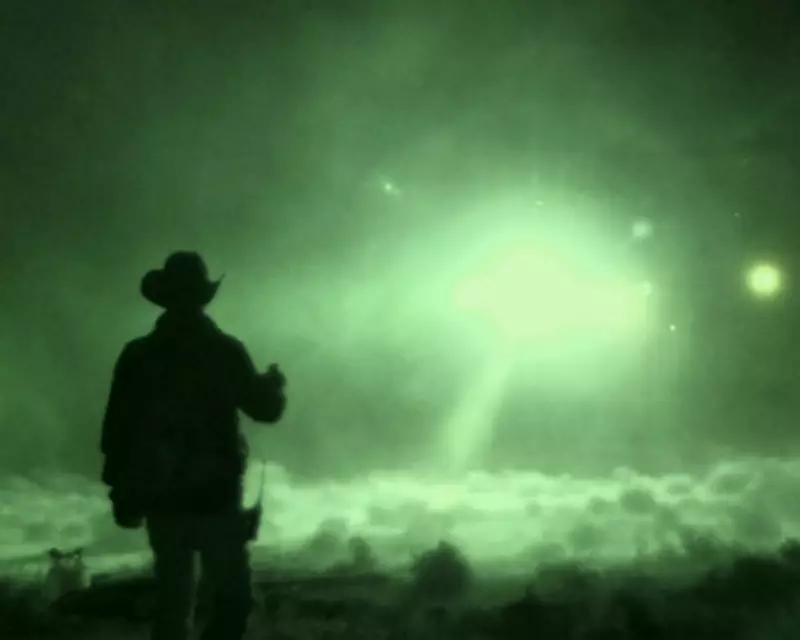
In 2017, the New York Times published an article revealing the Pentagon's secret UFO program, the Advanced Aerospace Threat Identification Program (AATIP). Military intelligence officer Luis Elizondo claimed this program found evidence of UFOs defying physics near military bases. The article included striking videos, such as one showing a dark, glowing object resembling a flying saucer, with navy pilots expressing shock in the background.
By 2021, the Pentagon confirmed it could not explain over 140 incidents of flying objects reported by navy officers over two decades. Former President Barack Obama added to the intrigue by acknowledging unexplained aerial phenomena. In 2023, former intelligence officer David Grusch testified before Congress about secret programs hoarding crashed spaceships and "non-human biologics."

Investigating the Claims
Inspired by these developments, a journalist embarked on a trip to the US in autumn 2023 to chase aliens. Despite efforts to contact key figures like Elizondo and Blink-182 frontman Tom DeLonge, responses were scarce, leading to a deeper examination of whistleblower stories.
Research revealed that the Pentagon's UFO program was actually called the Advanced Aerospace Weapon System Applications Program (AAWSAP), not AATIP. This program originated from intelligence officer James Lacatski's visit to Skinwalker Ranch in Utah, a site known for paranormal activity. Lacatski claimed to see an "unearthly technological device," leading to a $22 million government contract awarded to Robert Bigelow's company for research that included monsters, apparitions, and other bizarre phenomena.
Scrutinizing the Evidence
Elizondo disputes the Pentagon's claims about his role, filing a complaint in 2021. His 2024 memoir mentions psychic powers and remote viewing, details that might have affected his credibility if known earlier. At a UFO hearing in May 2025, Elizondo presented images alleged to show UFOs, but internet sleuths identified them as irrigation circles or reflections.
Analysis of the navy videos by experts like Mick West suggested the objects were likely glare from heat sources, such as jet exhausts. Despite this, media coverage often features ufology "experts" without these critical updates, perpetuating the narrative on news channels and shows like Bill Maher's HBO program.
Cultural and Psychological Factors
The journalist's travels across the US included interviews with alleged alien abductees and "starseeds," revealing more about human psychology than extraterrestrials. The resurgence of ufology may stem from political unreality and popular culture, which conditions people to attribute unexplained phenomena to aliens.
In the US, UFO obsession dates to the late 1960s, a time of unrest and mistrust, reinforced by Hollywood myths. American exceptionalism plays a role, with the belief that aliens would target the US as the "greatest" nation. Harvard physicist Avi Loeb noted the disappointment if humans are the universe's only intelligent life, highlighting our limitations.
The Reality of Alien Visits
There is no evidence aliens have visited Earth, and the vast distances between solar systems make such visits improbable. Proxima b, the nearest exoplanet, is 4.2 light years away, requiring immense energy and time to reach. Life there may not be complex, given Earth's 4-billion-year history and the relatively recent emergence of humans.
Ultimately, this investigation suggests that while the search for aliens reveals human curiosity and cultural narratives, we should focus on caring for each other in a potentially lonely universe. The journey into ufology underscores the blend of government intrigue, media sensationalism, and deep-seated myths shaping our understanding of the unknown.