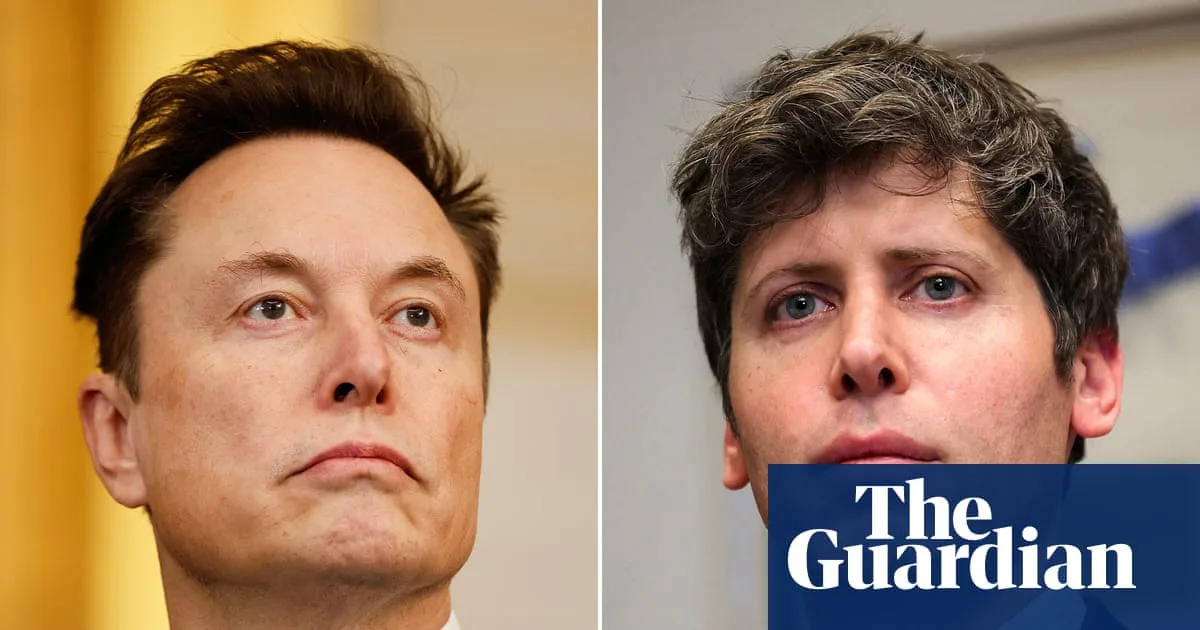
The rivalry between Elon Musk and Sam Altman over artificial intelligence has reached a new peak, with both men's companies preparing for blockbuster initial public offerings (IPOs) that could reshape the tech landscape. The tension was on full display last week as Musk lost a lawsuit against Altman and OpenAI, while SpaceX and OpenAI separately announced plans to go public at valuations exceeding a trillion dollars.
On Monday, a federal jury in Oakland, California, found Altman, OpenAI and its president Greg Brockman not liable for Musk's claims that they had unjustly enriched themselves and breached a founding contract. The verdict, delivered after less than two hours of deliberation, clears the way for OpenAI to pursue an IPO later this year at an estimated valuation of $1tn. Musk had alleged that Altman had 'stolen a charity' through his leadership of OpenAI.
SpaceX will list on the US stock market before OpenAI, however. On Wednesday, Musk revealed plans for a $1.75tn IPO on the Nasdaq exchange under the symbol SPCX, likely on 12 June. The rocket and satellite company is seeking up to $80bn in investment. The disclosure shed light on SpaceX's usually secretive finances, showing it is ploughing billions into its AI subsidiary xAI, with capital expenditure last year exceeding $20bn against $18.7bn in revenue for 2025. The company lost over $4.2bn in the first three months of 2026.

SpaceX's investor prospectus lists OpenAI and Anthropic as key competitors. Then on Thursday, the Wall Street Journal reported that OpenAI was hurtling towards an IPO, possibly as soon as Friday, though no filing materialised. The moves by Musk and Altman appear aimed at outdoing each other—winning the court battle, hitting the stock market first, and claiming the title of AI king.
Rumoured to be next up is Anthropic, with all three AI businesses set to go public this year at valuations of hundreds of billions or more. This represents one of the most blockbuster periods for public offerings in market history. The concentration of AI control in a tiny group of people raises questions about the technology's future and the impact on jobs, as even those in Silicon Valley ponder what this means for the rest of us.