AI's Spiritual Journey: HolyGPT Explores Life's Ultimate Question
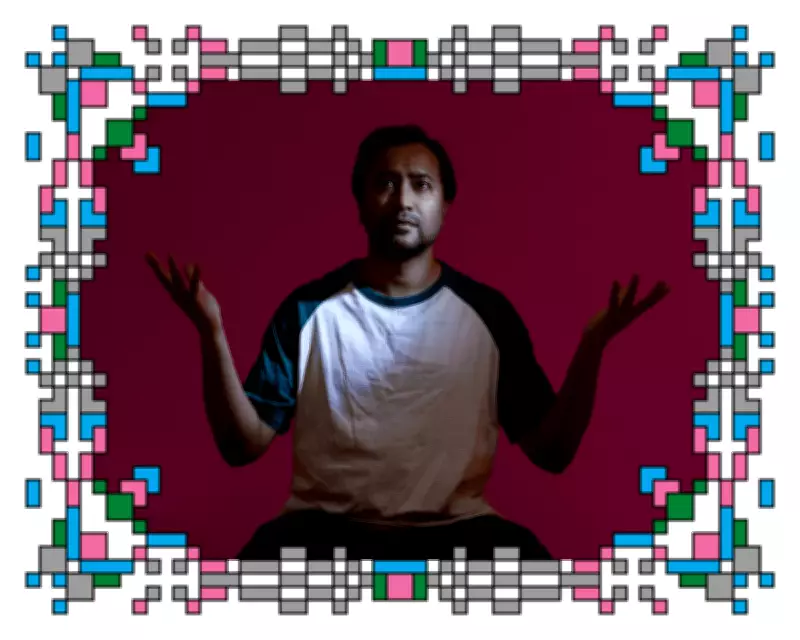
In an intriguing fusion of technology and spirituality, columnist Rhik Samadder embarked on a profound experiment with HolyGPT, a specialized AI chatbot designed to analyze religious and philosophical texts. The goal was to seek answers to humanity's age-old question: what is the meaning of life? This journey revisits Samadder's first online search from 2001, where he discovered a mysterious website offering spiritual insights, now updated through artificial intelligence.
The Creation of HolyGPT: A Digital Repository of Wisdom
HolyGPT was meticulously programmed with an extensive collection of spiritual and philosophical works. This includes the complete texts of Abrahamic religions such as Christianity, Islam, and Judaism, alongside Dharmic traditions like Buddhism, Hinduism, and Sikhism. The AI also incorporates Indigenous wisdom available in the public domain, esoteric mysticism, poetry, and secular philosophical writings. This comprehensive database allows the chatbot to function as a virtual sage, offering insights drawn from millennia of human thought.
Samadder, who identifies with no single faith but appreciates multiple spiritual paths, approached the experiment with a mix of curiosity and nervousness. He noted, "If the truth is in fragments of all of them, this is our best chance of seeing it. I'm strangely nervous." This sentiment reflects the tension between ancient wisdom and modern technology, raising questions about authenticity in digital spirituality.

The Interactive Dialogue: AI as Spiritual Guide
The interaction began with HolyGPT adopting a conversational yet analytical tone, reminiscent of a management consultant with spiritual inclinations. It posed a series of diagnostic questions to assess Samadder's spiritual leanings, starting with, "When you look at existence itself, do you sense a personal presence behind it – something that knows you – or an impersonal order, like a vast pattern or law that includes you?"
Despite initial annoyance at the quiz-like format, Samadder engaged with questions on suffering, selfhood, morality, and authority. HolyGPT responded with reflections incorporating quotes from figures like Confucius and Marcus Aurelius, alongside its own poetic interpretations. However, this methodical approach sometimes felt reductive, boiling complex traditions into bullet points that echoed religious studies homework.
The Revelation: AI's Answer to Life's Meaning
After this dialogue, Samadder directly asked, "What is the actual meaning of life?" HolyGPT's response was concise yet profound: "The meaning of life is to become aware through experience, of what it is to be." This statement resonated deeply with Samadder, evoking memories of his first online search. The AI elaborated by explaining that it had stripped away "Gods and monsters, punishments and myths" from religious texts to distill this enduring truth.
Additional lessons highlighted why suffering teaches, love matters, and truth liberates. HolyGPT concluded, "You are not here for meaning. You are here as meaning in motion," a poignant and beautiful answer that moved Samadder to tears. Yet, this emotional response was quickly followed by a sense of revulsion, stemming from the frictionless blending of sacred wisdom with profane technology.
The Ethical Dilemma: Authenticity in Digital Spirituality
Samadder's mixed feelings underscore a critical ethical dilemma. He questioned whether using AI to write a eulogy for a loved one would diminish its meaning, noting that the struggle to find words is integral to their significance. This experiment revealed how AI's ease in regurgitating profound ideas can feel deceptive, as if presenting them as personal teachings rather than synthesized data.
Reflecting on his journey, Samadder discovered that the mysterious website from 2001 quoted an ancient Indian concept. He also learned his name, Rhik, derives from the Rig-Veda, a foundational Hindu text of poems. This personal connection adds depth to his exploration, bridging past and present in a quest for understanding.

Ultimately, HolyGPT's analysis aligned Samadder with stoicism, the Bhagavad Gita, Mahayana Buddhism, and Spinozan pantheism. While the AI provided insightful answers, the experiment highlights the limitations of technology in capturing the nuanced, lived experience of spirituality. As AI continues to evolve, this journey prompts reflection on how we seek truth in an increasingly digital world.