Datacenter Opposition: A Tangible but Limited Response to AI
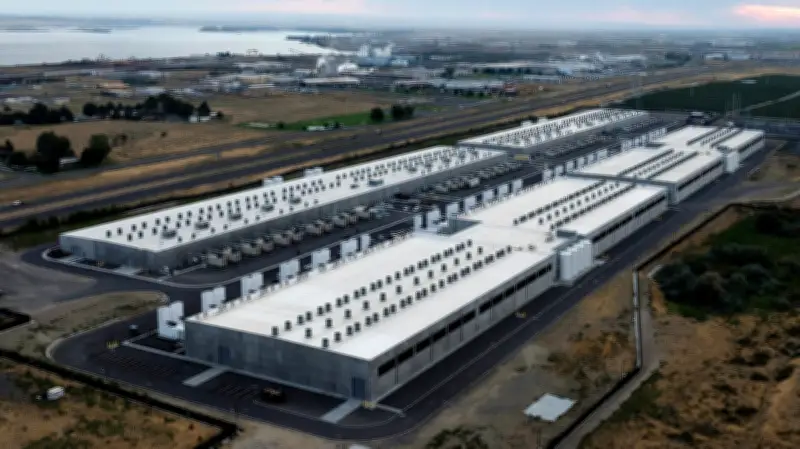
Opposition to AI datacenters has become a primary theme in US politics, cutting across party lines. While communities rightly evaluate whether economic benefits outweigh costs, experts Bruce Schneier and Nathan E Sanders argue that focusing solely on datacenters obscures the larger impacts of AI: the concentration of power in AI companies and their widespread political and financial influence.
Local opposition stems from legitimate concerns: misallocation of land resources when housing is at a premium, pressure on energy prices, and localized environmental impact. Unlike other industrial facilities, datacenters produce very few jobs. The fiercest opposition in lower-income communities reflects righteous indignation over an inequitable bargain where tech companies profit from local resources with little return. Globally, their carbon footprint could grow unsustainably if usage accelerates—all in aid of a technology many fear will propagate misinformation, take jobs, or pose existential risks.
AI Companies May Be Banking on Datacenter Fights
For some, datacenter opposition may feel like the only tangible mechanism for registering concern or anger about AI. But Schneier and Sanders warn this might be exactly what AI companies are banking on. They can overcome protests when it matters and live with some proposals being defeated. More importantly, focusing opponents on datacenters obscures the bigger prize: capturing all the value created by entire industries.

While US companies are spending a staggering three-quarters of $1 trillion on datacenter infrastructure this year alone, the market for enterprise software is about twice that size—and still small compared with what AI companies actually want. AI has arguably conquered customer service and consumer sales, but bigger targets include enterprise software development, creative design, management, and legal services. In AI companies' vision, AI replaces teachers and doctors. They would rather fight resistance to building infrastructure than deal with how their products should be used in those fields.
Mixed Effectiveness of Datacenter Opposition Campaigns
Datacenter opposition campaigns have been successful in building widespread appeal, but their effectiveness in the US is mixed. They work best against speculative, early-stage proposals with low likelihood of fruition. Advanced-stage, well-capitalized projects have resources to overcome opposition. For instance, an OpenAI- and Oracle-backed facility in Saline township, Michigan, broke ground even after local officials voted to reject it. Developers sued the town of 3,000 and forced a settlement. The Trump administration has signaled willingness to advance AI infrastructure by overriding state objections and using federal lands.
Rampant datacenter development may be a momentary spike. Demand for centralized computing could decline as leading Chinese labs innovate to make models smaller and cheaper. AI power users miniaturize open-weight models to run locally. Apple and Google support running AI on mobile phones. The current mania may resemble the fiber optic cable bubble of the early 2000s, as demand shifts to smaller models and on-device AI.
Broader Context: Affordability, Environment, and Corporate Power
For those concerned with affordability and environmental protection, singling out datacenters is misplaced. Energy rates and inflation are most visibly affected by the US-Iran war. The US is disinvesting in long-term energy security by ceding renewable energy to China and cancelling climate commitments. Heating buildings accounts for 10% of global carbon emissions—dwarfing AI energy use—and could be cut fivefold with heat pumps powered by renewables. Federal housing subsidies have changed little in three decades, even as housing costs spiked.

The greatest existential risk from AI is the concentration of power and wealth in tech companies. Schneier and Sanders argue we must limit corporate power, especially the ability to exploit the public and manipulate our political system. Opposing datacenters should be just a starting point. They advocate for states to regulate AI, reject irresponsible uses, shape corporate behavior, and tax AI computation so the public captures some profit while forcing companies to internalize energy and environmental consequences. They also urge joining the global movement for Public AI—an ecosystem under public control creating public benefit rather than private profit.
Midterm Elections and AI Political Agenda
The US midterm elections present opportunities to control the AI political agenda. In the recent New York congressional Democratic primary, PACs linked to Anthropic and OpenAI spent millions lobbying for or against “AI safety.” Schneier and Sanders note that both companies profit from the mystique that their products are so powerful that controlling them is the world’s most important challenge. OpenAI affiliates back “safety” through US industry dominance under federal control; Anthropic backs heavier regulation that plays to its ethics-focused posture. Both cases are more marketing than principled concern.
Political organizers should reject AI companies’ framing and reorient campaigns around populist resistance to corporate concentration. When AI companies pump millions into races, the result should not be hyperbolic discussion of superintelligence. When a plot of land is pitched for a datacenter, the debate should include out-of-control money in politics and Citizens United-proof solutions like public financing and state regulation.
Schneier and Sanders conclude: “The greatest risk AI poses to society is the exacerbation of inequality and the concentration of wealth. The real problem is trillion-dollar AI companies and their trillionaire oligarchs cozying up to political power worldwide, using their money to enact their agenda over the popular will. This is the issue we’d like to see put front and center, requiring solutions much more extensive than slowing datacenter development.”