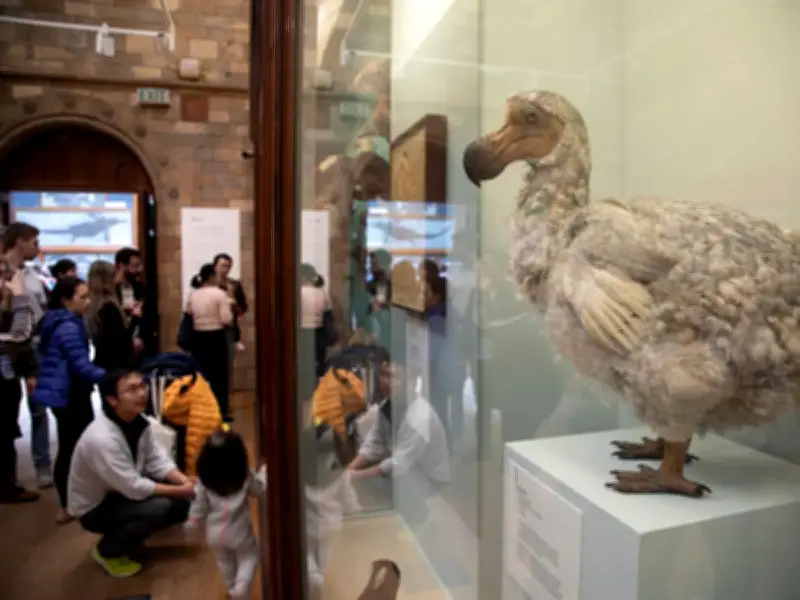
Scientists at Colossal Biosciences have identified 2,300 genetic switches linked to the dodo's skull and beak, marking a step forward in efforts to bring the extinct bird back to life. The discovery was made using a new AI tool called GenoMorph, which cross-examines genetic details from surviving birds with physical measurements of their beaks and skulls.
AI identifies genetic switches in dodo DNA
The US biotech firm, known for resurrecting three dire wolf pups – Romulus, Remus, and Khaleesi – from a species that died out around 10,000-12,000 years ago, seeks to "de-extinct" ancient species like the woolly mammoth, thylacine (Tasmanian tiger), the moa, and the dodo bird.
Researchers say they have identified "genetic switches": 2,300 pieces of DNA linked to the animal's skull and beak. Colossal built an "avian regulatory atlas" using samples from species such as pigeons, chickens, quail, and ducks, spanning six distinct stages of embryonic development and three developing facial regions.
GenoMorph compares living birds to extinct species
Genomes and skull measurements from more than 70 species of birds – including the Nicobar pigeon – were combined with the data. The AI identified 653 candidate elements linked to beak size and flagged an additional 1,698 for beak thickness and breadth. Colossal pointed out that these signals don't necessarily cause these traits, but they highlight areas for further investigation.
Ben Lamm, CEO of Colossal, said: "De-extinction is as much a data problem as a biology problem. Because so few dodo genomes survive, we cannot rely on the population-level comparisons available for many living species."
Path to reviving the dodo
Lamm added: "Our platform provides another path - it learns how regulatory DNA shapes living birds, then identifies the genetic switches that may have contributed to the dodo's distinctive anatomy. This is more than a solution for the dodo. It provides a repeatable approach for extinct species whose genomic records are similarly limited."
Last sighted in 1662, the flightless bird was native to Mauritius, an island country in the Indian Ocean. The dodo was driven to extinction by humans before science had developed a method for describing species. Despite its name becoming a byword for extinction, much about the dodo remains unknown.
Dr Beth Shapiro, Colossal's chief science officer, says the dodo's anatomy was shaped by "networks of regulatory instructions" that are "difficult to interpret". She said: "The answer turned out to be comparative: use the breadth of living bird diversity, combined with AI, to identify candidate loci for the next phase of testing."
Colossal has a potential route to replicating the bird's traits and introducing them into the Nicobar pigeon, a brightly coloured living species thought to be the dodo's closest surviving relative. Separately, Colossal said it now has 36 Nicobar pigeons in its Texas colony and has developed a way to insert DNA and RNA into bird embryos.