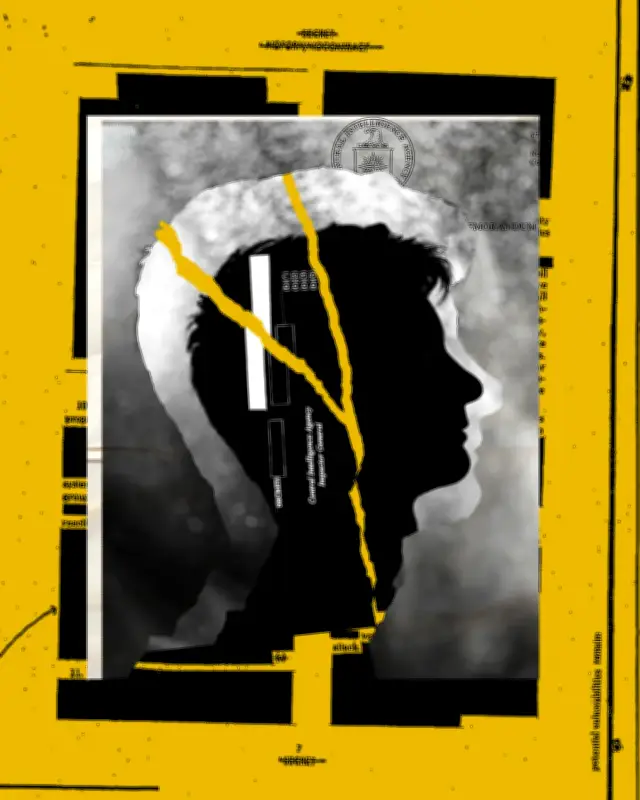
A decade after the first reports emerged from Cuba, the mystery of Havana syndrome refuses to die, with a new book and rescinded intelligence assessments reviving questions about whether Russia was behind at least some of the episodes.
In April 2019, a CIA officer on a work trip to London was jolted awake by intense head pain, soaked in sweat, and feeling like his eyes were spinning. The next day, he could not remember colleagues' names. By September, in Warsaw, he was again woken by worse pain, describing it as "someone standing over me with a baseball bat and just repeatedly hitting me on the head". He later suffered chronic nerve pain, fatigue, and other severe health problems for years.
These incidents, in which people reported unusual sounds, pressure, and pain followed by residual symptoms, acquired the name Havana syndrome after the Cuban city where mass reports first emerged. Dozens of CIA officers worldwide reported episodes, officially called anomalous health incidents (AHIs). Many believed AHIs were the result of a Russian intelligence operation using a previously unknown weapon that delivered sonic or pulsed microwave energy.
Disagreements and official assessments
There was sustained pushback against that theory. Some scientists insisted the idea of a portable weapon belonged in science fiction, suggesting environmental factors, toxins, or even "mass hysteria" as causes. In 2022, a panel of scientific experts convened by the US government concluded that "the signs and symptoms of AHIs are genuine and compelling" and "could be due to external stimuli".
But in 2023, an unclassified summary of a US intelligence community report said "the available intelligence consistently points against the involvement of US adversaries" and that it was "very unlikely" a Russian campaign was behind AHIs. This summer, that assessment was rescinded by Donald Trump's outgoing director of national intelligence, Tulsi Gabbard, who said the earlier assessments were marred by "selective exclusion of evidence" and "mischaracterisation of sources", though no new evidence was released.
New book and evidence
Two CBS journalists, Michael Rey and Oriana Zill de Granados, are releasing a book, The Havana Syndrome, that sets out the case for Russia being behind at least some episodes and accuses parts of the US government of covering up evidence. David Relman, the Stanford professor who led the 2022 scientific panel, told the Guardian he believed a subset of AHI cases were "most plausibly explained by exposure to pulsed microwave energy", and that "to any reasonable person looking at all the evidence I was able to see, it inevitably leads to the conclusion that there may have been a cover-up".
Rey and Zill recounted how they first came across the story after the Obama administration re-established diplomatic relations with Cuba in 2015. A senior US diplomat told them: "Oh no, this is completely true. And I can put you in touch with a bunch of people who were hit." A pattern linked some key cases: alleged victims were working on beats that rubbed up against Russian interests, with notable locations including Cuba, Georgia, Kyrgyzstan, Serbia, and Vietnam.
Key cases and the search for a weapon
A cornerstone case is that of Mike Beck, a counter-intelligence officer at the National Security Agency who got sick in the 1990s and developed a rare form of Parkinson's disease at 45, dying this year. A declassified NSA statement noted "there is intelligence information from 2012 associating the hostile country to which Mr Beck travelled in the late 1990s with a high-powered microwave system weapon". The unnamed "hostile country" was Russia, sources said.
Marc Polymeropoulos, a former CIA officer who went public with his Havana syndrome story, described waking up in Moscow in December 2017 with "vertigo and a splitting headache". He was later diagnosed with mild traumatic brain injury and in 2023 found eligible for compensation under the Havana Act. He said he is "more upset and feel more of a betrayal from my own government" than from the Russians.
In 2021, the Biden administration launched two investigations. Relman's panel concluded that a "device" that could cause AHI symptoms was plausible, but that the vast majority of AHI claims could be explained by other factors. A second expert group in 2023 issued the "very unlikely" assessment, dismaying many patients.
Disputed intelligence and a possible device
Sources offered the Guardian radically different interpretations of classified data. One highlighted the lack of a "smoking gun", referencing how US intelligence got hold of Putin's war plans before the February 2022 invasion of Ukraine. Another former intelligence official disagreed: "For any reasonable person who has access to the intelligence and knows how to read it, the Russian fingerprints are clear."
Mark Zaid, a lawyer representing more than 30 AHI patients, welcomed Gabbard's memo as a first step to overturning a CIA cover-up. Bill Burns, in a comment for the book, said it was "simply not true that there was a 'cover-up' by the CIA".
Perhaps the most significant recent evidence is the alleged US government acquisition of a "Havana syndrome-style device" in an undercover operation, first reported by journalist Sasha Ingber. Two sources confirmed to the Guardian that a device had been acquired and brought to the US in late 2024 for testing. The source told Rey and Zill the device was "man-portable", shot non-thermal pulsed microwaves, and was acquired from "a complex Russian illicit network". Testing on animals has reportedly shown it may cause similar symptoms to AHIs.
James Giordano, a professor emeritus of neurology at Georgetown University Medical Center, said: "We know the technology has reached a level that enables it to be used in weaponisable ways. I see that as a clear and present threat." For those who have had symptoms for years, the acquisition of the device and the rescinded assessments provide some hope that they will one day receive official confirmation they were targeted by a foreign adversary. The Havana Syndrome is published by Crown Publishing in the US on 13 October and by WH Allen in the UK on 15 October.