Artificial intelligence and technology stocks have become a driving force on Wall Street and, unbeknownst to most Australians, a growing part of their retirement savings. The so-called “magnificent seven” – chip maker Nvidia, Google owner Alphabet, Apple, Microsoft, Amazon, Facebook owner Meta and Tesla – are increasingly part of the portfolios offered by superannuation funds.
Average Super Portfolio Now 12% in AI
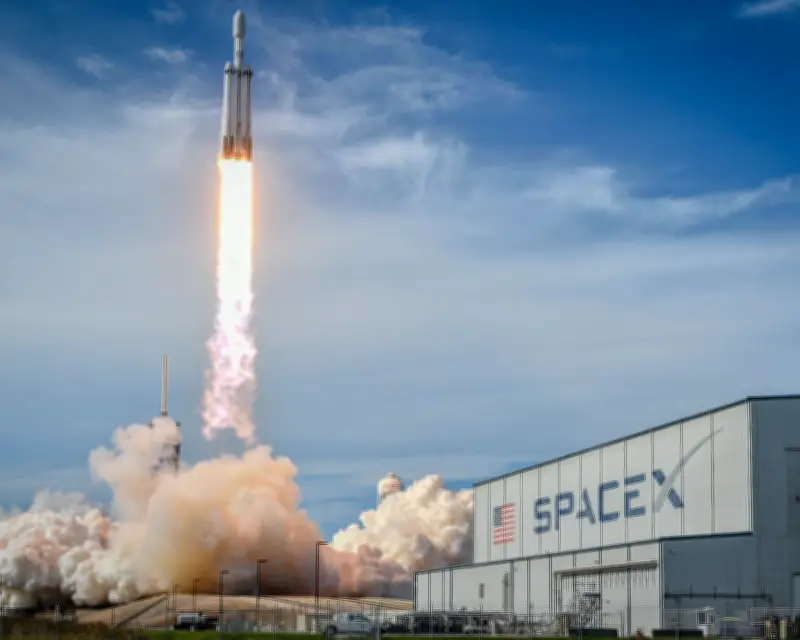
The average Australian super portfolio now has an estimated 12% of its investments in AI-related companies due to the massive growth of tech stocks in recent years, experts say. Many portfolios are even invested in Elon Musk’s mission to Mars through SpaceX, according to the Association of Superannuation Funds of Australia (Asfa). SpaceX’s recent launch on the US stock exchange – coinciding with Anthropic and OpenAI’s plans for their own public launches – has renewed questions around the ethics, risks and rewards of investing in AI.
Why Your Super Might Own SpaceX
Super funds invest a large proportion of members’ savings outside of Australia to make the most of risk-adjusted returns that aren’t available in the local market, Asfa chief executive officer Mary Delahunty says. When Australian super funds invest in international share markets, they often track global benchmark indices that are heavily weighted towards the US because it is the world’s largest capital market. Delahunty says this strategy, along with “broadly diversified portfolios”, had driven average returns in balanced funds of about 10% a year for the past three years.

Individual Holdings Are Small
Because global indices are dominated by the big US tech stocks, many Australians are shareholders in these companies through their super. But individual holdings are often quite small. Even though SpaceX made the world’s largest stock market debut to date on 12 June, Morningstar senior principal William Anglingdarma says its immediate effect on Australian portfolios would be relatively modest. Asfa estimated the average Australian super fund member’s exposure to SpaceX was about $50. Australian Retirement Trust (ART), one of the country’s three biggest super funds, said theirs was about $15 per member.
ART’s head of investment strategy, Andrew Fisher, says the fund is ultimately focused on what would generate the biggest returns for its members. “New money doesn’t get created,” he says. “One of the areas … that we’re going to be watching closely is if all this money goes to SpaceX or Anthropic or OpenAI, where does it come from?” Fisher says ART didn’t have any “strong issues” with investing in AI “from an ethics point of view”, noting that it had been one of the early financial backers of the data centre company AirTrunk. Australian Super and Aware Super did not respond to the Guardian’s questions.
‘Unavoidable’ Exposure Raises Questions of Ethics
The chief investment analyst at Wealth Within, Dale Gillham, says investment in AI raised a range of ethical issues relating to privacy, copyright infringement and labour displacement, as well as the enormous energy and infrastructure requirements. Speaking generally, Gillham says super funds may promote an environmental, social and governance (ESG) responsible investment policy while still holding shares in companies that members may consider unethical. “Most Australians do not choose to invest in AI directly, yet their retirement savings are increasingly exposed to a small group of US technology companies,” he says. “Super funds need to be clear about where that exposure sits, how concentrated it is, and what ethical framework they apply.”
Financial Risk of Tech Concentration
Additionally, Gillham says the concentration on tech stocks could put Australians at an “unacceptably” high financial risk. While the local tech sector makes up just 3% of the ASX, he says, a third of the US market is in tech stocks. The average holder of a balanced super fund in Australia may have between seven and 12% of their portfolio exposed to AI and big tech. If the US tech giants were to fall heavily, superannuation balances would fall too.

Warwick Peel, a responsible AI expert and partner at Amrop Carmichael Fisher, says given exposure to AI was now “completely unavoidable”, super funds should “really get deep in terms of what is responsible AI”. Peel, who is part of a working group on an Asia-Pacific framework for investing in AI, says ideally the sector would generate environmental benefits and “social dividends” as well as returns. “It’s going to get worse before it gets better,” he says. “However, I’m an optimist and I honestly believe once we point these machines in the right direction, we’ll be better placed to actually achieve … pro-social AI.”