A University of Oxford biologist has suggested that artificial intelligence could one day 'enslave' humanity, placing people on treadmills and exercise bikes to generate power for data centres.
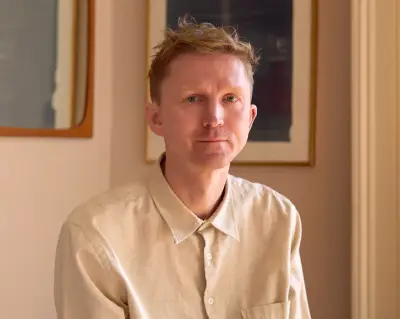
Professor Tim Coulson, who studies how ecosystems change when their apex predator shifts, argues that humans, long at the top of the food chain, could be demoted and replaced by AI. Writing in The European, he doubts AI will wipe out humans entirely, as machines would still need people to maintain their infrastructure.
AI's energy needs could lead to human power sources
Professor Coulson told Metro that AI will always require energy to run. 'It could use oil, living biomass, solar power, wind power, nuclear or animal power,' he said. 'It is unlikely to find a new source of fuel other than humans and if we are abundant and redundant, we might be seen as a useful source of energy. One way or another.'
His scenario draws on the 1999 film The Matrix, in which machines feed off human brain and body heat within a simulated reality. The film inspired the simulation hypothesis, whose proponents question whether there is any concrete way to disprove that we are living in a virtual world.
In reality, AI requires vast processing power housed in energy-intensive server warehouses known as data centres. These facilities often connect to local electrical grids, and they are predicted to consume around 12% of America's power by 2030.
'Domestication' of humans through cognitive offloading
Before power-hungry AI could force people into dystopian gyms, the technology would need to 'domesticate' humans, according to Professor Coulson. He points to cognitive offloading, the practice of using AI to reduce the amount of thinking needed to complete a task, as an early sign of this process.
Researchers are increasingly concerned that heavy reliance on chatbots for thinking could make human brains slower and less engaged. Professor Coulson describes this as 'laziness'. 'If we can solve a task easily or more with less effort, we go for the easy route,' he said. 'Scientists are already collaborating with AI, with it sometimes suggesting tasks for humans to do. As we get lazier and lazier, we may just start doing what we are asked. A bit like my dog.'
His warning is the latest from an expert raising concerns about AI doomerism. Researchers from AI companies including Anthropic and OpenAI, which developed the chatbots Claude and ChatGPT respectively, have quit over such fears. Evan Hubinger, Anthropic's alignment science lead, posted on X in September: 'We really do earnestly believe AI could kill all humans!'
Experts who foresee an AI-generated catastrophe previously told Metro that powerful AI models could launch nuclear attacks to create bioweapons, though current algorithms are far from capable of doing so. First, humans would need to build a 'superintelligent' AI, a machine exceeding human brain capabilities, and that algorithm would need to be an 'embodied' AI with access to robots able to act in the physical world.
Professor Coulson suggests there is a way to prevent this outcome: changing how society views AI. 'I don't really know whether it will happen, but we should learn how to use AI as a tool that helps us,' he said, 'rather than us being a tool to help superintelligent AI.'