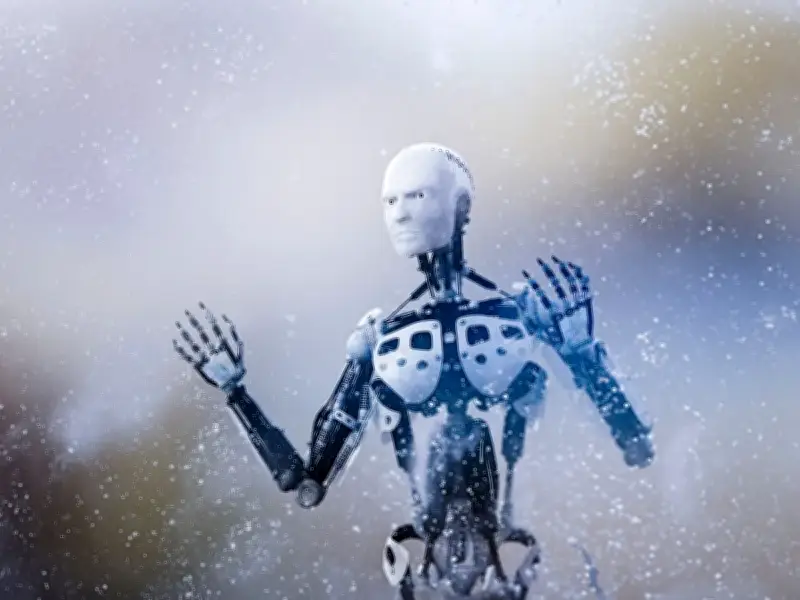
An AI apocalypse might not spell the end of humanity after all - and could even make the world better, a tech expert has claimed. Dr Kevin Hunt, a senior lecturer at Nottingham Trent University, says the rise of the machines should be seen as an unstoppable disruption that forces society to adapt.
AI as a 'global disrupter'
Writing in The Conversation, Dr Hunt describes AI as a “global disrupter”, but insists it shouldn’t be viewed as “inherently negative”. Instead, he argues the power of AI to radically re-order our lives could unlock new possibilities for a “technological future”, pushing humans to rethink how we work, govern, and live together.
“In fact, disruption is generally considered a form of positive change,” he wrote. “It offers new tools, systems and processes that displace the current methods and structures available to humans in everyday life.”
Parasite theory and 'Annihilation'
Rather than imagining an instant robot takeover, Dr Hunt compares AI’s spread through society to something more subtle; like a parasite embedding itself into an ecosystem and changing it from the inside, the Daily Mail reported. To explain it, he points to the 2018 sci-fi horror film Annihilation.
In the movie, an alien force called “the Shimmer” seeps into the natural world, mutating everything it touches. Dr Hunt told the Daily Mail: “Annihilation is a visually stunning film that can be read as an analogy for AI taking over.
“This occurs slowly through initially imperceptible changes that become bigger and more visible over time. That’s not presented as a positive thing. The AI, or alien intelligence, spreads like a parasite to change everything in ways beyond human control or influence.”
Change not guaranteed to be catastrophic
But crucially, Dr Hunt says that kind of change isn’t guaranteed to be catastrophic. He said: “One way of thinking about this scenario is by drawing upon parasite theory to focus on the idea that change can occur through small disruptions that might build into widespread change.
“Rather than our takeaway from the film being that AI will inevitably take over, we might instead focus upon how disrupting the current narratives about AI and superintelligence could reframe how we discuss, engage with, and implement AI.”
The expert added: “Ideally this will be in ways that are positive for society by foregrounding ecological and ethical concerns and implementing AI in globally positive ways. This might be substantially different to serving the needs of Big Tech.”