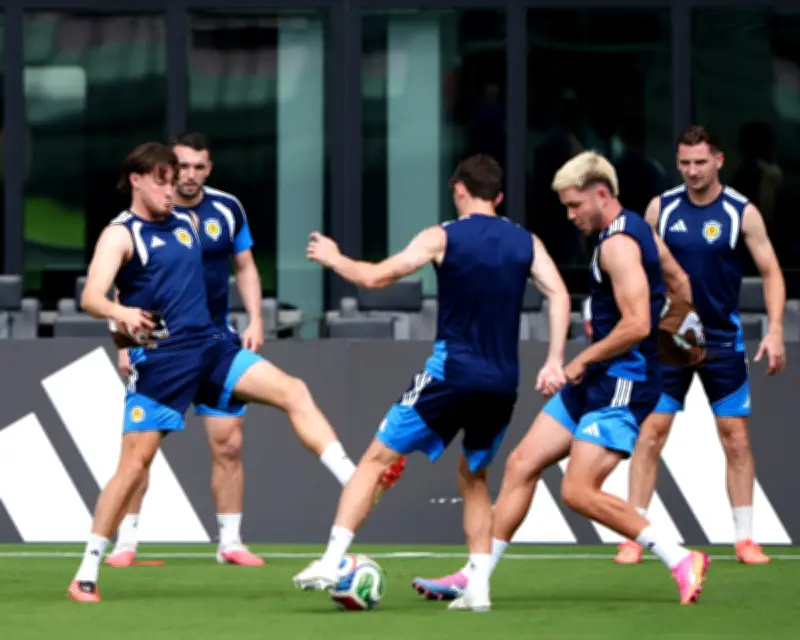
Scotland are on the cusp of making history at the World Cup, but their style of play has sparked debate as they prepare to face Brazil. A place in the last 32 is within reach, yet grumbling persists over the manner of their performances.
Third-Place Scenario Offers Hope
On Tuesday afternoon, the best-third-place table had Scotland second and in a strong position to advance to the knockout phase for the first time. Heavy defeat against Brazil on Wednesday in Miami could damage that position, but it remains feasible that the 1-0 win over Haiti and three points will take Scotland into uncharted territory. Denis Law did not emerge from a tournament group with Scotland, nor did Kenny Dalglish. The 1974 World Cup team were unbeaten yet still on an early flight home.
Criticism Over Tactics
Rory McIlroy stated last week that Scotland had benefited from the expansion of the World Cup, but in fact they topped their section regardless. Victory over Haiti was expected, as was defeat by Morocco, and another loss to Brazil is probable. If Scotland stumble through, there will be celebrations, but critics question their approach.
Scotland’s players and staff have made great play of making history. Captain Andy Robertson insisted he “couldn’t care less” about permutations. “After the game that might change, I can’t deny that,” Robertson said. “But we are in control of our own destiny at the moment. What we do know is if we get a [positive] result against Brazil, we will be 100% through.”
Lack of Attacking Invention
Debate rages about Scotland’s approach, often framed in black-and-white terms. Scotland do not need to attack with abandon; they would be punished for doing so. Clarke’s team are often defensive through a lack of attacking talent rather than a deep-rooted desire to play that way. However, they should display more invention.
In chance creation and shooting statistics, Scotland are lowly ranked. Clarke laughed when a Brazilian journalist asked whether Scotland needed to be safety first. “I don’t want to say anything because I’ve got the Scottish media here and they kill me for being too conservative,” Clarke said.
Ben Gannon-Doak’s Role
Ben Gannon-Doak, almost an old-school winger, is a significant figure. It will feel like an opportunity lost if Clarke does not select him, giving Brazil something to ponder. Gannon-Doak’s impact at this World Cup means he deserves to play.
Scotland could lift the mood by taking at least a point from Brazil in a fifth World Cup meeting. Reaching four points would be an excellent achievement. Aside from 1982, when Brazil won 4-1, the matches have generally been tight. Scotland led through David Narey’s stunning goal in that game.
Clarke’s Ambition Questioned
Clarke has been accused of lacking ambition, of being overly cautious, and deploying a style unlikely to make friends. Scotland are typically low scorers and often look paralysed by fear of being countered. “We know what we have to do,” Clarke said. “Not overcommit going forward, don’t leave yourself open to a counterattack. And when we have the ball, create chances.”
Robertson said Scotland needed to do more in attack. “We can’t just spend 90 minutes defending and not having the ball,” he said. “I think defensively in the first two group games, we have probably been better than in attack. We have not created as many chances, which we are working really hard to do because we need to score goals. Defensively we have been pretty good, individually and collectively. When we have the ball, we also have to try to give the other team problems as well. We have to come up with a plan to keep the ball and create chances.”
Scotland sit 90 minutes from a progression that would define a team. How they look to secure that carries meaning that does not apply elsewhere in this World Cup.