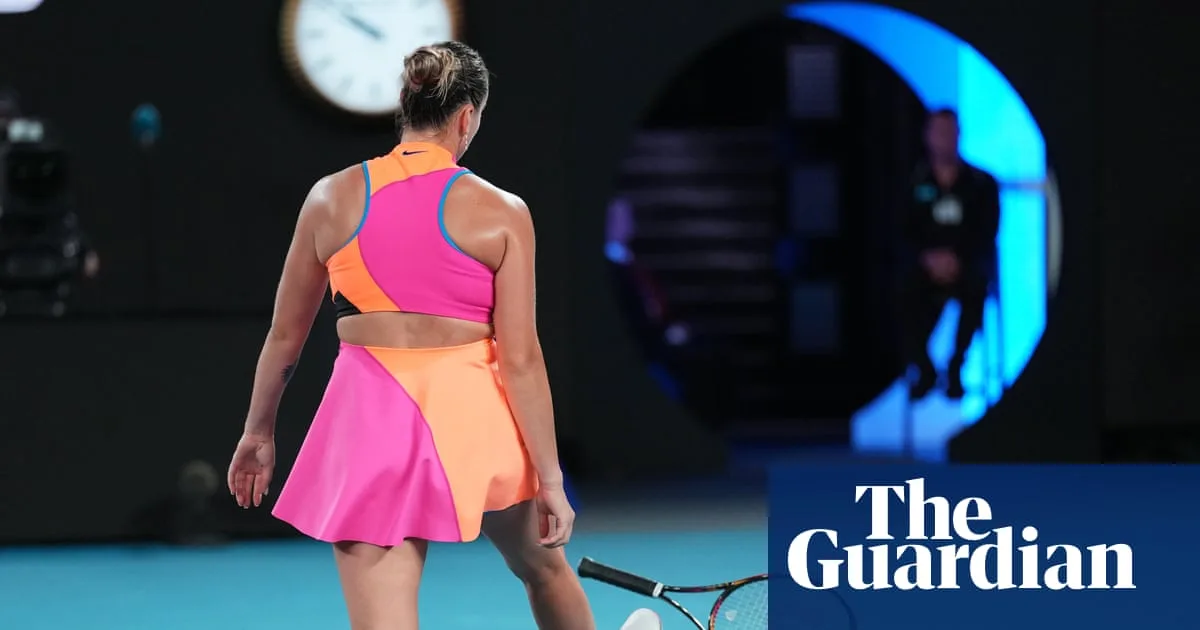
World No 1 Aryna Sabalenka has admitted her grand slam final record is a source of frustration after her latest defeat, a 4-6, 6-4, 2-6 loss to Elena Rybakina in the Australian Open final on Saturday. The Belarusian ends the tournament with a 4-4 record in major finals, but such is her dominance in the sport that she believes she has lost more than she has won. That in itself speaks to the weight of expectation she carries at every major.
Sabalenka's consistency is remarkable. She has reached five of the past six grand slam finals, and eight in total. In her last 13 major appearances, she has made the semi-finals 12 times, the only exception coming at the 2024 French Open, where she was hampered by food poisoning in a quarter-final loss to Mirra Andreeva. That level of sustained excellence reflects her ability to handle the pressures of the early rounds, yet it has repeatedly been undermined by her performances in finals.
The 27-year-old has been open about her difficulties in the biggest matches, having previously worked with a sports psychologist to address her struggles with nerves and decision-making. Saturday's collapse, however, highlighted how much work remains. After recovering from a slow start to take the second set, Sabalenka lost five consecutive games in the third from 3-0 up, allowing Rybakina to seal her second major title. It was a familiar pattern for those who have watched Sabalenka fall short in finals before, including her defeat to Coco Gauff at the 2024 French Open.
Rybakina, who outserved and overpowered Sabalenka in the key moments, deserves credit for her victory. But for the world's best player, the manner of the loss was unacceptable. Sabalenka leaves Melbourne at a crossroads, still the main character of women's tennis with four grand slam titles, 75 weeks at No 1 and 22 career trophies. Yet she knows she is at her physical peak and that this run of opportunities will not last forever.
Her ambitions, however, remain unchanged. “Keep fighting, keep working hard, keep putting myself out there, and try my best if I’ll have another chance in the final,” she said. “Just go out there and do my best. Then just try the same. Try to see how many of them I can get.”